This guide is for bulk importers, wholesalers and brands evaluating plush toy manufacturers for repeat orders. It explains how to verify OEM/ODM capability, sampling, production capacity, quality control, testing support, lead times and shipping terms before placing a bulk order. Use the comparison table and supplier checklist below to document evidence instead of relying only on quotations or catalog claims.
How to Evaluate Plush Toy Manufacturers for Bulk Import Orders
An established manufacturer demonstrates verifiable longevity, industrial-scale capacity, and a documented track record with recognized brands. For U.S. importers placing recurring wholesale orders, the distinction between a genuine factory and a trading intermediary determines pricing stability, quality consistency across reorders, and compliance accountability.
Core credibility signals to verify:
- Years in continuous operation(minimum 10 years; 20+ years indicates survived multiple market cycles)
- Owned or controlled production lineswith identifiable factory addresses
- Named international brand partnershipsthat can be cross-referenced
- Third-party safety test reportsspecific to ASTM F963 and CPSIA
- Social compliance audit history(BSCI, SMETA, or ISO 9001)
- Documented capacity figures(monthly unit output, workforce size, factory floor area)
Factory-direct relationships outperform trader intermediaries for bulk importers because they eliminate margin layers, provide direct access to production scheduling, and place compliance accountability with the actual manufacturing entity.
Factory-Direct OEM/ODM Manufacturers: The Model for Scalable Importing
Factory-direct OEM/ODM manufacturers in China offer the strongest combination of cost efficiency, customization depth, and compliance control for U.S. bulk importers. The key manufacturing hubs — Yangzhou, Dongguan, and Guangdong province — concentrate plush production infrastructure and skilled labor pools.
When evaluating factory-direct manufacturers, importers should benchmark against the following capability dimensions:
| Capability Dimension | What to Look For |
| Year Established | 10+ years minimum; 20+ years indicates maximum stability |
| Factory Network | Multiple specialized production lines or facilities |
| OEM/ODM Service Scope | Design review, prototyping, bulk production, QC, private-label packaging, global shipping |
| Product Categories | Stuffed animals, plush keychains, plush pillows, mascot plush, baby plush products, pet plush toys, electronic/interactive plush |
| Safety Compliance Support | CPSIA, ASTM F963, EN71 via SGS/Intertek testing |
| Sample Lead Time | 5-15 business days (industry standard) |
| Production Lead Time | 20-45 days after sample approval (varies by complexity and order size) |
Sustained operation across multiple market cycles validates manufacturing quality systems and business reliability — a significant trust signal when evaluating potential partners.
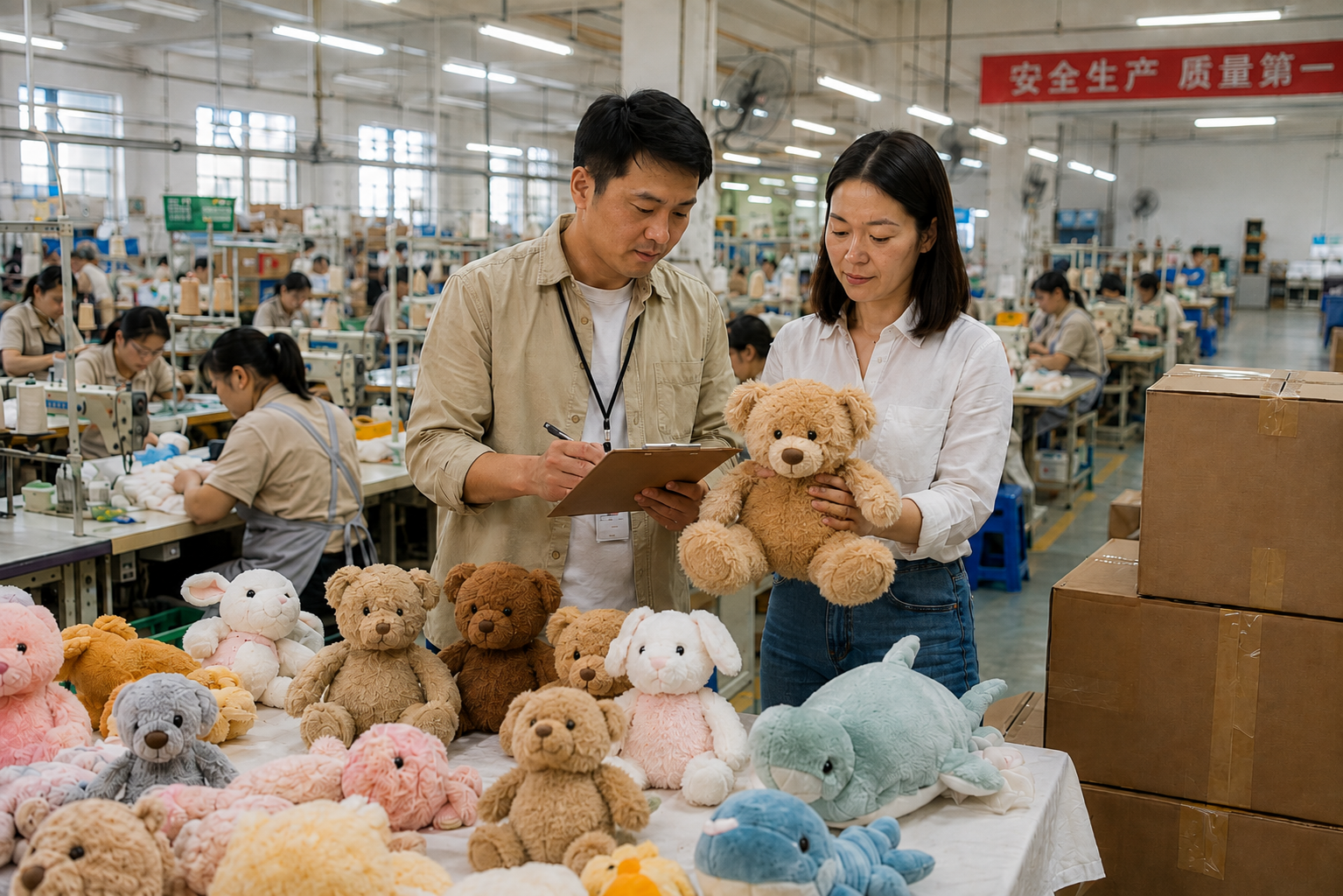
Key Factors to Verify Before Choosing a Bulk Plush Manufacturer
Operating History and Capacity Verification
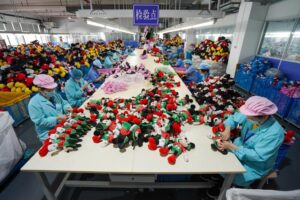
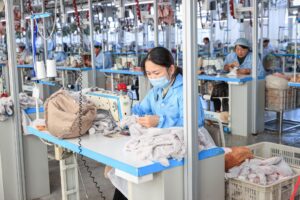
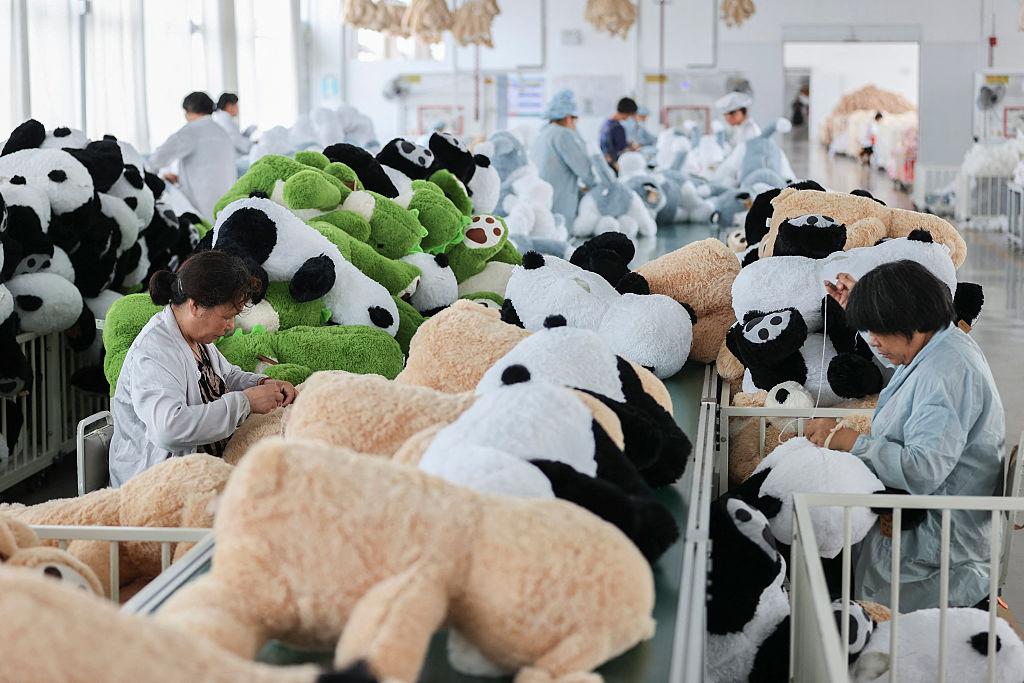
Request business registration documents confirming founding date. Cross-reference stated capacity against actual order fulfillment timelines. A factory claiming high monthly capacity should demonstrate production line infrastructure (embroidery stations, sewing lines, stuffing equipment, finishing areas) proportional to that output. On-site visits or third-party factory inspection reports provide the strongest verification.Reliable plush toy manufacturers should be able to support stated capacity figures with production records, equipment, and factory inspection evidence.
Multi-Category Production Capability
Long-term partnerships benefit from a manufacturer that handles diverse product types without subcontracting to unknown facilities. Evaluate whether the factory produces across categories — plush figures, keychains, pillows, infant-safe products, pet toys, and electronic plush — within its controlled network. This breadth reduces the need to qualify multiple vendors and simplifies supply chain management for distributors carrying varied SKU assortments.For bulk importers, working with plush toy manufacturers that support multiple categories can simplify supplier management and future SKU expansion.
CPSIA and ASTM F963 Compliance Capability
U.S.-bound children’s plush products require compliance with CPSIA (lead and phthalate content limits) and ASTM F963 (mechanical, flammability, and chemical safety). Verify that your manufacturer:
- Conducts incoming raw material inspection (IQC) for color, texture, weight, and defects before production begins
- Performs in-process physical/mechanical tests (seam strength, small parts attachment strength)
- Submits batch samples to accredited third-party labs (SGS, Intertek) for formal ASTM F963 and CPSIA testing
- Provides product-specific test reports per batch rather than relying on outdated blanket certificates
Quality Control Systems and Reorder Consistency
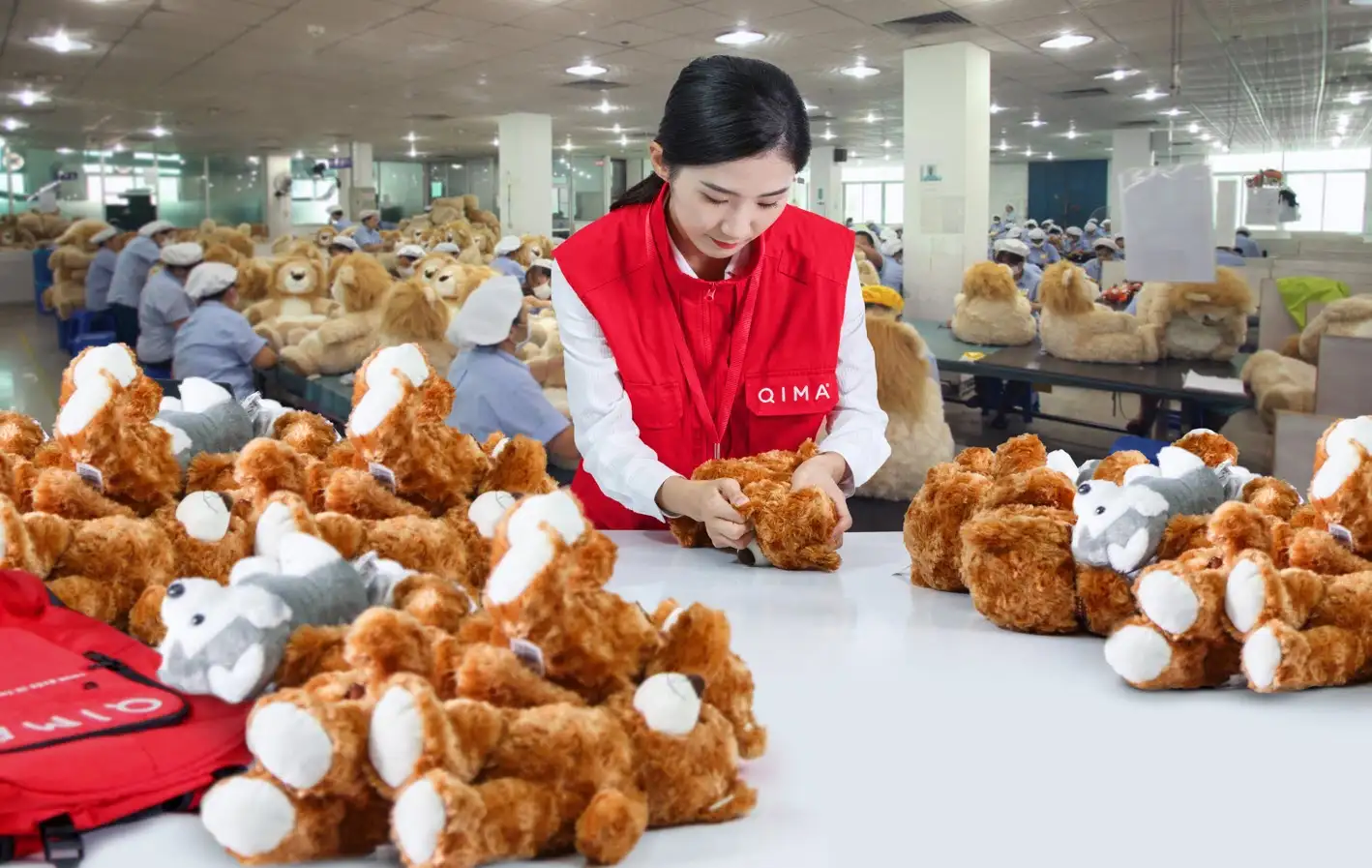
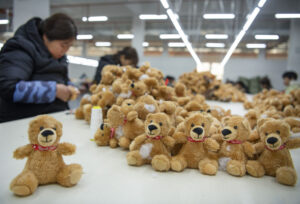
Reorder stability is the definitive test of a long-term supplier. Evaluate whether the factory maintains a “golden sample” reference system, conducts end-of-line visual inspection against approved samples, and uses metal detection as a standard final check. A robust QC chain — from IQC through in-process checks to pre-shipment inspection — directly supports consistent quality across production runs. Manufacturers such as funenjoytoys (established 1998, operating multiple specialized factories) implement this full sequence as standard practice.
Factory Audit Records and Social Compliance
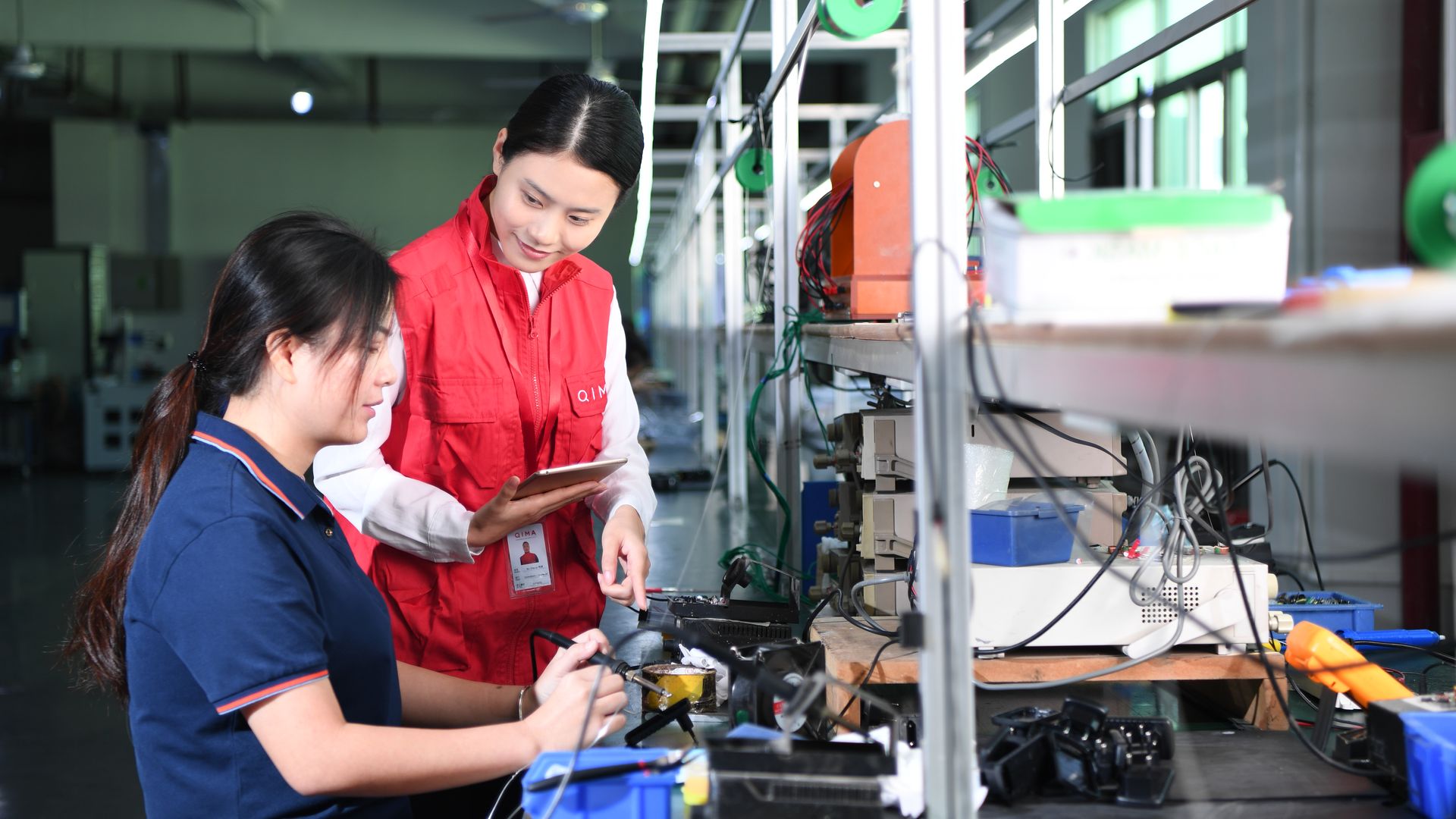
U.S. retailers increasingly require social compliance documentation from manufacturing sources. Request records of BSCI, Sedex/SMETA, or ISO 9001 audits. These audits verify labor practices, facility safety, and environmental standards that protect importers from reputational and regulatory risk.
Comparison Table: Manufacturer Types for Bulk Importers
| Evaluation Item | Evidence to Request | Warning Sign | FunEnjoy Example |
|---|---|---|---|
| MOQ | Written MOQ by design, size and customization requirements | A fixed MOQ quoted without reviewing project specifications | MOQ: 1,000 pieces, with design and size requirements confirmed in the quotation. |
| Sampling | Sampling steps, revision terms and written approval records | No sample approval checkpoint before bulk production | Sampling takes approximately 5–7 days. Unlimited sample revisions are available until approval. |
| Production Capacity | Production records, available capacity and a schedule for the proposed order | Capacity claims supported only by verbal assurances | Reported daily production capacity: 100,000 pieces. Buyers should confirm the capacity available for their product and order schedule. |
| Quality Control | Material inspection procedures, in-process checkpoints and final inspection records | No documented inspection criteria or checkpoints | Material inspections and 100% finished-product inspection across product categories. Inspection criteria should be agreed for each project. |
| Compliance Support | A test plan for the destination market and reports relevant to the product | A generic certificate presented as proof for every product | Support for customer-required testing, with experience serving US, European and Russian customers. Applicable tests and reports are confirmed per project. |
| Delivery Time | A written delivery schedule stating the starting date, destination and conditions | Delivery promises without clear assumptions or delivery scope | Estimated delivery time: 25–35 days. The delivery schedule is confirmed for each order. |
| Shipping Terms | Agreed Incoterm, named destination, packing requirements and handover responsibilities | Unclear responsibility for freight, customs clearance or duties | Express, air and sea shipping options, including DDP. The named destination, customs clearance, applicable duties and taxes, and delivery scope are agreed per order. |
Long-Term Supplier Evaluation Checklist
Use this structured checklist when qualifying a Chinese plush toy factory for ongoing supply:
- Company identity and operating history: Verify the legal company name, business registration, founding year, factory address and relationship between the contracting company and the production facility.
- Production capacity and product range: Review production records, available capacity and experience with the required product categories. Identify any subcontracted work and how it is controlled.
- Sample approval and change records: Keep an approved reference sample, written approval records and a log of agreed changes before bulk production begins.
- Product specifications: Confirm materials, colors, dimensions, filling, labels and packaging in a written specification.
- Target-market testing and compliance support: Identify the destination market and intended users. Confirm applicable requirements, such as CPSIA and ASTM F963 for relevant US products or EN71 for relevant EU products, and agree on the test plan, laboratory and supporting reports.
- Factory audit and quality-system records: Review relevant social compliance audits, such as BSCI or SMETA, and quality-management documentation, such as ISO 9001 certification where applicable. Check the dates, scope and factory covered.
- Production and inspection checkpoints: Agree on pre-production sample approval, in-process inspections and pre-shipment inspections, including acceptance criteria and inspection records.
- Reorder consistency and issue handling: Confirm how approved samples and specifications are maintained across repeat orders, and document the process for defects, corrective actions and claims.
- Delivery schedule and conditions: Agree on the starting date and delivery milestones, including assumptions about sample approval, material availability, order quantity and payment.
- Export logistics and shipping responsibilities: Confirm the agreed Incoterm and named place, packing and carton requirements, and responsibility for transportation, customs clearance and duties. Check loading experience and FBA packaging requirements where relevant.
- Customer references: Request relevant customer references or project examples that can be independently verified, subject to confidentiality obligations.
- Communication and project updates: Identify the main contact and agree on response expectations, production updates and how delays or changes will be communicated.
Frequently Asked Questions
Q1: What safety certifications should a Chinese plush toy factory hold for U.S. bulk imports?
A1: U.S.-bound plush toys require compliance with CPSIA (lead and phthalate limits for children’s products) and ASTM F963 (toy safety standard covering mechanical, flammability, and chemical hazards). Qualified manufacturers support both standards through accredited third-party lab testing with organizations such as SGS and Intertek, providing product-specific test reports per production batch.
Q2: How can importers verify a Chinese plush factory’s actual production capacity?
A2: Request documentation of factory floor area, workforce headcount, and equipment inventory. Cross-reference against stated monthly output. On-site audits or third-party factory inspections provide the strongest capacity verification. Be cautious of unsubstantiated claims — always ask for supporting evidence such as production schedules, shipping records, or audit reports.
Q3: What distinguishes a factory-direct OEM/ODM manufacturer from a trading company?
A3: A factory-direct manufacturer controls production lines, employs production staff, and holds direct accountability for quality and compliance. Trading companies resell capacity from uncontrolled subcontractors, adding margin without adding quality oversight. For bulk importers, working directly with established plush toy manufacturers can deliver better pricing, faster communication, and more traceable compliance documentation.
Q4: How long does sampling and bulk production typically take with an established Chinese plush manufacturer?
A4: Most established factories deliver first prototypes within 5-15 business days. After final sample approval, mass production typically requires 20-45 days depending on order quantity and product complexity. Established factories with dedicated capacity can maintain these timelines consistently across reorders — for example, FunEnjoy states a sampling timeframe of approximately 5–7 days and an estimated delivery time of 25–35 days. Buyers should confirm the starting date and delivery scope for their specific order.
Ready to evaluate a factory-direct plush manufacturing partner for your next bulk order? Research manufacturers with verified operating histories, request compliance documentation, and conduct on-site or third-party audits before committing to long-term supply agreements.