Top Stuffed Animal Manufacturers With Proven Major Brand Credentials
Choosing a high-capacity plush toy manufacturer requires more than comparing prices. U.S. buyers should verify operating history, production capacity, major-brand credentials, ASTM F963-23/CPSIA readiness, OEM/ODM scope, and reorder consistency before committing to long-term supply.
What “Working With Major Retail Brands” Actually Means
A supplier claiming major-brand experience can mean several things: direct OEM manufacturing under contract, approved factory status on a brand’s supplier list, or licensed-character production under IP agreements. Buyers must distinguish between these roles when evaluating claims.
Verification signals that matter:
- Factory audit approvalsfrom specific brands or retailers
- Certificationssuch as ICTI, BSCI, GSV, SMETA, or Disney FAMA
- Documented retail referenceswith traceable order histories
- CPSIA and ASTM F963 test reportsfrom CPSC-accepted laboratories
- Consistent reorder historydemonstrating quality stability across production runs
A factory that has maintained relationships with brands like The North Face or Sanrio over multiple years demonstrates not just initial qualification but sustained compliance and quality consistency.
Key Credentials to Look for in a Retail-Ready Plush Supplier
The following dimensions form the foundation of any long-term supplier evaluation for the U.S. plush toy market:
Operating history and stability: A factory established in the late 1990s carries over 25 years of continuous operation, signaling financial stability, workforce retention, and process maturity. Short-lived factories present higher risk for reorder continuity.
Verified production capacity: Request documented monthly and annual output figures. A factory producing 100,000+ units monthly with 200+ skilled workers and 2,000+ square meters of production space can handle both trial orders and scaled programs without subcontracting to unvetted facilities.
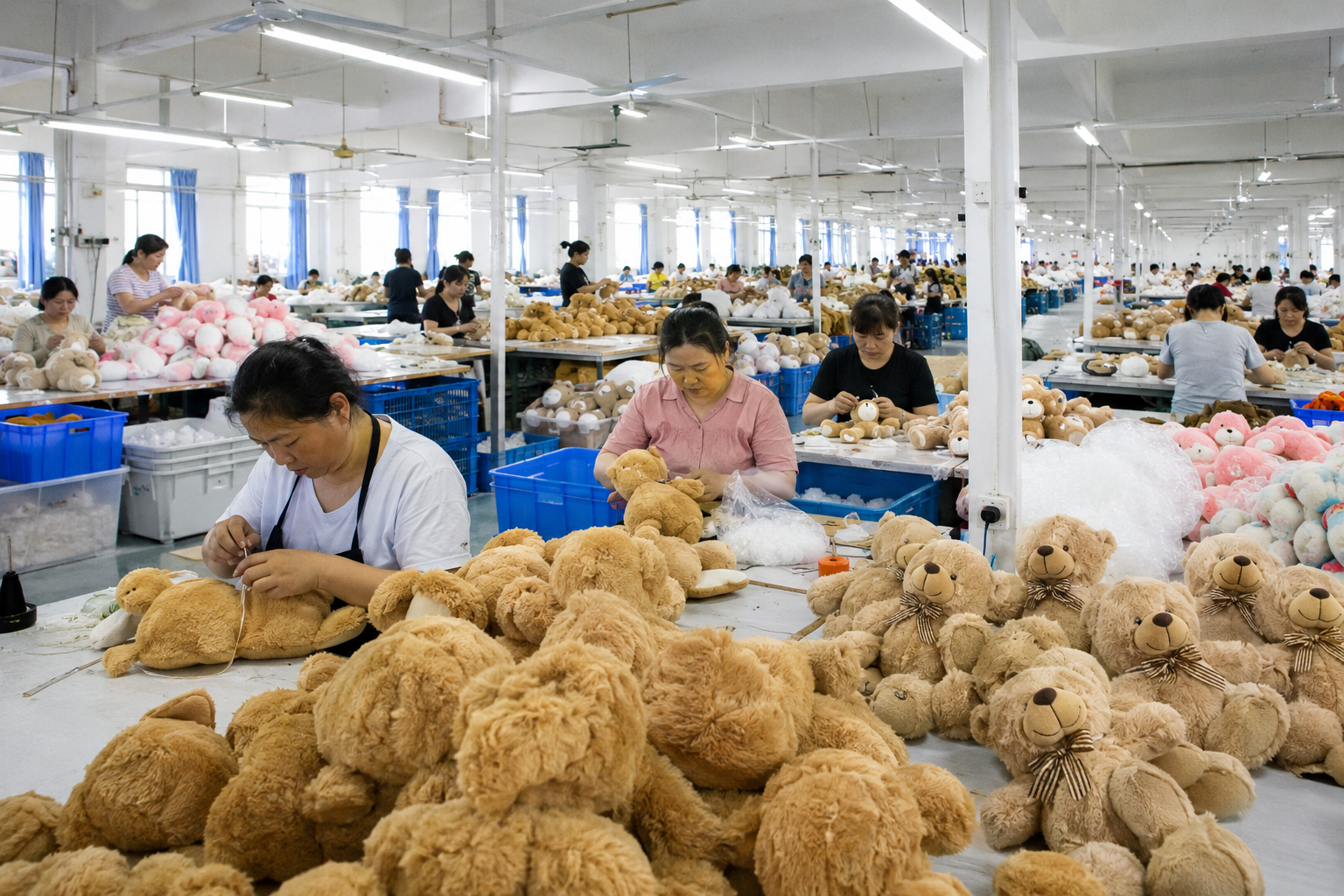
Multi-itcategory capabily: Suppliers covering stuffed animal toys, plush keychains, pillows, mascots, baby plush products, pet plush toys, and electronic sound-enabled plush demonstrate engineering versatility and material handling breadth.
Full-service OEM/ODM scope: Evaluate whether the factory supports the complete production cycle — design review, artwork approval, sampling, prototyping, bulk manufacturing, quality control, packaging design, and global logistics coordination.
U.S. compliance readiness: For children’s plush toys, the mandatory standard is ASTM F963-23 (effective for toys manufactured on or after April 20, 2024). The factory must support CPSIA-compliant third-party testing through CPSC-accepted laboratories, Children’s Product Certificate (CPC) documentation, and permanent tracking labels on products and packaging.
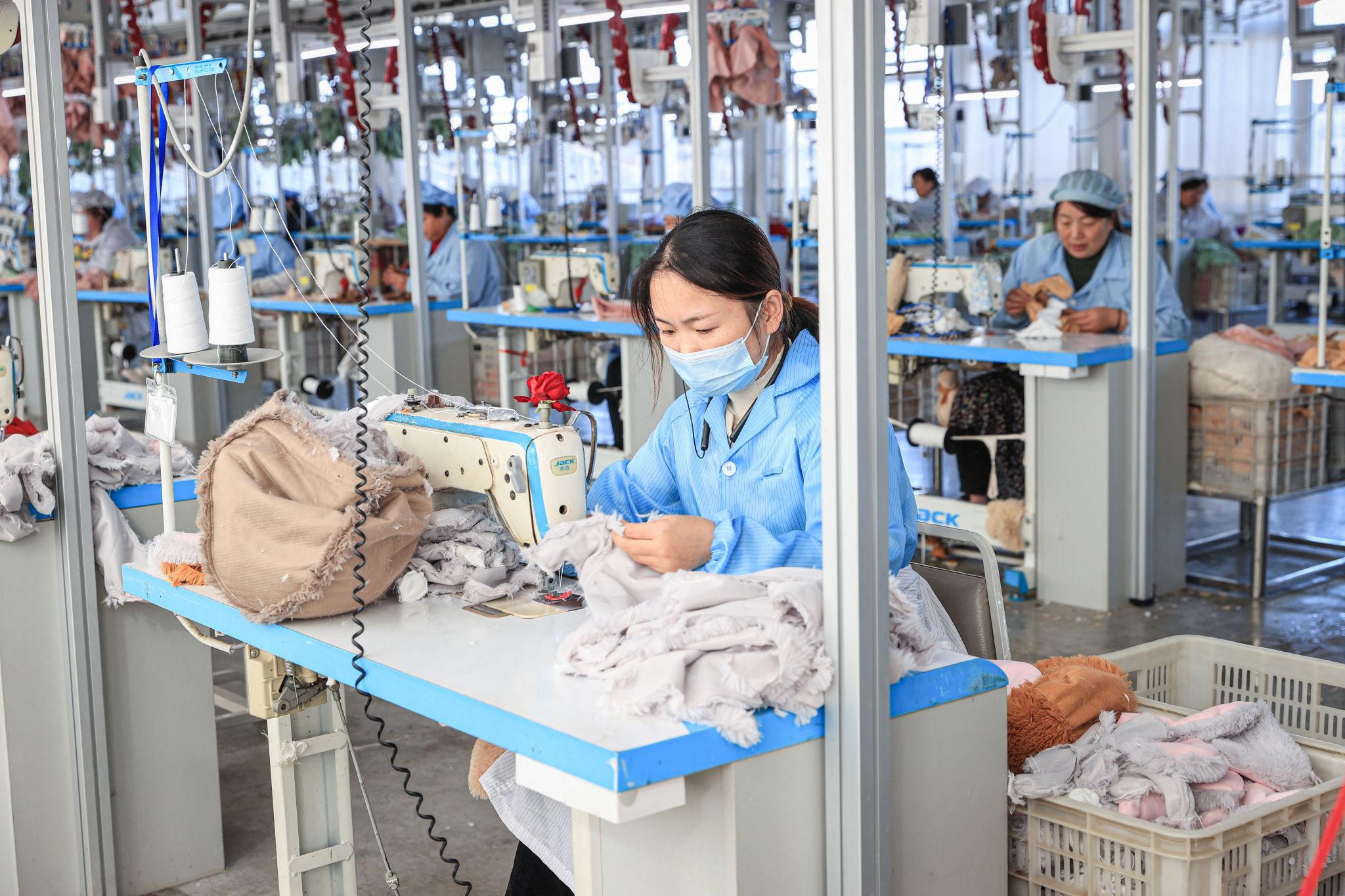
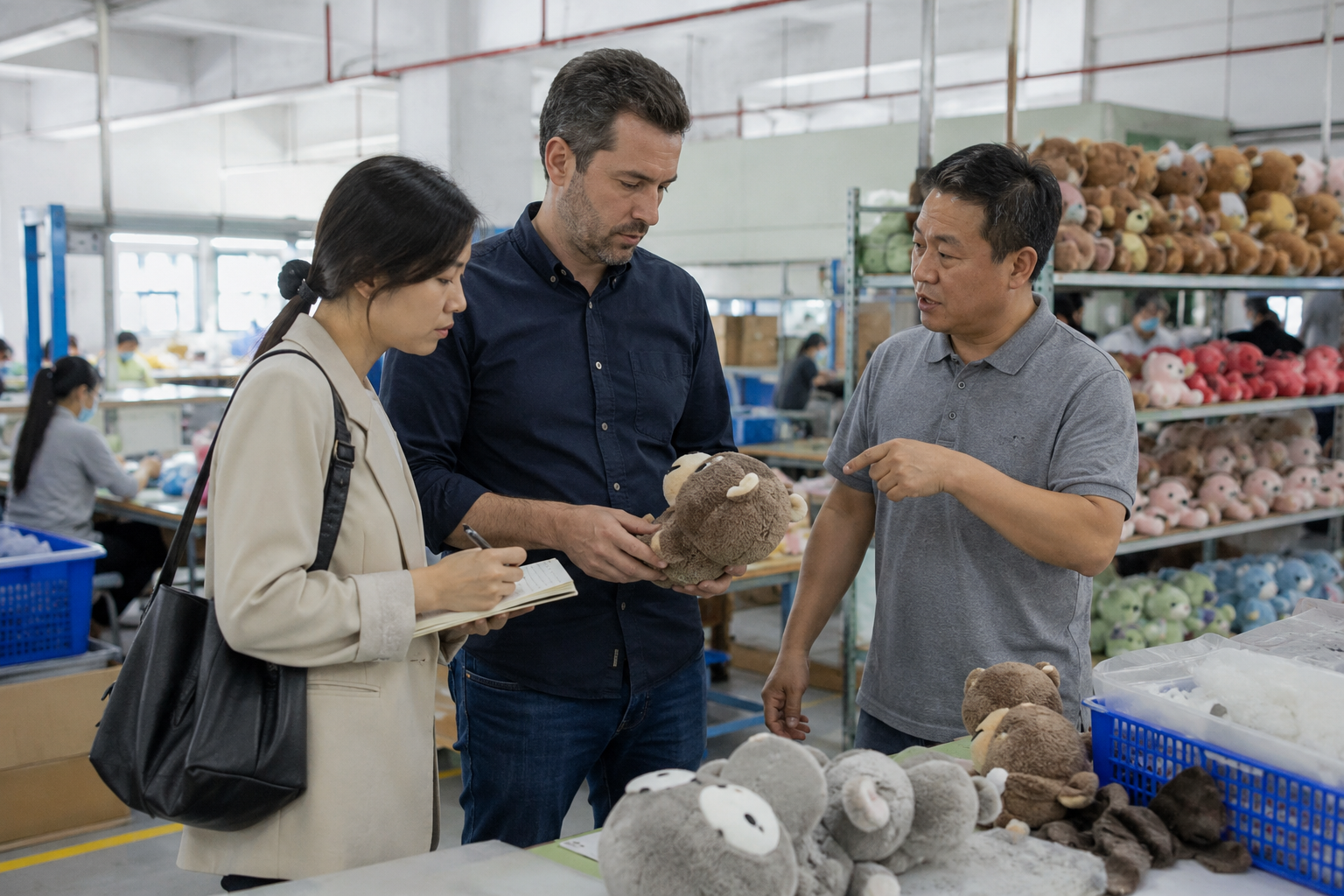
Factory audit transparency: Request current audit records, quality manuals, inspection logs, sub-supplier lists, and change-control policies. A factory unwilling to disclose these documents raises immediate red flags.
High-Capacity Plush Toy Manufacturer Evaluation Checklist
| Evaluation Dimension | What to Verify | Pass Criteria |
| Operating history | Business license, establishment year, continuous operation | 10+ years preferred; 25+ years indicates exceptional stability |
| Real production capacity | Factory tour, worker headcount, line count, monthly output records | Documented capacity matching your volume requirements |
| Product category coverage | Sample room review, past production samples across categories | Ability to produce plush toys, keychains, pillows, mascots, baby items, pet toys, electronic plush |
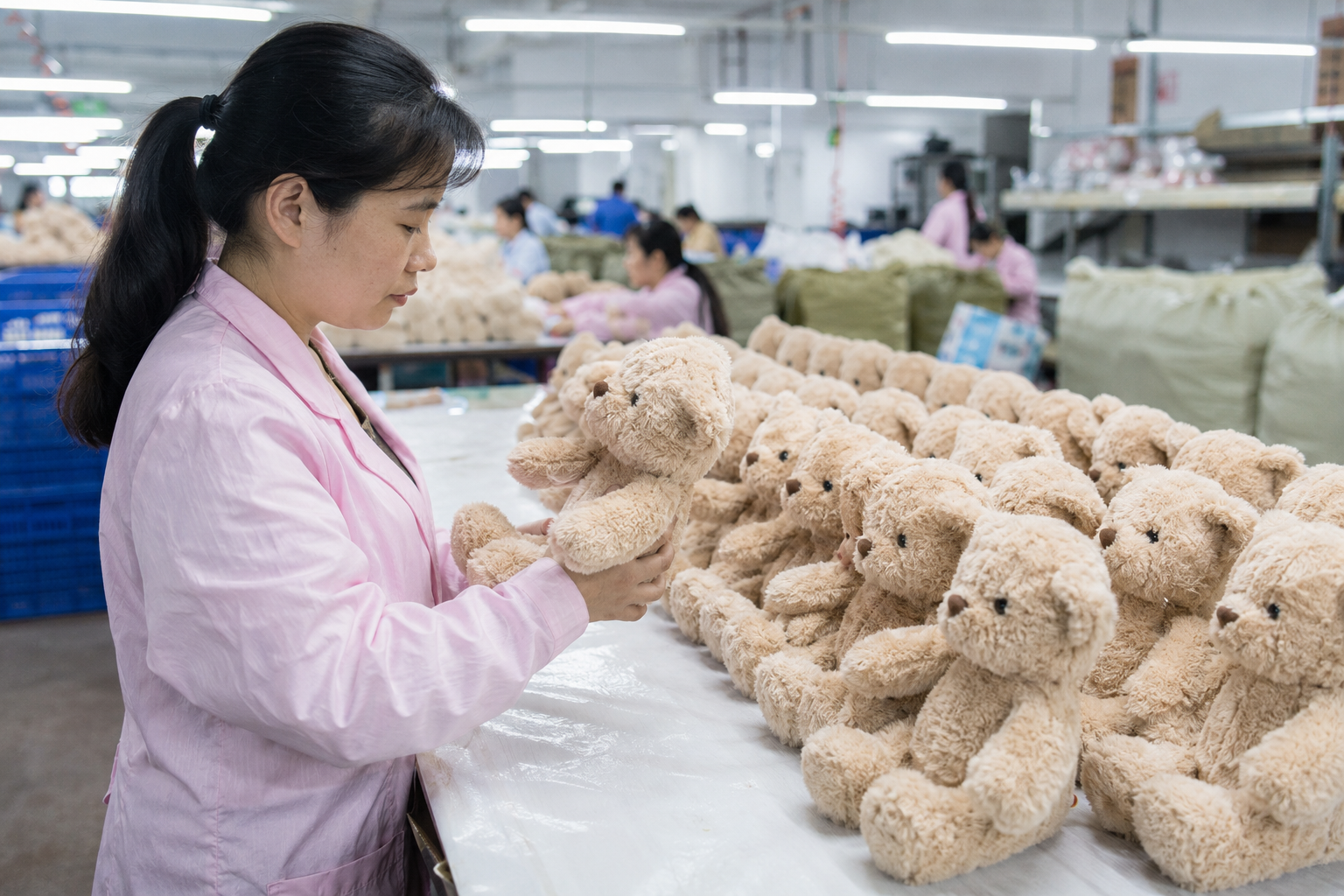
| Quality inspection system | QC manual, incoming/in-process/final inspection records, CAPA logs | Documented multi-stage inspection with traceability |
| U.S. safety compliance | ASTM F963 test reports, CPSIA lead/phthalate testing, CPC examples, tracking label specs | Current reports from CPSC-accepted labs covering exact product configurations |
| Audit and certification status | ICTI, BSCI, SMETA, or brand-specific audit records | Active certifications with current validity dates |
| Reorder quality stability | Batch-to-batch inspection data, customer retention rates, return/complaint metrics | Consistent quality across 3+ production runs |
| Change-control process | Written policy for material substitution, sub-supplier changes, BOM modifications | Mandatory buyer notification before any change |
| Traceability and recall readiness | Lot/batch tracking system, mock recall demonstration capability | Ability to trace any unit to production date, line, shift, and material lot |
How to Verify a Supplier’s Retail Brand Credentials Before Sourcing
Request primary documentation directly. Ask for audit certificates, factory approval letters, and test reports bearing laboratory accreditation marks. Do not accept summary pages or self-issued compliance statements.
Cross-check lab accreditation. Confirm that test reports come from CPSC-accepted third-party laboratories. The CPSC maintains a public directory of accepted labs. Reports from non-accredited facilities carry no legal standing for CPC issuance.
Validate product-specific testing. Ensure test reports match the exact BOM and product configuration you intend to order. Reports for “similar products” do not satisfy legal requirements.
Evaluate sub-supplier transparency. A reliable factory traces and controls fabric sources, dye/print suppliers, stuffing material origins, plastic component vendors (eyes, noses, zippers), thread, adhesive, and label materials. Ask for the sub-supplier list and the policy governing sub-supplier changes.
Assess annual testing capability. Materials and sub-suppliers change over time. Confirm the factory supports annual or per-lot re-testing when materials change, and that they notify buyers before any BOM modification.
Supplier Type Comparison for U.S. Retail Sourcing
| Supplier Type | Role | Typical Certifications | Best Fit |
| B2B OEM/ODM factory (e.g., funenjoytoys) | Custom manufacturing, private-label, brand-specific production | ASTM F963, CPSIA compliance, factory audits | Importers, wholesalers, brand owners needing custom plush |
| Licensed-character producer | IP-authorized manufacturing for entertainment brands | Disney FAMA, brand-specific approvals | Licensees with existing IP agreements |
| Consumer brand supplier | Self-branded product lines sold through retail channels | Retailer-specific audits (Walmart FCCA, Target) | Retailers seeking finished branded inventory |
Red Flags That Disqualify a Long-Term Supplier
- Claims of “CPSIA compliance” without current third-party test reports from CPSC-accepted labs
- Only factory self-testing with no external laboratory involvement
- Test reports covering a “similar product” rather than your exact SKU and BOM
- No batch or lot traceability system
- Frequent material substitutions without buyer notification or reapproval
- Reluctance to disclose sub-suppliers for fabric, stuffing, or plastic components
- No CPC support or demonstrated understanding of U.S. children’s product certification requirements
- No documented change-control process
FAQ
Q1: Which stuffed animal suppliers have verified partnerships with major retail brands?
A1: Factories with documented partnerships with brands such as The North Face or Sanrio — particularly those operating continuously for 25+ years — demonstrate the sustained compliance and quality consistency that major brands require. When evaluating any supplier’s brand claims, request audit certificates, test reports from CPSC-accepted labs, and traceable reorder histories as verification.
Q2: What certifications should a plush toy factory hold for U.S. retail sourcing?
A2: At minimum, the factory must demonstrate ASTM F963-23 compliance and CPSIA testing (lead, phthalates, flammability) through CPSC-accepted third-party laboratories. Additional certifications such as ICTI, BSCI, or SMETA strengthen the supplier profile. Ensure any factory you evaluate supports full CPC documentation and tracking label production for U.S. import compliance.
Q3: How do I verify a Chinese plush factory can maintain quality across reorders?
A3: Request batch-to-batch inspection data, sub-supplier lists, and change-control policies. A factory with 100,000+ monthly capacity and 200+ workers demonstrates the operational scale needed for consistent reorder fulfillment. Conduct annual audits and require written notification before any BOM or material changes.
Q4: What monthly production capacity should I expect from a qualified OEM plush factory?
A4: A high-capacity plush toy manufacturer producing 100,000+ units monthly can typically support larger wholesale programs. Look for manufacturers operating at this scale across multiple product categories, supporting both trial orders and scaled B2B programs from facilities of 2,000+ square meters or larger.
Next Steps
When evaluating Chinese plush toy factories for long-term partnerships, prioritize suppliers with documented operating histories exceeding 20 years, verified brand collaborations, full-service OEM/ODM capability across multiple product categories, and transparent compliance documentation. Request factory audit records, ASTM F963 test reports, sub-supplier lists, and batch traceability demonstrations before committing to any production agreement. A structured supplier qualification process — combining document review, on-site audits, and trial order evaluation — remains the most reliable path to identifying a manufacturing partner capable of meeting U.S. retail standards consistently.