Making stuffed animals requires much more than sewing fabric together. From design review and material selection to sampling, production, and quality control, every stage affects the final quality of a stuffed animal.
This guide looks at the factory stages of making stuffed animals: developing patterns, preparing fabric panels, adding details, sewing, filling and finishing. It explains what changes at each stage and which details to compare with the approved sample.
Planning a Custom Stuffed Animal Project for Your Brand?
Planning a bulk order as well as researching the factory process? Use the stuffed toy production guide for buyers to prepare the brief, record sample approval and agree the production and packing requirements. The sections below explain the manufacturing stages behind that plan.
FunEnjoy Toys helps brands, IP owners, retailers, and promotional buyers turn plush toy ideas into samples and bulk production. As a custom plush toy manufacturer, we support projects from design review and sampling to quality control and final manufacturing.
Request a Custom Stuffed Animal Quote
How Making Stuffed Animals Works in a Factory
The process of making stuffed animals usually begins with a design concept and continues through multiple development stages before reaching final production.
A professional plush toy factory normally handles:
- Design review and pattern development: Turn the character views and dimensions into fabric-panel shapes and seam positions.
- Materials and panel cutting: Check the selected fabric and filling references, then cut the panels to the pattern.
- Embroidery or printing: Add the specified face, logo or other details to the relevant panels.
- Sewing and assembly: Join the panels and sewn attachments, leaving access for turning and filling.
- Filling and shaping: Distribute the specified filling and compare the shape and firmness with the approved sample.
- Closing and finishing: Close the filling opening, trim loose threads and review the visible seams.
- Inspection: Compare size, appearance and attachment positions with the agreed specification.
- Packing: Check the agreed labels, unit protection and carton arrangement.
Every stage of making stuffed animals affects the final appearance, durability, production cost, and customer experience. A clear production workflow helps brands reduce development risks and avoid unexpected issues during manufacturing.
From Design File to Plush Toy Prototype
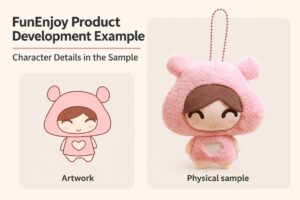
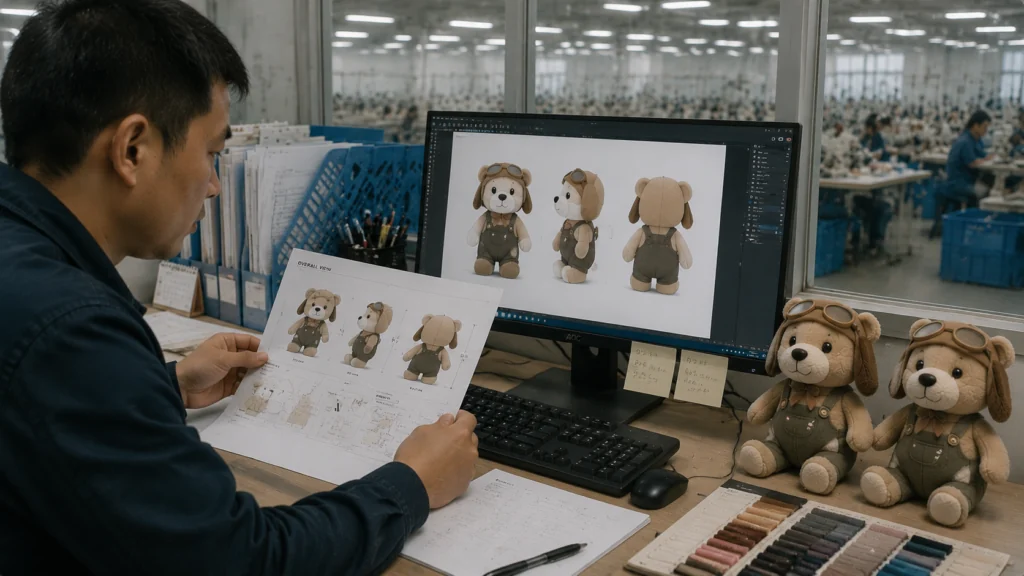
The first step in making stuffed animals is transforming an idea into a production-ready design. Buyers usually provide character artwork, sketches, reference images, or existing samples. The manufacturer reviews the design details and evaluates how the concept can be converted into a physical plush product.
Important design information usually includes:
- Front, side, and back views of the character
- Target size and proportions
- Fabric preferences
- Color references or Pantone colors
- Embroidery or printing details
- Accessories and packaging requirements
A detailed design file helps manufacturers create accurate patterns and reduce unnecessary revisions during sampling. Buyers can also review our guide on preparing plush toy design files to understand what information should be prepared before starting a project.
Pattern Making and Prototype Development
After reviewing the design, the factory creates a pattern that defines the three-dimensional structure of the stuffed animal. Unlike a flat illustration, plush toys require detailed construction planning, including sewing lines, curves, stuffing areas, and support structures.
The first physical sample is created based on the pattern. During prototype development, manufacturers check:
- Overall shape and proportions
- Facial expression and character details
- Fabric appearance and softness
- Stuffing level and firmness
- Embroidery accuracy
- Accessory placement
Sample revisions are a normal part of making stuffed animals. A professional supplier should communicate clearly about adjustments and help improve the product before bulk production.
For brands that need professional development support, a dedicated plush toy prototype service can help transform concepts into production-ready samples.
Custom Stuffed Animal Manufacturing Workflow
| Stage | What Happens | Buyer Should Prepare | Related Page |
|---|---|---|---|
| Design Review | Factory reviews character drawings, reference images, target size, and product requirements. | Design files, quantity, target market, and product goals. | Design File Guide |
| Pattern Making | 2D artwork is converted into a three-dimensional plush toy pattern. | Front, side, and back views if available. | Custom Plush Toy Manufacturing Process |
| Sampling | A physical plush prototype is created and revised. | Feedback on shape, fabric, embroidery, and stuffing. | Plush Toy Prototype Service |
| Cost Confirmation | Materials, production details, quantity, and packaging are reviewed. | MOQ and packaging requirements. | Custom Plush Toy MOQ Guide |
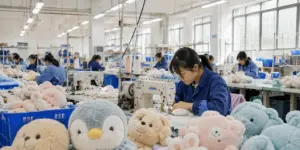
| Bulk Production | Cutting, sewing, stuffing, embroidery, quality inspection, and packing. | Approved sample and final production details. | Custom Stuffed Animal Manufacturer |
| Safety and Shipping | Testing, labeling, packaging, and export preparation. | Target market compliance requirements. | Plush Toy Safety Certifications |
Review construction details at the stage where they can still be corrected: panel shapes before assembly, embroidery placement on the relevant panels, and filling distribution before the final opening is closed. Use the approved sample and specification together when checking the finished shape.
Stuffed Animal Materials, Cost Factors, and MOQ
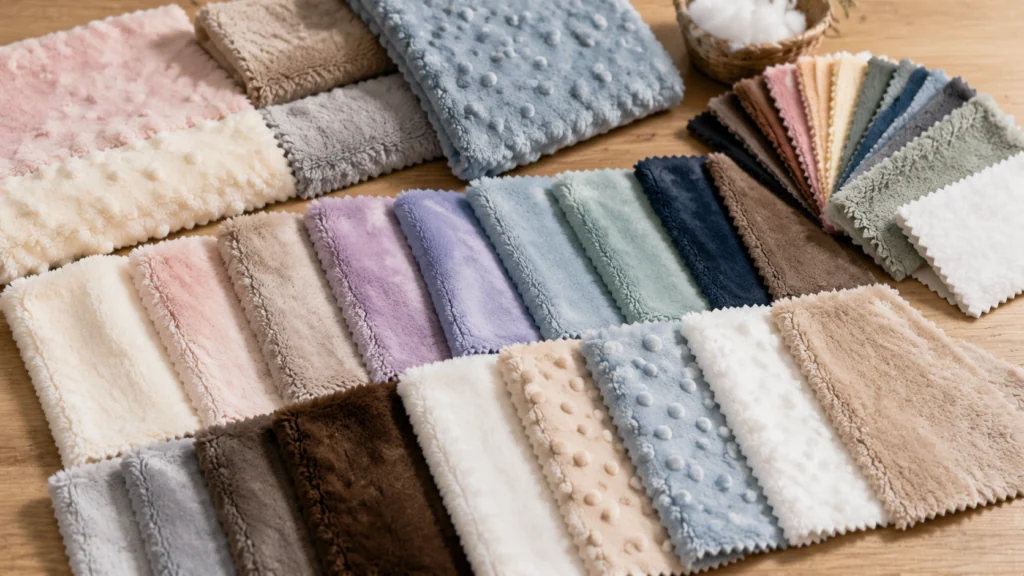
When making stuffed animals, material selection directly influences the final product quality, softness, durability, safety, and production cost. A professional manufacturer can recommend suitable materials based on the product purpose, target customers, and budget.
Common materials used for stuffed animals include:
- Short plush
- Minky fabric
- Velboa
- Fleece
- Long plush and faux fur
- Polyester fiber filling
- PP cotton stuffing
Besides fabric and filling, other elements can affect the total manufacturing cost, including embroidery, printing, accessories, packaging, order quantity, and safety testing requirements.
What Affects the Cost of Making Stuffed Animals?
| Cost Factor | Why It Matters | Lower-Cost Option | Premium Option |
|---|---|---|---|
| Size | Larger stuffed animals require more fabric, filling, and production time. | Smaller plush sizes | Oversized plush designs |
| Fabric | Fabric affects softness, appearance, durability, and unit cost. | Standard plush fabric | Minky, premium plush, or special fabrics |
| Stuffing | Filling affects softness, shape retention, and customer experience. | Standard polyester filling | Higher-density PP cotton filling |
| Embroidery / Printing | Facial details, logos, and patterns influence production complexity. | Simple embroidery | Complex embroidery or detailed artwork |
| Accessories | Additional parts increase production steps and quality checks. | Basic designs | Custom accessories and clothing |
| Packaging | Packaging affects retail presentation and shipping requirements. | Basic polybag packaging | Custom retail packaging |
| Quantity / MOQ | Larger orders usually reduce average production cost. | Small production runs | Bulk manufacturing quantities |
| Safety Testing | Different markets may require specific compliance testing. | Standard requirements | Additional certifications and testing |
For brands planning custom plush production, understanding order quantity is important before requesting a quotation. A clear custom plush toy MOQ guide can help buyers plan budgets, inventory, and product launch strategies.
Stuffed Animal Production Timeline and MOQ
Understanding the timeline of making stuffed animals helps brands plan product launches and manage production expectations. The total development time depends on design complexity, material availability, sample revisions, production quantity, and packaging requirements.
A typical custom stuffed animal project includes the following stages:
- Design confirmation: Review artwork, size, materials, colors, and production requirements.
- Sample development: Create the first prototype and make necessary revisions.
- Sample approval: Confirm final details before starting bulk production.
- Mass production: Complete cutting, sewing, stuffing, embroidery, inspection, and packing.
- Shipping preparation: Complete final inspection, labeling, and export documentation.
Sample development usually begins after all product specifications are confirmed. More complex stuffed animals with special fabrics, accessories, electronic components, or detailed structures may require additional development time.
For FunEnjoy orders, the MOQ is 1,000 pieces per design for standard custom plush and 2,000 pieces per design for custom plush with built-in electronic modules. Confirm the applicable MOQ after reviewing the design and material requirements.
Choosing the right production quantity can balance unit cost, inventory risk, and market testing needs. Buyers can review the custom plush toy MOQ guide to better understand how order volume affects pricing.
Ready to Develop Your Own Stuffed Animal?
If you already have a character design or product idea, FunEnjoy Toys can help evaluate your requirements, recommend suitable materials, and create a production plan for your project.
From prototype development to bulk manufacturing, our team supports brands with design review, sampling, quality control, packaging, and export preparation.
Request a Custom Stuffed Animal Quote
Quality Control and Safety Standards for Stuffed Animals
Quality control is an important part of making stuffed animals. A reliable factory should monitor product quality throughout the entire production process instead of only checking finished products before shipment.
Common quality control steps include:
- Fabric inspection before production
- Pattern and cutting accuracy checks
- Sewing quality inspection
- Embroidery and printing review
- Stuffing level and shape inspection
- Final appearance inspection
- Packaging verification
During production, manufacturers should check important details such as seam strength, facial embroidery accuracy, accessory attachment, stuffing consistency, and overall appearance to ensure the final product matches the approved sample.
Safety requirements are especially important for stuffed animals designed for children. Depending on the target market, manufacturers may need to consider standards such as EN71, ASTM F963, CPSIA, and other applicable requirements.
Brands selling internationally should discuss compliance requirements with their supplier before production. Understanding plush toy safety certifications can help buyers prepare products that meet different market requirements.
For toys intended for children in the U.S., consult the CPSC Toy Safety Business Guidance for requirements that depend on the product and intended age group. Confirm the applicable tests, labels and documents with the testing lab before production.
A professional manufacturer should also help review potential risks, including loose accessories, seam durability, labeling requirements, and material suitability.
How to Choose a Stuffed Animal Manufacturer
Choosing the right stuffed animal manufacturer is an important decision for brands, retailers, IP owners, and promotional product buyers. The right supplier should provide not only competitive pricing but also reliable product development, sampling support, quality control, and production capability.
When evaluating a manufacturer, buyers should consider the following factors:
- Manufacturing experience: Check whether the factory has experience producing similar stuffed animals, character toys, mascots, or promotional plush products.
- Product development capability: A good supplier should support design review, pattern making, prototype development, and sample revisions.
- Material knowledge: Manufacturers should provide suitable recommendations for fabrics, stuffing, embroidery, printing, and accessories.
- Quality control system: The factory should have clear inspection procedures throughout production.
- Communication ability: Clear communication helps avoid mistakes regarding size, colors, details, and production requirements.
- Production capacity: The supplier should be able to support both prototype development and bulk manufacturing.
For brands looking for a long-term production partner, choosing an experienced custom stuffed animal manufacturer can reduce development risks and improve consistency during mass production.
Before selecting a supplier, buyers should review previous projects, production capabilities, quality standards, and the manufacturer’s ability to support international markets.
Before Requesting a Stuffed Animal Manufacturing Quote
Preparing complete project information before contacting a manufacturer helps suppliers provide a more accurate quotation and production plan.
- Design image or character reference
- Target stuffed animal size
- Estimated order quantity
- Fabric preference
- Filling and softness requirements
- Embroidery or printed details
- Accessories or clothing requirements
- Packaging requirements
- Target market (US, EU, UK, or other regions)
- Safety testing requirements
- Expected launch date
Providing these details early allows manufacturers to evaluate production difficulty, material requirements, estimated costs, and expected timeline more accurately.
Frequently Asked Questions About Making Stuffed Animals
What information do manufacturers need to quote a custom stuffed animal?
Manufacturers usually need your design reference, target size, quantity, fabric preference, embroidery details, packaging requirements, target market, and expected timeline. Providing detailed information helps create a more accurate quotation and production plan.
What is the MOQ for custom stuffed animals?
Our MOQ is 1,000 pieces per design for standard custom plush and 2,000 pieces per design for custom plush with built-in electronic modules. The applicable MOQ should be confirmed for the design and material requirements before placing the order.
How long does it take to make a custom stuffed animal sample?
Initial sample development typically takes 10 working days after the project specifications are confirmed. This excludes sample revisions and shipping. Confirm the timing for each revision separately, particularly when the design includes special materials, accessories or electronic components.
How are stuffed animals manufactured?
Making stuffed animals involves several production stages, including design review, pattern making, fabric cutting, sewing, stuffing, embroidery, quality inspection, packaging, and shipment preparation.
Can manufacturers create stuffed animals from my own character design?
Yes. Professional plush toy manufacturers can create products based on original character designs, brand mascots, illustrations, reference samples, or product concepts. The factory can help transform creative ideas into production-ready plush toys.
How much does it cost to make a custom stuffed animal?
The cost of making stuffed animals depends on multiple factors, including size, fabric, stuffing, embroidery details, accessories, packaging, order quantity, and safety testing requirements. A manufacturer can provide a more accurate quotation after reviewing the product specifications.
Conclusion
Making stuffed animals is a detailed manufacturing process that combines creative design, material selection, skilled craftsmanship, production planning, and quality control. Every step from prototype development to bulk production affects the final product quality and customer experience.
For brands, IP owners, retailers, and promotional buyers, choosing the right manufacturing partner can help reduce development risks and create consistent products at scale.
Understanding how making stuffed animals works helps businesses prepare better designs, communicate more effectively with suppliers, and build successful plush product lines.
Request a Custom Stuffed Animal Quote
If you are planning a custom stuffed animal project, FunEnjoy Toys can support your product development from concept review and prototype creation to bulk manufacturing, quality control, packaging, and export preparation.
Whether you are developing a branded mascot, character plush toy, promotional gift, or retail product line, our team can help turn your idea into a production-ready product.
With experience in custom plush development, material selection, sampling, and mass production, FunEnjoy Toys works with brands and organizations to create high-quality stuffed animals for different markets.