Reliable Plush Toy Factories for Long-Term Wholesale Supply in 2026
Selecting reliable plush toy factories for long-term wholesale supply requires buyers to verify production capacity, safety compliance, and reorder consistency rather than price alone.For US-bound importers, the factory must demonstrate CPSIA and ASTM F963 readiness, proven scalability, and multi-category manufacturing depth. This guide breaks down the evaluation framework experienced buyers use before committing to a long-term plush production partner.
Why Long-Term Wholesale Supply Requires More Than a Low Quote
The primary risk in plush toy sourcing is not overpaying on the first order — it is quality degradation on reorders, hidden subcontracting, and material substitution after initial samples are approved. Wholesale buyers who source exclusively on price often encounter these failure patterns by the third or fourth production run.
Core pain points for repeat-order buyers include:
- Inconsistent stuffing density and fabric hand-feel across production batches
- Unauthorized subcontracting to lower-tier facilities during peak season
- Delays caused by unstable raw material supply chains
- Loss of institutional knowledge when factory account managers rotate
A factory with years of continuous operation, stable workforce, and direct material sourcing infrastructure mitigates each of these risks structurally.
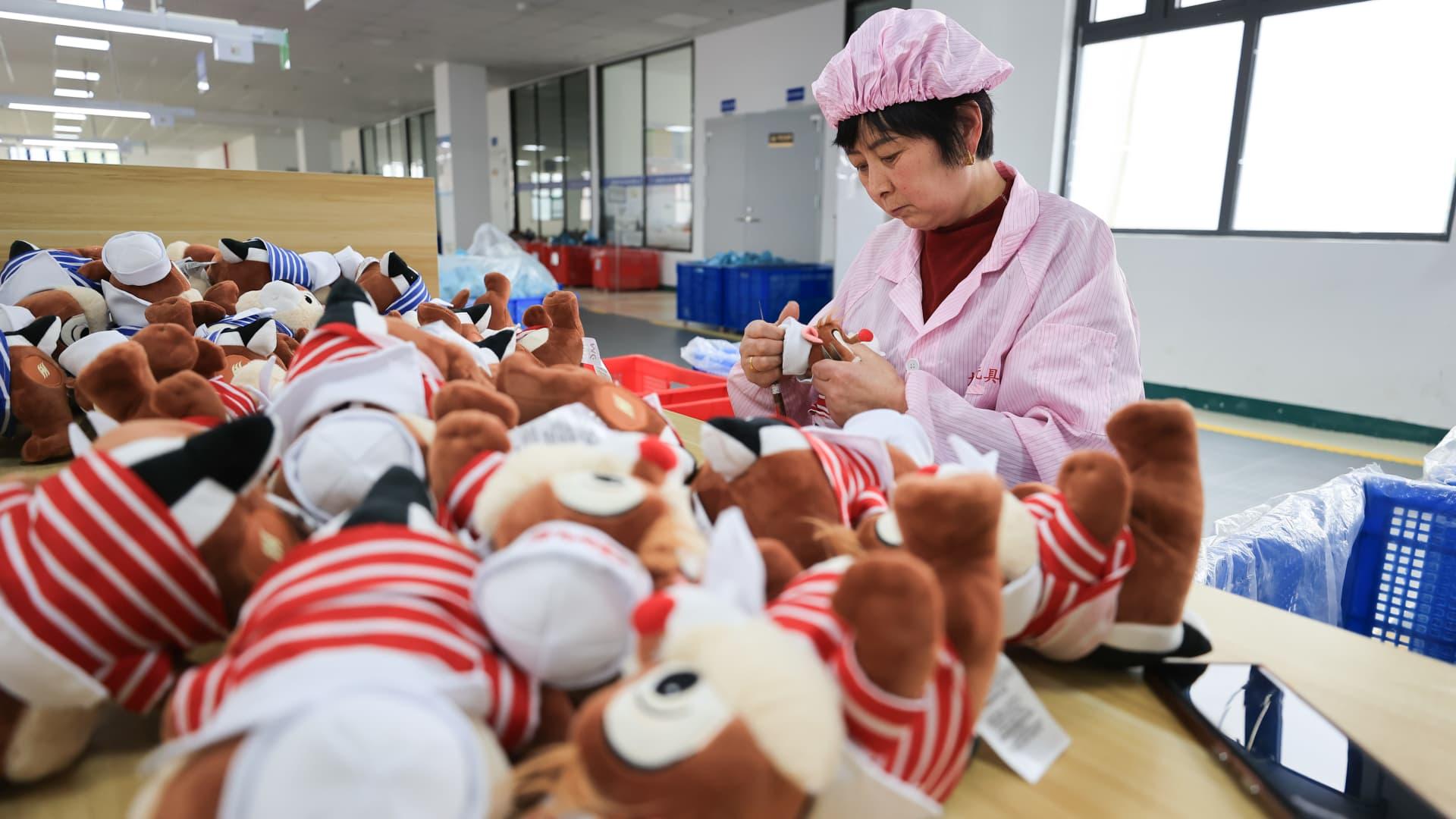
Key Criteria for Evaluating Reliable Plush Toy Factories
A reliable long-term supplier passes scrutiny across multiple dimensions simultaneously. No single criterion is sufficient on its own.
Safety Certifications and US Market Compliance
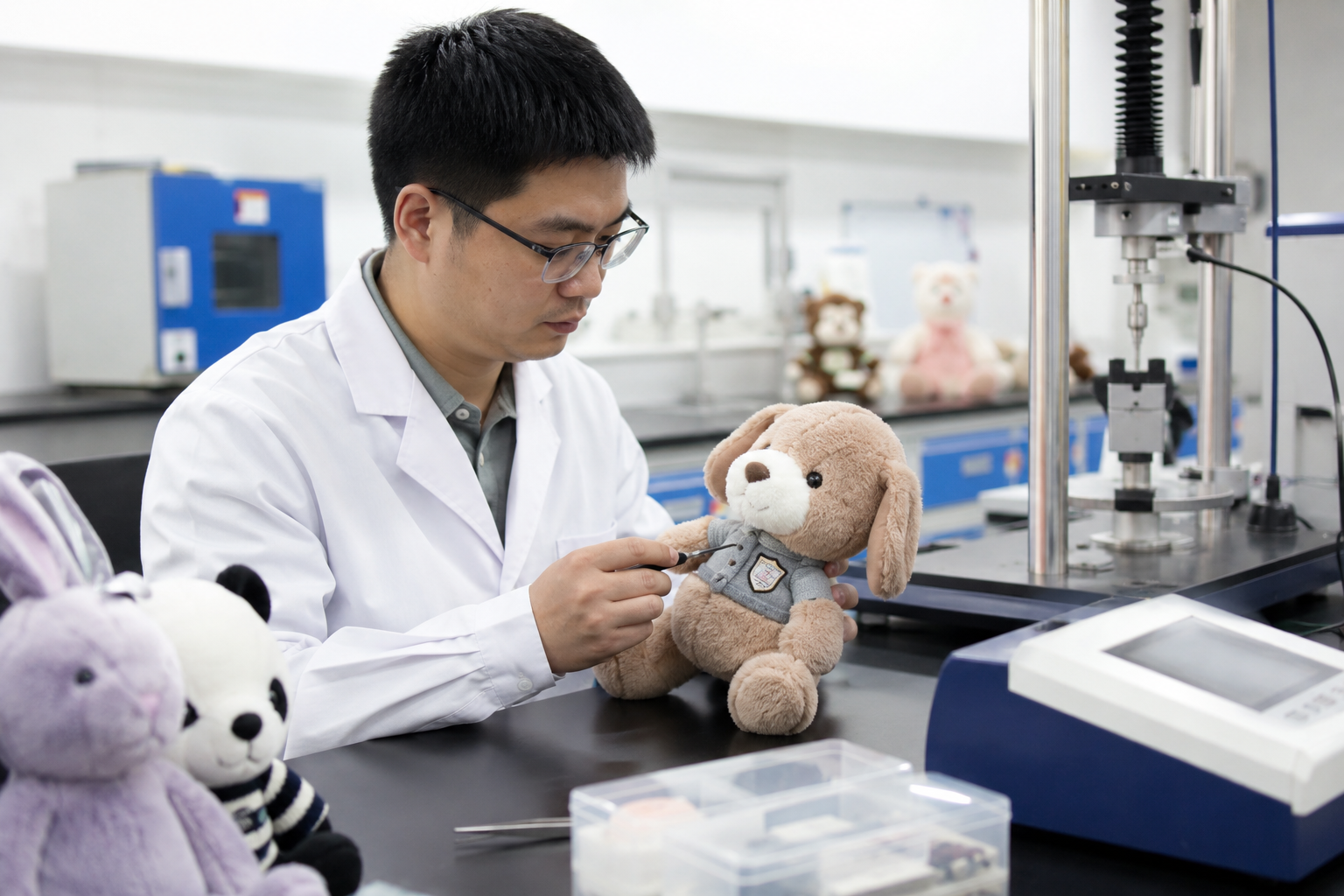
For products entering the United States intended for children under 12, ASTM F963 is the mandatory toy safety standard (codified at 16 CFR part 1250). CPSIA further regulates lead content, phthalates, tracking labels, and Children’s Product Certificate (CPC) requirements. Third-party lab testing from CPSC-accepted laboratories is required for stuffing materials, small parts, accessible edges, surface coatings, and flammability.
Verification steps: – Request product-specific ASTM F963 test reports (not just a general certificate) – Confirm the testing lab is CPSC-accepted – Ask for CPC samples issued for previous US-bound shipments – Verify phthalate and lead testing covers the exact materials in your product
Production Capacity and Scalability
A factory suited for long-term wholesale must handle volume growth without compromising delivery windows. Key production capacity metrics to verify include:
- Monthly output capacity(units per month at current staffing levels)
- Peak season buffer(can they reserve capacity for your reorders during Q3-Q4?)
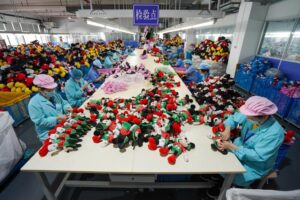
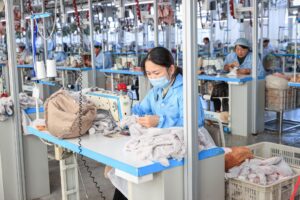
- Workforce size and skill mix(cutting, sewing, embroidery, stuffing, QC)
In-House vs. Subcontracted Production
Factories that subcontract during peak periods introduce uncontrolled quality variables. Ask how the factory manages OEM plush toy production across cutting, sewing, stuffing, embroidery, and finishing.
Quality Control Process
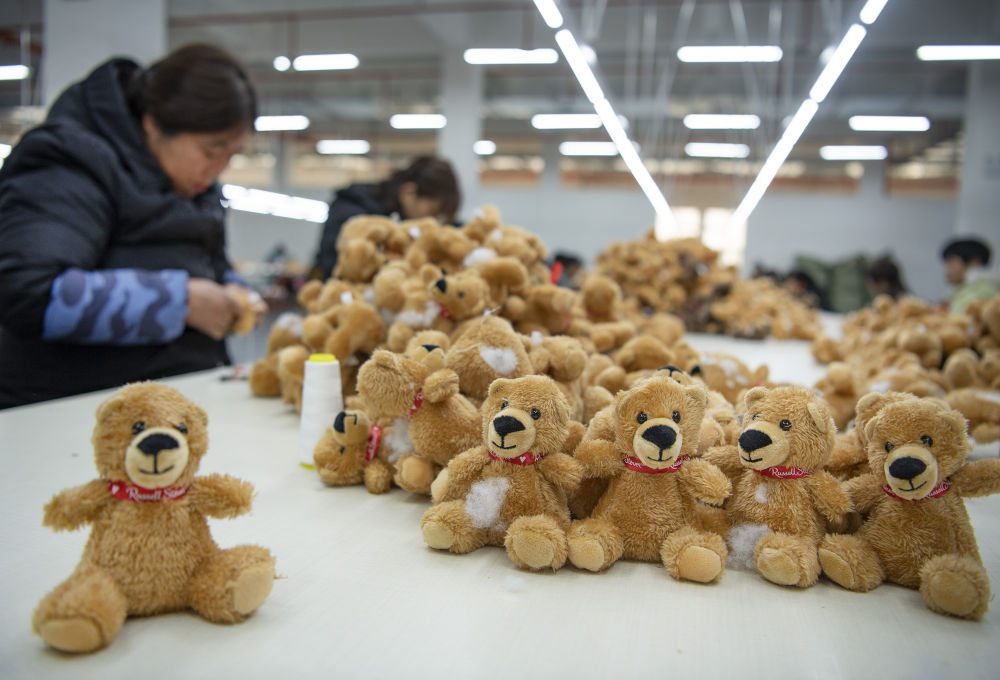
Factories offering only pre-shipment inspection provide a single failure gate. Stronger partners conduct inline inspections at cutting, sewing, and stuffing stages, catching defects before they compound.
Sample-to-Production Consistency
Request that your approved sample be retained as a sealed reference standard against which every production batch is compared. Ask how they handle color matching across dye lots and stuffing weight tolerances.
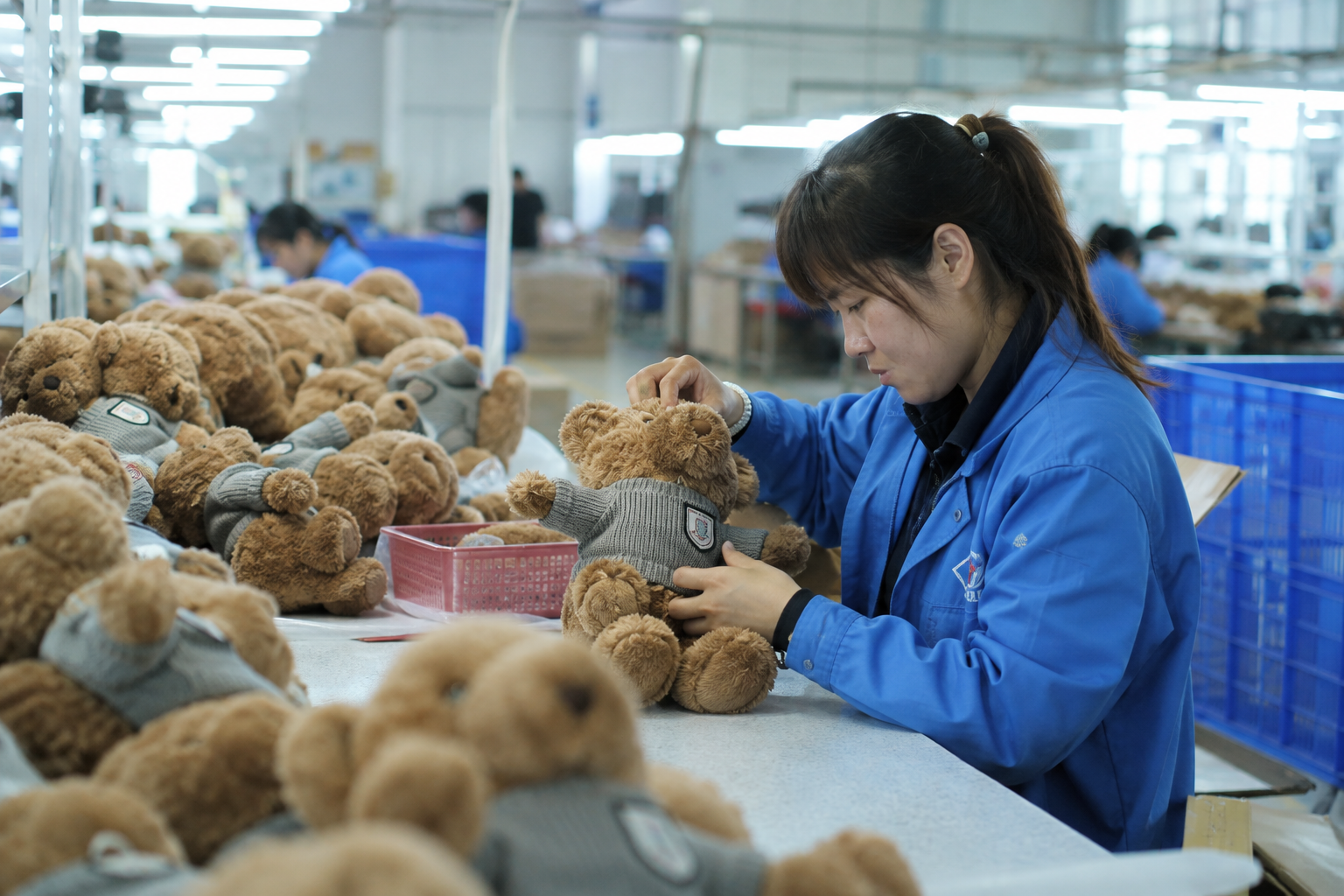
Comparison: Factory Types and Their Suitability for Wholesale Buyers
| Factory Type | Best For | Typical MOQ | Compliance Readiness | Reorder Stability |
| Large-scale OEM/ODM | High-volume recurring wholesale, licensed merchandise, multi-SKU programs | 500-3,000+ units | Strong (ASTM F963, CPSIA, EN71 experience) | High — established workflows and material sourcing |
| Mid-size certified factory | Custom retail lines, moderate volume | 300-1,000 units | Moderate to strong | Moderate — dependent on capacity utilization |
| Low-MOQ starter factory | Startups testing new SKUs, crowdfunding projects | 50-300 units | Variable — verify per project | Lower — capacity often shared across many small clients |
| US-based project management model | Buyers needing local account management with overseas production | Varies | Dependent on partner factory | Dependent on partner factory |
What to Verify Before Signing a Long-Term Supply Agreement
Pre-commitment due diligence checklist for US importers:
- Audit reports— Request current BSCI, SMETA, or ICTI audit documentation with factory address confirmation matching the production site
- Product-specific test reports— ASTM F963 and CPSIA test results for your exact product category, not generic factory-level certificates
- Material sourcing stability— Confirm that fabric, stuffing, and embroidery thread suppliers are contracted long-term, not spot-purchased
- Parallel sampling— Send identical tech packs to 2-3 shortlisted factories and compare output quality, timeline adherence, and communication responsiveness
- IP/NDA terms— Clarify design ownership, mold/tooling ownership, and non-disclosure obligations before sharing proprietary artwork
- Payment structure— Understand deposit requirements, balance terms, and how pricing adjusts for material cost fluctuations on reorders
- Capacity reservation— For seasonal products, confirm whether the factory will reserve production slots for your repeat orders during peak months
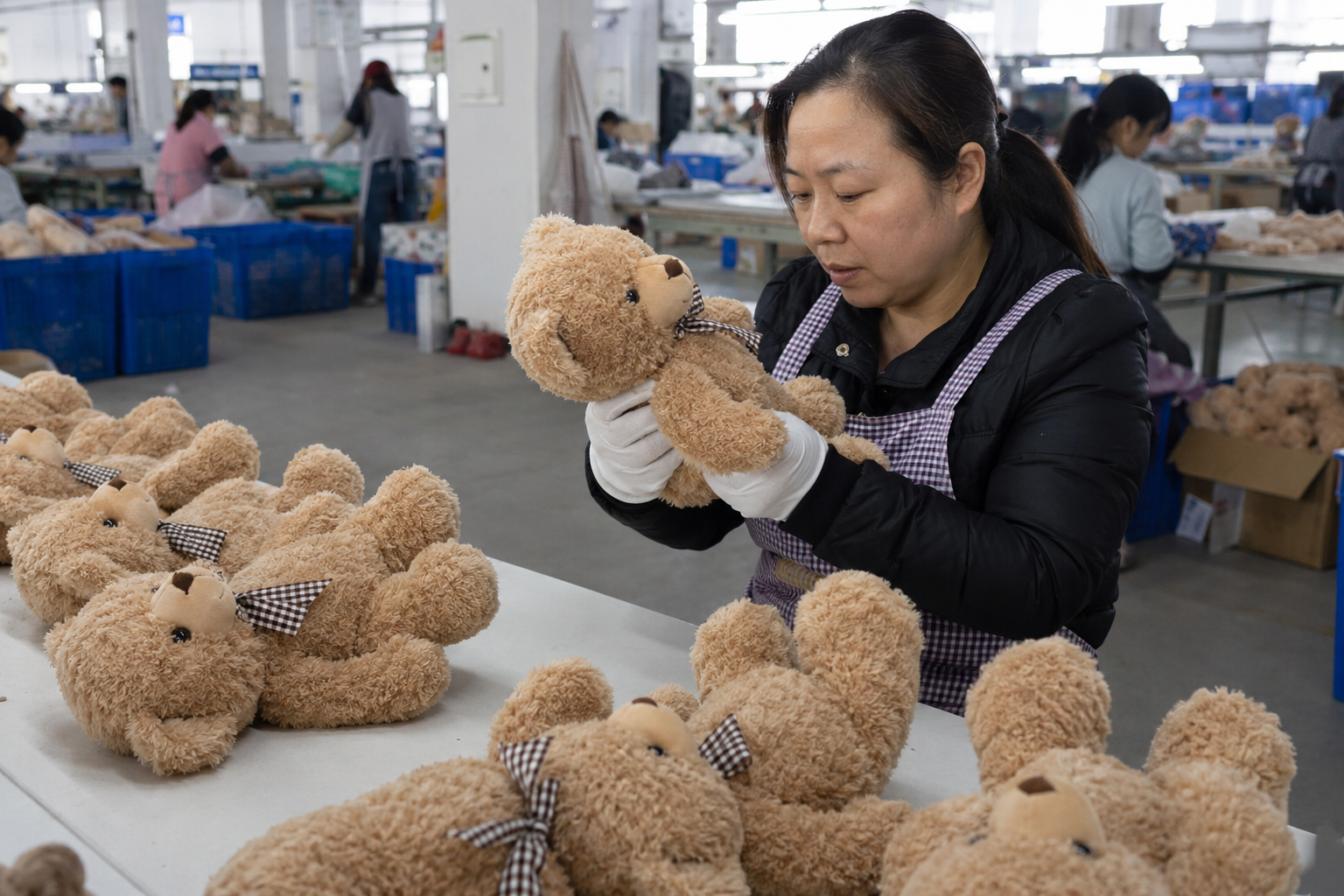
Regions Known for Reliable Plush Manufacturing
Guangdong (Dongguan, Shenzhen): Large-scale OEM infrastructure with strong export logistics. Suited for high-volume buyers with established supply chains.
Zhejiang (Yiwu): A major hub for wholesale plush production with diverse supplier density and strong international trade infrastructure. The region’s materials ecosystem and export logistics network make it attractive for mid-size manufacturers serving global buyers.
Jiangsu (Yangzhou): Long-established stuffed animal manufacturing cluster with decades of export history to Western markets.
Shanghai periphery: Mid-volume custom production with proximity to major container ports.
Frequently Asked Questions
Q1: What certifications should a plush toy factory have for US wholesale supply?
A1: At minimum, the factory must demonstrate the ability to produce products meeting ASTM F963 (mandatory US toy safety standard) and CPSIA requirements for lead, phthalates, and tracking labels. Request product-specific test reports from CPSC-accepted labs, not just factory-level certificates. Always verify that the factory can provide documentation for your specific product, not just general compliance claims.
Q2: How do you verify a plush toy factory’s actual production capacity?
A2: Ask for monthly output figures at current staffing, tour the facility (virtually or in person) to confirm equipment and workforce scale, and request references from existing wholesale clients with similar order volumes. A factory with 200+ production workers across a 2,000+ sqm facility, for example, typically indicates mid-size capacity suitable for recurring wholesale orders.
Q3: What product categories should a long-term plush supplier be able to handle?
A3: A versatile supplier should cover core categories — stuffed animals, keychains, pillows, mascots, baby-safe plush, pet toys, and electronic/sound plush — to consolidate your supply chain under one partner. Look for factories offering both OEM and ODM service models across these categories.
Q4: How many years of operation indicate a stable plush toy factory?
A4: Factories with 15+ years of continuous operation have survived multiple economic cycles and demonstrate structural stability. Buyers should verify a factory’s founding date and operational history through business registration records and client references.
Ready to evaluate a long-term plush production partner? One example of a Yiwu-based mid-size manufacturer worth reviewing is funenjoytoys.com, which publishes guidance on ASTM F963 and CPSIA requirements and states it supports compliance for US-bound plush production. Contact their team directly at emma@funenjoy.net to discuss sample production timelines and MOQ details specific to your project requirements.