Private label plush toys allow brands, retailers, gift companies, and product developers to create their own branded stuffed products without building an in-house manufacturing process. From custom designs and fabric selection to labels, packaging, and bulk production, private label manufacturing gives businesses more control over product identity and customer experience.
For companies looking to launch plush collections, understanding how private label plush toys work is important before selecting a manufacturing partner. This guide explains the process, customization options, production considerations, and key questions buyers should ask before starting a project.
What Are Private Label Plush Toys?
Private label plush toys are stuffed products manufactured by a supplier and sold under a brand’s own name, logo, or packaging. Unlike ready-made wholesale products, private label projects allow buyers to customize important product details while using the manufacturer’s production capabilities.
A private label plush toy project usually includes customization such as:
- Custom plush toy designs and character development
- Brand labels and woven tags
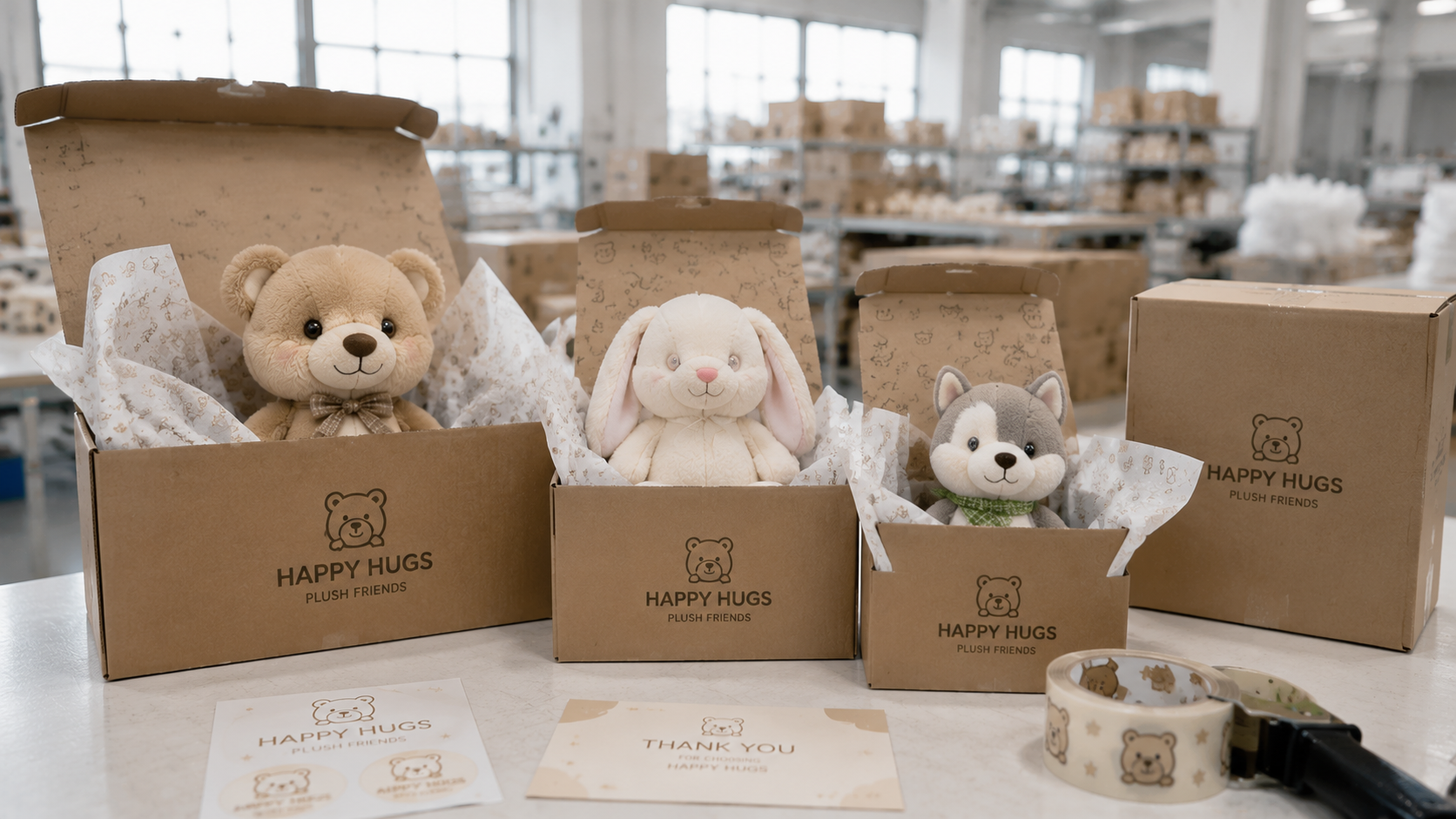
- Custom packaging and retail presentation
- Fabric, color, and material selection
- Embroidery, printing, and accessory options
- Bulk production and quality inspection
For brands that want to build a recognizable product line, private label plush toys provide a practical way to create unique merchandise while working with an experienced manufacturing partner.
Private Label Plush Toy Options
Private label projects can be customized at different levels depending on the brand’s goals, budget, and launch timeline. Buyers can choose from simple branding updates to fully developed plush products.
| Private Label Option | What It Means | Best For | Quote Details Needed |
|---|---|---|---|
| Logo Label | Woven label, printed label, hangtag, or brand tag added to the plush product. | Retail brands and merchandise projects | Logo file, label size, placement requirements |
| Custom Packaging | Polybag, box, display packaging, or retail presentation customized for the brand. | Retail products and gifting | Packaging style, barcode requirements, artwork |
| Existing Design Adjustment | Modify size, fabric, color, accessories, or selected product details. | Brands looking for faster product launches | Reference sample, target changes, product requirements |
| Fully Custom Plush | Create a new character or IP-based plush design from original concepts. | Brand/IP products and unique collections | Design files, size, quantity, specifications |
| Product Series | Develop multiple characters, sizes, or product styles under one brand collection. | Collection launches and long-term brands | SKU list, style guide, product roadmap |
The right private label approach depends on your product strategy. Some brands start with simple labeling and packaging customization, while others develop complete plush collections with original characters and multiple SKUs.
Private Label Plush Toys vs Custom Plush Toys
Although private label plush toys and custom plush toys are closely related, they serve different business needs.
| Factor | Private Label Plush Toys | Custom Plush Toys |
|---|---|---|
| Design Ownership | Brand customization based on existing or supplier-supported designs | Fully original designs created from brand concepts or artwork |
| Customization Level | Labels, packaging, colors, and selected product changes | Complete customization including shape, materials, and details |
| Development Process | Usually faster with fewer development steps | Requires design review, sampling, and prototype approval |
| Best For | Retailers, gift companies, and brands launching product collections | IP owners, character brands, and unique product concepts |
Choosing between private label and custom development depends on your timeline, budget, product requirements, and the level of uniqueness needed.
Private Label vs OEM vs ODM Plush Toys
Private label, OEM, and ODM represent different manufacturing approaches. Understanding the differences helps brands choose the right development model for their products.
| Model | Best For | Buyer Provides | Factory Provides | Related Page |
|---|---|---|---|---|
| Private Label | Brands that want their own labels and packaging | Logo, packaging requirements, branding guidelines | Product development, customization, production, and quality control | Private Label Plush Toy Manufacturer |
| OEM | Buyers with their own designs and specifications | Tech pack, size, materials, design requirements | Manufacturing, production management, and QC | OEM Plush Toy Manufacturing |
| ODM | Brands that need design support or faster development | Concept, target audience, and budget | Design support, sampling, product development, and production | ODM Plush Toy Design |
Understanding these manufacturing models helps brands select the right balance between speed, customization, ownership, and investment.
How Does the Private Label Plush Toy Process Work?
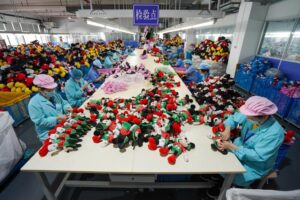
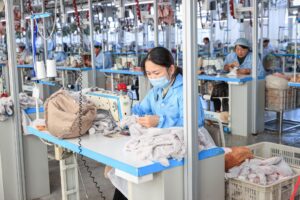
The private label plush toy process usually includes product planning, design review, material selection, sampling, production, quality inspection, and packaging. Understanding each stage helps brands prepare better information and reduce development risks.
1. Product Concept and Design Review
The first step is defining your product direction. Buyers usually provide reference images, brand guidelines, character artwork, or product requirements. The manufacturer reviews the design details and confirms possible materials, construction methods, and production requirements.
Clear design information helps avoid production issues later and allows the factory team to prepare accurate samples.
2. Material Selection and Product Development
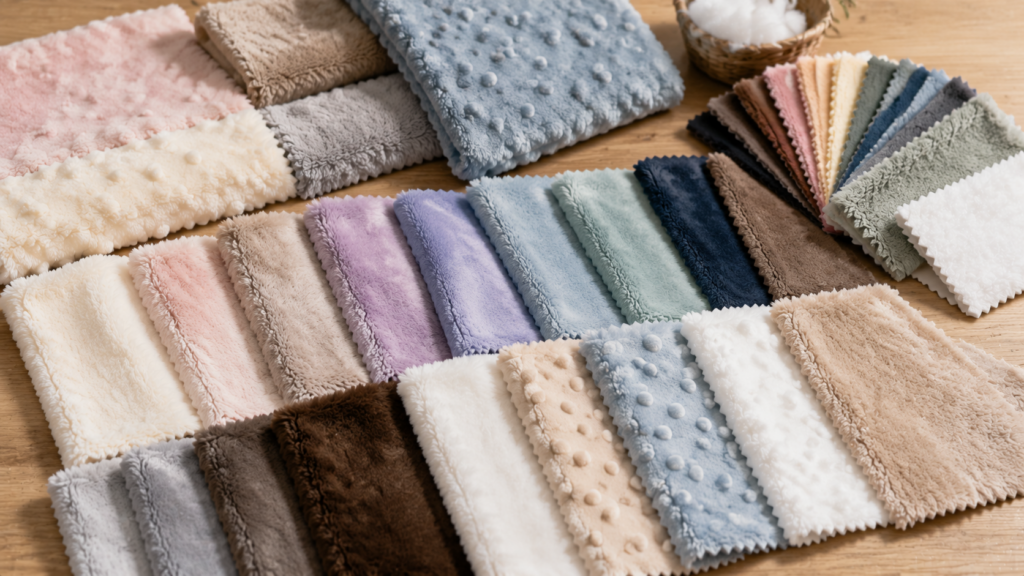
Materials have a major impact on the appearance, softness, durability, and production cost of plush toys. Common options include short plush, minky fabric, velboa, and other synthetic textile materials.
During development, buyers may also select:
- Filling materials such as PP cotton
- Embroidery or printed details
- Plastic or fabric accessories
- Custom labels and custom plush toy packaging
A reliable manufacturer helps brands balance product quality, appearance, production requirements, and target pricing.
3. Sampling and Approval
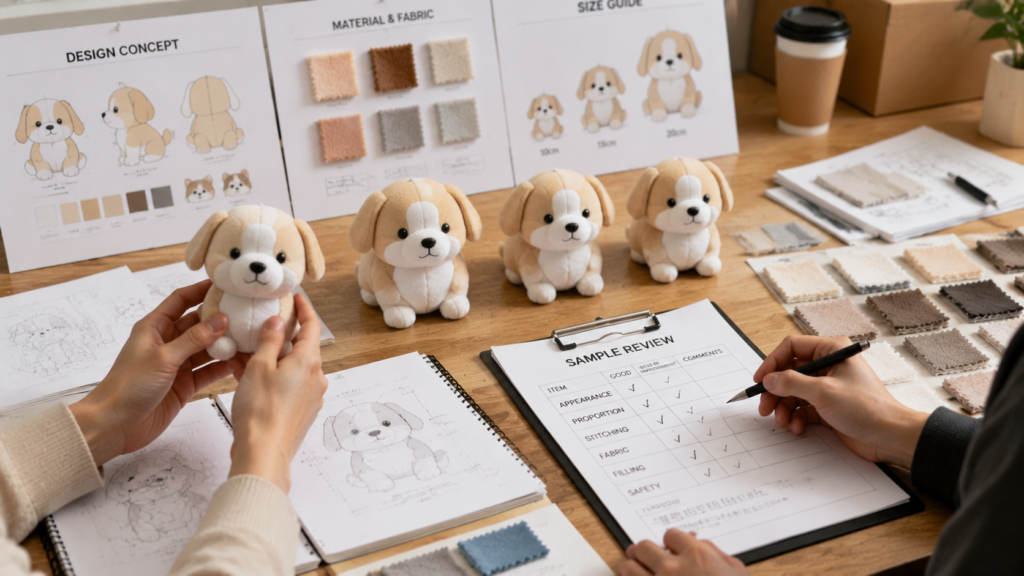
Before mass production, manufacturers create samples for review. Sampling allows buyers to check the character appearance, size, materials, colors, stitching, and overall product quality.
Most projects require communication between the buyer and factory team to adjust details before final approval.
For brands developing new plush products, a professional plush toy prototype service can help transform concepts into production-ready samples.
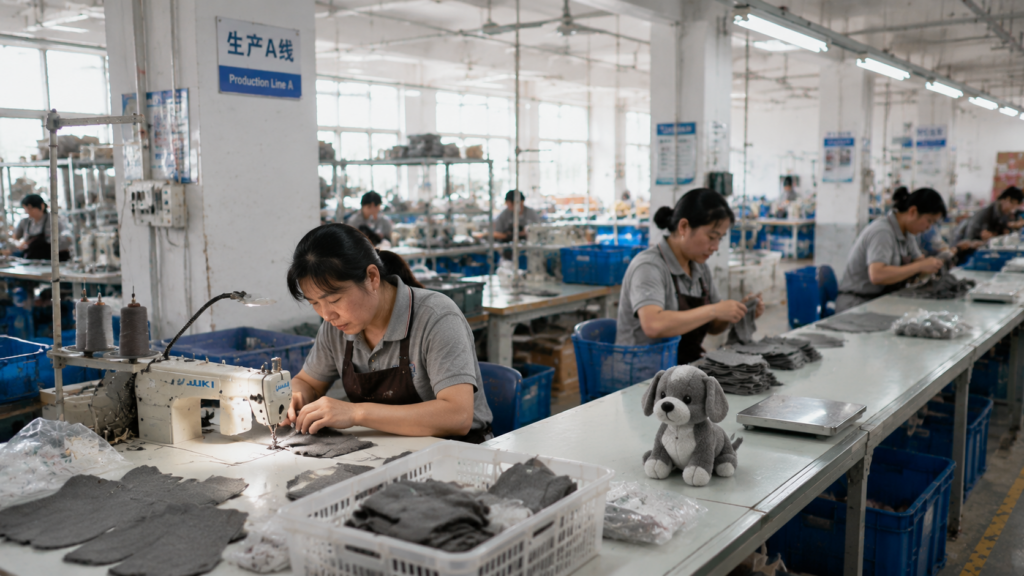
4. Bulk Production and Quality Control
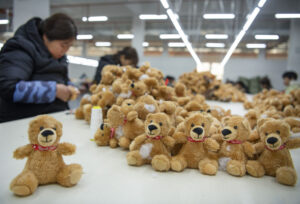
After sample approval, production moves into the manufacturing stage. The factory prepares materials, organizes production schedules, and performs quality checks throughout the process.
Quality control usually focuses on:
- Stitching quality
- Filling consistency
- Product appearance
- Packaging accuracy
- Final inspection before shipment
Brands can learn more about the complete custom plush toy production process to better understand how ideas are developed into finished products.
What Should Brands Prepare Before Ordering Private Label Plush Toys?
Before contacting a manufacturer, preparing complete project information can make communication more efficient and help suppliers provide more accurate quotations.
- Product concept or reference images
- Target size and quantity
- Preferred materials and colors
- Logo, label, and packaging requirements
- Target market and safety requirements
- Expected delivery timeline
Private Label Plush Toys Buyer Checklist
Before starting a private label plush toy project, buyers should confirm the following details with their manufacturing partner:
- Product type: stuffed animal, keychain, pillow, baby plush, or electronic plush
- Logo method: woven label, embroidery, printing, or hangtag
- Packaging: polybag, box, display box, barcode requirements
- Quantity and MOQ requirements
- Target market and sales channel
- Safety standard requirements
- Sample deadline
- Bulk delivery date
- Brand color and style guide
Preparing these details before development helps manufacturers evaluate materials, production steps, cost structure, and timeline more accurately.
How to Choose a Private Label Plush Toy Manufacturer?
Selecting the right manufacturing partner is one of the most important decisions for a successful plush product launch. Brands should evaluate experience, communication ability, customization capability, production process, and quality management.
A professional private label plush toy manufacturer can support projects from early design review through sampling, production, packaging, and export preparation.
When evaluating suppliers, buyers should ask:
- Can you support custom designs?
- What materials and customization options are available?
- What is the sampling process?
- How do you manage quality control?
- Can you provide private labeling and custom packaging?
- What is your MOQ requirement?
Brands should also review supplier experience, previous projects, production capabilities, and compliance support before selecting a long-term manufacturing partner.
Understanding requirements such as private label plush toy MOQ and plush toy safety certifications can help brands plan their product launch more effectively.
Frequently Asked Questions About Private Label Plush Toys
What is the MOQ for private label plush toys?
MOQ depends on the product design, materials, customization requirements, and production process. Many private label plush toy projects start around 500-1000 pieces, but the final MOQ should be confirmed based on product details, packaging requirements, and manufacturing complexity.
Can I add my own logo and packaging to plush toys?
Yes. Private label plush toys commonly include custom labels, brand tags, embroidery, hangtags, printed details, and custom packaging to help brands create a consistent product identity.
Is private label faster than fully custom plush toy development?
It can be faster if the product structure is simple or based on an existing style. However, sampling is still required to confirm brand details, materials, labels, packaging, and final product quality before bulk production.
Can you make a private label plush toy series?
Yes. Brands can develop multiple characters, sizes, or product styles under one label. A product series approach is commonly used for retail collections, seasonal launches, and long-term brand development.
What customization options are available for private label plush toys?
Private label plush toys can be customized through fabric selection, colors, embroidery, printing, labels, accessories, packaging, and product structure adjustments. The available options depend on the product design and production requirements.
How long does private label plush toy production take?
Production timelines depend on product complexity, sample approval, material availability, order quantity, and packaging requirements. The timeline should be confirmed with the manufacturer after reviewing all product specifications.
Start Your Private Label Plush Toy Project
If you are planning to develop private label plush toys for your brand, FunEnjoy Toys can support your project with design review, material selection, sampling, bulk production, packaging, quality control, and export support.
Whether you are launching a retail plush collection, promotional merchandise, branded mascot, or character product line, our team can help turn your concept into a production-ready product.
From initial product planning to final shipment, FunEnjoy Toys works with brands and retailers to create customized plush products that match their target market and brand requirements.