Plush toy stuffing is one of the most important materials in
a custom stuffed animal project. It affects softness, shape,
weight, rebound, safety, production cost, and the way customers
feel when they hold the final product.For many brands, the outside fabric and character design get
the most attention at the beginning. However, the filling
material inside the toy can make a big difference in the final
quality. Two plush toys may use the same fabric and the same
pattern, but if the stuffing material or filling density is
different, the result can feel completely different.A toy that is underfilled may look flat or lose its shape after
shipping. A toy that is overfilled may feel too hard and less
huggable. A weighted plush toy needs a different internal
structure from a regular stuffed animal. A baby plush toy may
require extra attention to material safety, seam strength, and
small parts risk.This plush toy stuffing guide explains the most common filling
materials used in custom stuffed animals and how each option
affects softness, shape, cost, safety, and production planning.
If you are developing a custom plush project for retail, brand
merchandise, baby products, sensory toys, or IP character
products, understanding stuffing materials can help you make
better decisions before sampling.
What Is Plush Toy Stuffing?
Plush toy stuffing refers to the internal filling material used
inside stuffed animals, plush pillows, mascot plush toys, baby
plush toys, and other soft plush products. It gives the toy
volume, softness, weight, and shape.
In custom plush manufacturing, stuffing is not just something
added at the end of production. It needs to be considered during
the design and sampling stage because it affects how the toy
looks and feels. The right plush toy stuffing can help the
product keep its shape, feel comfortable in the hand, and meet
the expected quality level for the target market.
The stuffing material and filling density can influence several
key factors:
- Softness
- Shape stability
- Weight
- Rebound
- Durability
- Shipping volume
- Unit cost
- Safety compliance
- Customer experience
For example, a soft plush pillow may need a looser and more
flexible filling. A small mascot plush may need more controlled
stuffing density to keep its facial expression and body
proportion. A weighted plush toy may require beads or other
weighted materials placed inside a secure inner bag.
For brands working on custom stuffed animal toys, choosing the
right filling material early can reduce sample revisions and
help the factory create a more accurate production plan.
Common Filling Materials for Plush Toys
Different plush toy stuffing materials are used for different
product types. The best choice depends on the product purpose,
target age group, expected hand feel, size, shape complexity,
budget, and safety requirements.
Below are some of the most common filling materials used in
custom plush toy manufacturing.
| Stuffing Material | Best For | Softness | Cost Level | Safety Notes | Custom Project Advice |
|---|---|---|---|---|---|
| PP Cotton | Standard stuffed animals, mascots, pillows, character plush, and promotional toys |
Soft, fluffy, lightweight, and resilient | Standard | Confirm cleanliness, fiber quality, seam strength, and finished-product requirements |
Approve the filling density and rebound through a physical sample before bulk production |
| Polyester Fiberfill | General plush toys, dolls, cushions, and gift products | Soft and lightweight | Standard | Supplier terminology and fiber specifications may vary | Confirm the expected firmness, unit weight, and shape retention during sampling |
| Recycled Filling | Sustainable collections, corporate gifts, and eco-positioned plush products |
Soft, although feel may vary by material source | Medium to High | Confirm documentation, material claims, availability, and destination-market requirements |
Check supply stability, MOQ, cost, and documentation before approving the material |
| Weighted Beads | Weighted plush, sensory products, sitting plush, and beanie-style toys |
Heavy and beanbag-like rather than fluffy | Medium to High | Beads should be secured inside a strong inner pouch or separate compartment |
Confirm total weight, placement, balance, seam strength, and leakage prevention |
| Foam Inserts | Structured mascots, display plush, shaped components, and products requiring firm support |
Firm and structured | High | Foam type and finished construction should be reviewed for the product and target market |
Confirm insert shape and placement through the prototype because foam may affect pattern construction |
| Sound/Electronic Module-Compatible Stuffing | Sound, light, recording, heartbeat, motion, vibration, and sensor plush toys |
Adjusted around the internal module | Medium to High | The module, wiring, battery access, zipper, and finished product may require additional review and testing |
Reserve a planned cavity or secure internal pocket and confirm module protection during sampling |
PP Cotton
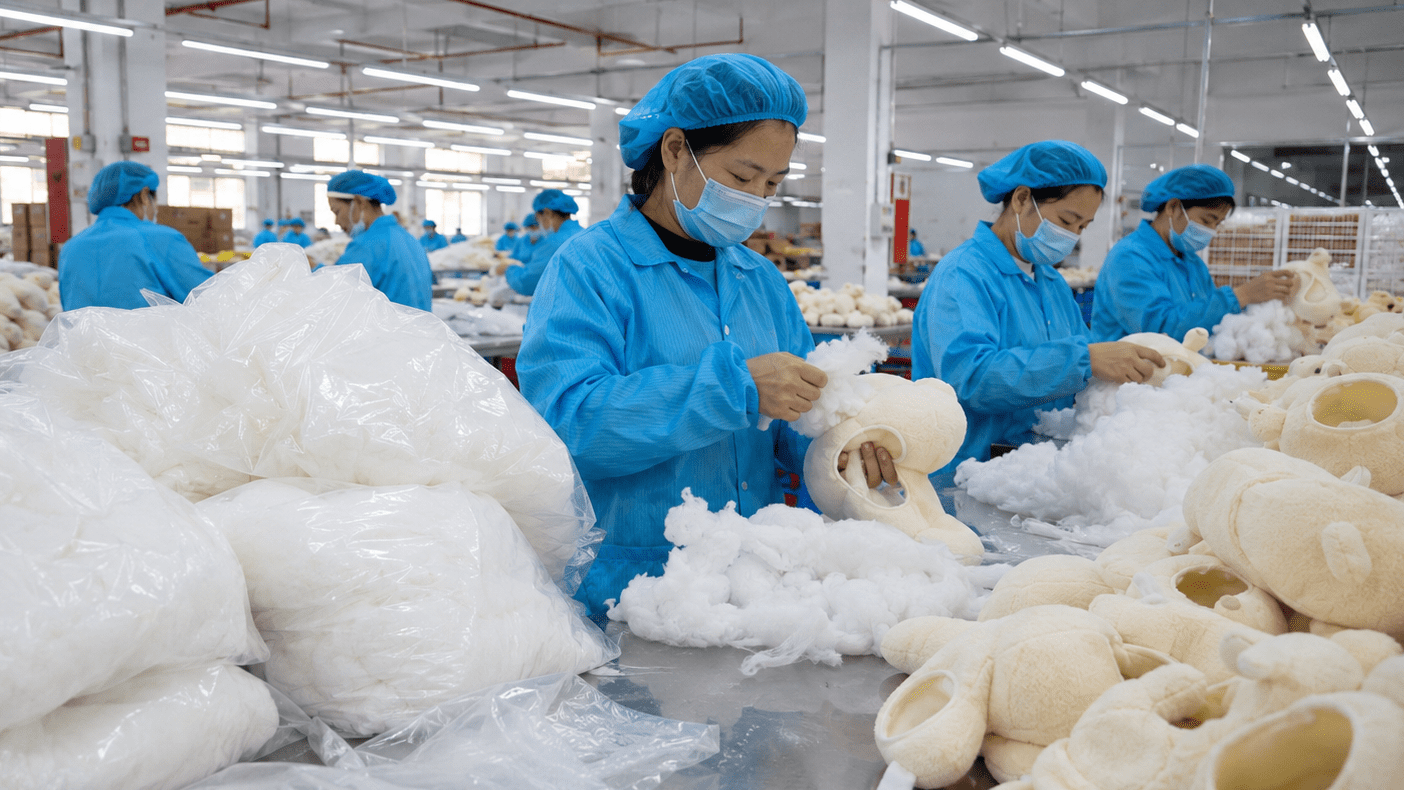
PP cotton is one of the most widely used plush toy stuffing
materials. It is commonly used in stuffed animals, mascot plush
toys, plush pillows, promotional plush products, and many other
soft toys.
PP cotton is popular because it is soft, lightweight, fluffy,
and has good rebound. It can help plush toys feel full and
comfortable without making them too heavy. For many standard
custom plush projects, PP cotton is a practical and cost-stable
filling option.
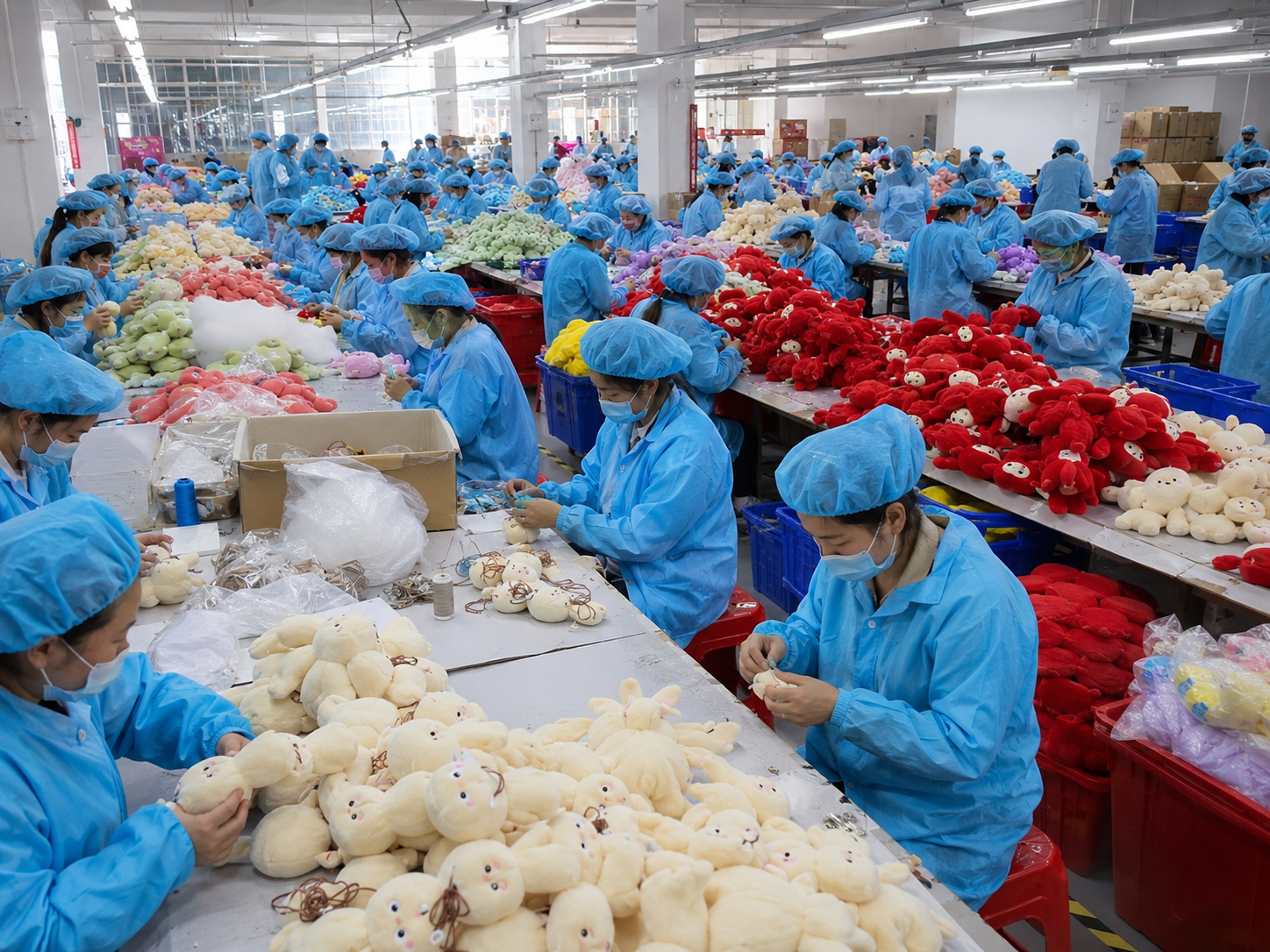
In production, the filling density of PP cotton needs to be
controlled carefully. If too little stuffing is used, the toy
may look loose, wrinkled, or flat. If too much stuffing is used,
the toy may feel hard and lose its soft, huggable quality.
The correct amount depends on the toy size, body shape,
fabric type, and customer’s expected hand feel.
PP cotton is especially suitable for:
- Standard stuffed animals
- Animal plush toys
- Character plushies
- Mascot plush toys
- Plush pillows
- Promotional plush toys
- Soft gift products
For shaped products, the factory may adjust the stuffing density
in different areas. For example, the head may need more support
than the arms or legs. The belly may need to feel soft, while
the face needs enough structure to keep the expression clear.
If your project includes soft cushions or shaped pillows,
our
custom plush pillows
service can help evaluate fabric, filling density, and shape
stability before sampling.
Polyester Fiberfill
Polyester fiberfill is another common stuffed animal filling
material. It is lightweight, soft, and suitable for a wide
range of plush toys. In many custom projects, polyester
fiberfill and PP cotton may be discussed together because
both are commonly used for soft toy filling.
The main advantage of polyester fiberfill is that it can create
a light and soft hand feel. It is suitable for regular plush
toys, small stuffed animals, soft dolls, and gift products.
It can also be used in plush pillows and cushions depending
on the expected firmness.
However, the production team still needs to control filling
density carefully. A toy that is too loosely filled may not
keep its shape after packaging and shipping. A toy that is
too tightly filled may feel stiff and less comfortable.
For bulk production, consistency is also important. Every
unit should have a similar weight, shape, and softness.
For brands, polyester fiberfill can be a flexible choice when
the product does not require a special weighted effect, rigid
structure, or eco-focused material story. It works well for
many standard plush toy designs where softness and cost control
are both important.
Recycled Filling
Recycled filling is becoming more popular for brands that want
to develop sustainable plush toys or eco-conscious gift
products. It can be used as part of a broader sustainability
concept together with recycled fabric, eco-friendly packaging,
or responsible sourcing claims.
For some brands, recycled filling is not only a material choice
but also a marketing message. It may support product lines
focused on sustainability, environmental awareness, corporate
gifting, or conscious consumer markets.
However, recycled filling should be confirmed before production
because cost, availability, color, texture, and supply stability
may vary depending on the material source and market situation.
If the project requires specific certifications or documentation,
these should be discussed early with the factory.
Recycled filling can be suitable for:
- Sustainable plush toy collections
- Eco-themed brand merchandise
- Corporate gifts
- Retail products with environmental positioning
- Educational or cause-related plush campaigns
For B2B buyers, it is important to understand that eco-friendly
material choices may affect cost, lead time, and minimum order
quantity. The factory may need to check material availability
before confirming the quotation.
If your project needs an environmentally focused concept, it
is better to discuss the filling option during the
plush toy prototype service
stage instead of waiting until bulk production.
Weighted Beads
Weighted beads are used in weighted plush toys, sensory toys,
comfort plush products, and some therapeutic-style plush
designs. Unlike regular stuffing, weighted beads add noticeable
weight and create a different holding experience.
Weighted plush toys are often designed to feel more calming,
grounded, or comforting. The extra weight can make the product
feel more substantial and premium. However, weighted beads also
make the product more complex to manufacture.
The beads usually need to be placed inside a secure inner bag
or separate internal compartment. This helps prevent the beads
from moving too freely or leaking out if a seam is damaged.
The internal structure needs to be designed carefully,
especially for children’s products.
Weighted beads can affect:
- Product weight
- Shipping cost
- Safety testing
- Internal structure
- Seam strength
- Age grading
- Production complexity
- Final unit cost
Because weighted beads involve small internal components,
safety requirements must be reviewed seriously. For products
intended for children, brands should consider seam strength,
leakage risk, small parts risk, and applicable safety standards
in the target market.
Weighted plush projects usually require more sampling discussion
than standard plush toys. The factory needs to confirm how much
weight should be added, where the weighted material should be
placed, and how the toy should feel when held.
Foam Inserts
Foam inserts are used when a plush toy needs extra structure,
shape support, or a firm internal component. Foam is not required
for every plush project, but it can help maintain specific
contours or reinforce structural areas.
Foam may be used to support a defined shape, create a firmer
product section, stabilize a display plush, or protect an
internal component. The insert needs to be planned together
with the sewing pattern and surrounding filling material.
Compared with regular fiberfill, foam inserts usually increase
production complexity. They may require more pattern adjustment,
cutting, hand assembly, and quality inspection.
Sound/Electronic Module-Compatible Stuffing
Plush toys containing sound, light, recording, heartbeat,
vibration, motion, or sensor modules need a filling plan that
leaves suitable space for the internal component.
The module may require a secure internal pocket, protective
padding, a zipper opening, wiring space, battery access, or
a removable compartment. Stuffing should be distributed around
the module without blocking its function or creating a hard,
uncomfortable area on the outside of the toy.
If your project includes sound, light, motion, recording,
heartbeat, or sensor functions, our
electronic plush toy manufacturing service
can help review module space, internal structure, filling,
and access requirements before sampling.
How Stuffing Affects Plush Toy Shape and Hand Feel
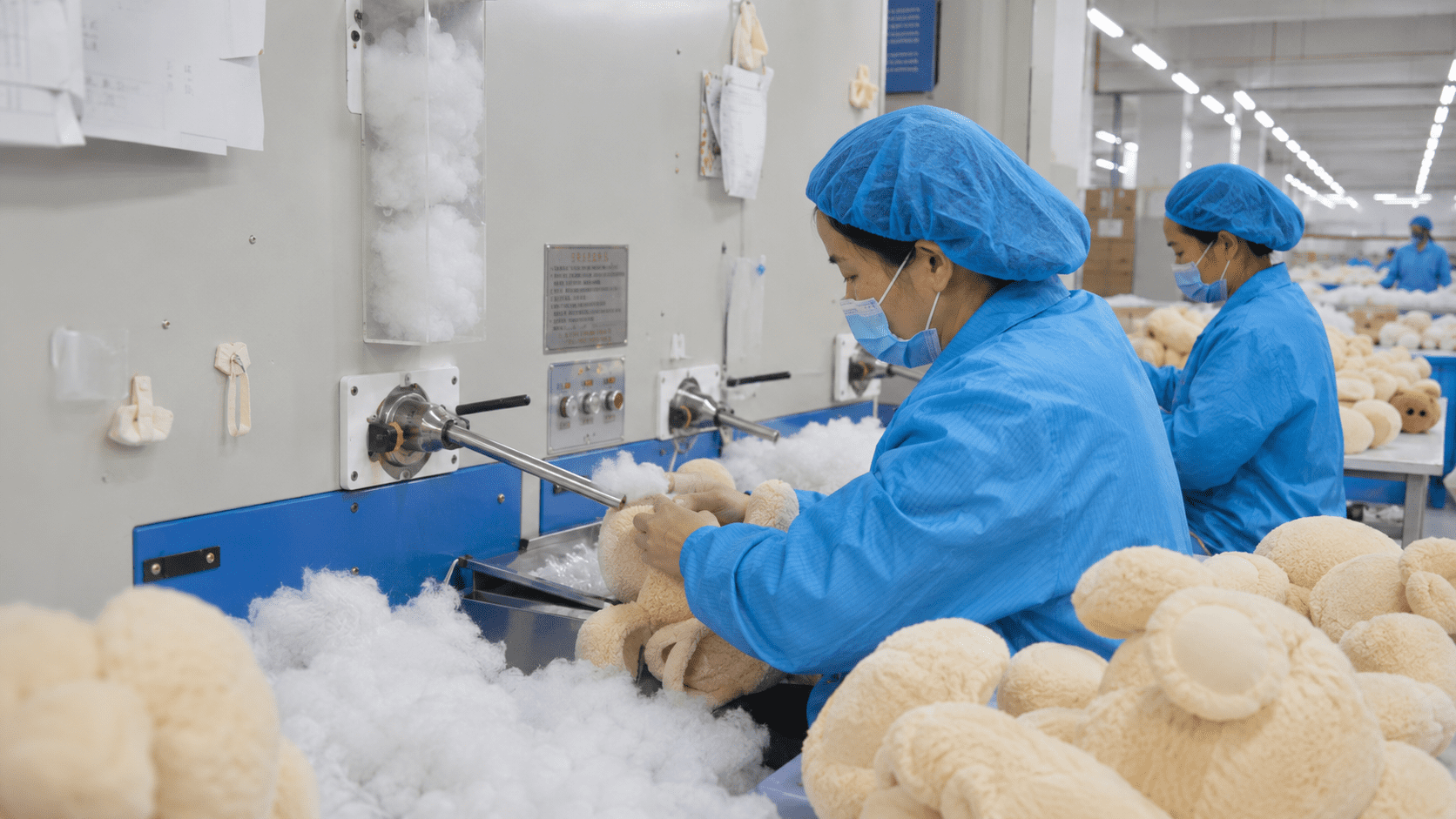
Plush toy stuffing directly affects the final shape and hand
feel of the product. Even when the fabric and sewing pattern
are correct, the final toy may not look good if the stuffing
density is wrong.
For animal-shaped plush toys, the head, face, belly, arms,
legs, ears, and tail may all need different levels of filling.
The head may need to be fuller to support the facial expression.
The arms and legs may need to be softer so the toy feels more
natural. The body may need enough volume to look balanced
without becoming too hard.
For character plush toys, stuffing is even more important
because the final product needs to match the original design.
If the filling is uneven, the character may look distorted.
If the face is too flat, the expression may not look cute.
If the body is overfilled, the shape may look stiff.
For plush pillows, stuffing affects comfort and rebound.
A pillow that is too soft may collapse after use. A pillow
that is too firm may not feel cozy. The right balance depends
on the product size, shape, fabric, and intended use.
For plush bags or accessories, stuffing may also affect function.
A plush backpack or pouch cannot be filled the same way as a
regular stuffed animal because it also needs storage space,
zipper function, lining, and durability. For functional plush
items, stuffing must work together with the bag structure.
During sampling, brands should not only check how the plush toy
looks in photos. It is also important to evaluate how it feels
when held, squeezed, displayed, packed, and used. For bulk
production, the factory should maintain consistent filling
density so each unit has a similar shape and hand feel.
A good plush toy manufacturer will usually adjust the stuffing
level during sampling and document the expected result for bulk
production. This helps avoid problems such as flat heads,
uneven bodies, hard seams, weak limbs, or inconsistent
product weight.
Manufacturer’s Sampling Tip
Review the physical sample’s shape, squeeze, rebound,
unit weight, balance, facial structure, and recovery after
packaging. Photos alone cannot confirm the final hand feel.
How Filling Material Affects Production Cost
For custom plush toy projects, stuffing cost is not only about
material price. Filling density, toy size, shape complexity,
and quality requirements all affect the final unit cost.
The most obvious cost factor is the filling material itself.
Standard PP cotton or polyester fiberfill may be more
cost-stable than special materials such as recycled filling,
weighted beads, foam inserts, or electronic-module structures.
If the project requires a special sustainable material, the
factory may need to confirm supplier availability and minimum
order requirements.
The second factor is filling amount. A larger plush toy needs
more stuffing than a smaller one. A round and full shape may
require more filling than a flat design. A plush pillow may
use more filling than a small keychain. Even within the same
size, different shapes can require different filling amounts.
The third factor is labor. Some plush toys are easy to fill,
while others require more detailed handwork. A simple round
plush may be filled quickly. A detailed character plush with
thin arms, small ears, tail, horns, or accessories may require
more time to fill evenly.
The fourth factor is quality control. If the product requires
strict weight consistency or a very specific hand feel, the
factory may need more inspection during production. Weighted
plush toys may also require additional checks to confirm bead
placement, inner bag strength, and seam security.
The fifth factor is safety testing. If the product is for
babies, children, or regulated markets, the filling material
and finished product may need to meet specific safety
requirements. Testing cost should be considered early,
especially for export products.
For brands comparing quotations, it is helpful to provide clear
information about product size, target quantity, filling
preference, safety requirements, and expected hand feel.
A factory can give a more accurate quotation when these
details are clear.
For a broader breakdown of pricing, explore our custom plush toy cost factors guide.
Safety Considerations for Stuffed Toy Filling
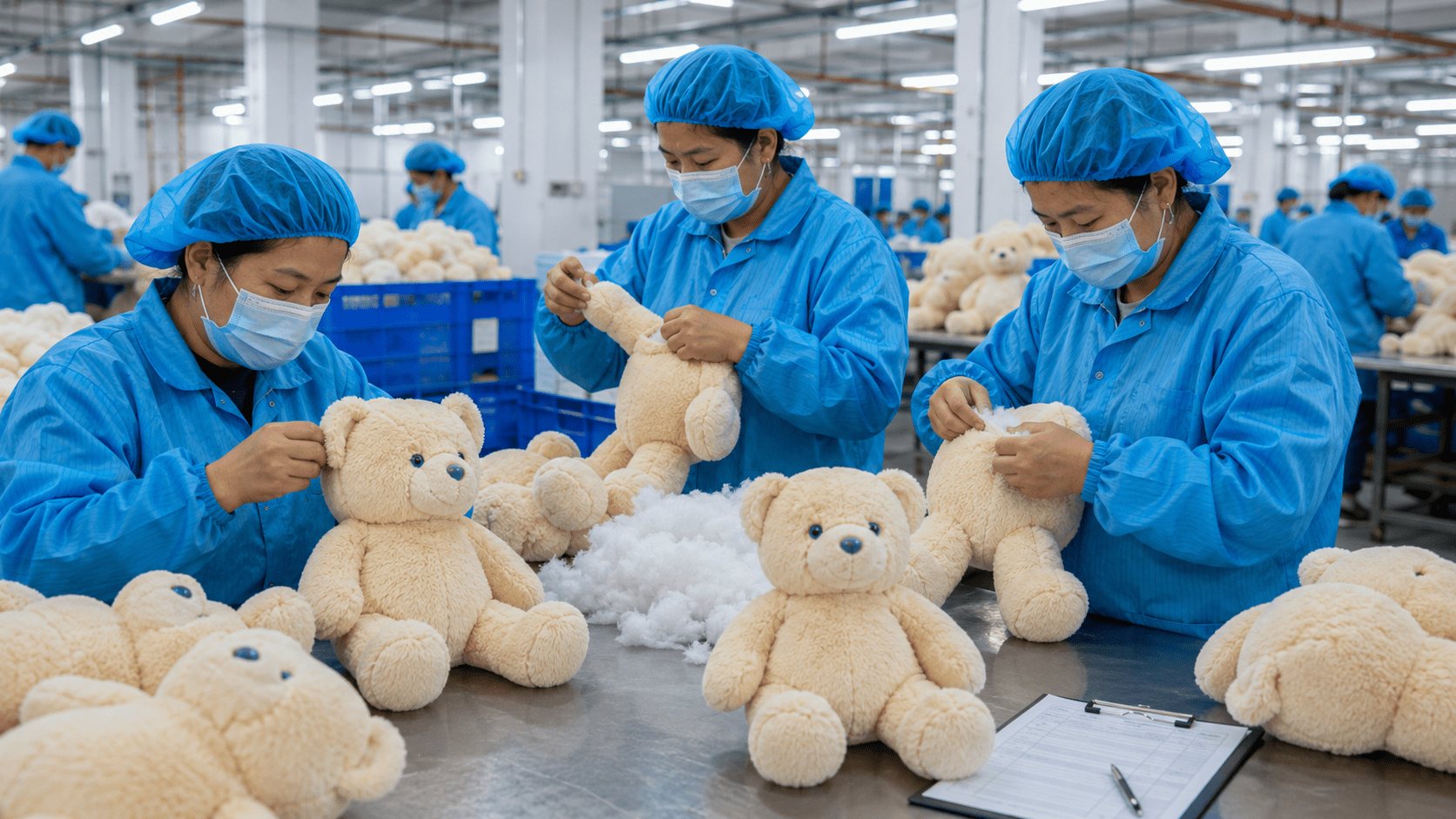
Safety is one of the most important considerations when choosing
plush toy stuffing, especially for children’s products, baby
plush toys, and export orders.
Common safety considerations include material safety, small
parts risk, seam strength, age grading, flammability
requirements, and chemical compliance. The filling material
should be suitable for the product use and target market.
The finished toy should also be strong enough to prevent
stuffing or small internal components from leaking out during
normal use.
For international markets, brands may need to consider standards
and regulations such as:
- EN71 for the European market
- ASTM F963 for the United States
- CPSIA requirements for children’s products in the United States
- AS/NZS ISO 8124 for Australia and New Zealand
- Small parts risk
- Seam strength
- Material safety
- Children’s product testing requirements
For weighted plush toys, safety review becomes even more
important because weighted beads are small internal materials.
They should be securely contained inside the toy, often within
an inner bag or separate compartment. The seams should be strong
enough to prevent leakage.
For baby plush products, the design should avoid unnecessary
small parts, loose accessories, long strings, and weak
attachments. Filling material should be selected with safety,
softness, and durability in mind.
Brands selling toys in the United States can refer to
official toy safety guidance from the U.S. Consumer Product
Safety Commission
when reviewing market requirements. For specific projects,
testing requirements should be confirmed based on product type,
age grading, material, and destination market.
Plush Toy Stuffing and Safety Certifications
Plush toy filling should be reviewed together with the finished
product construction, intended age group, internal compartments,
accessories, and destination market. Stuffing material alone
does not determine whether a finished plush toy meets the
required safety standard.
Learn more about material review, seam strength, small parts,
flammability, chemical requirements, and third-party testing
on our
plush toy safety certifications
page.
How to Choose the Right Stuffing for a Custom Plush Toy
The right plush toy stuffing depends on the product purpose,
target age group, expected hand feel, size, structure, budget,
and market requirements. There is no single best filling
material for every project.
First, consider the product use. A standard stuffed animal,
a baby comfort toy, a weighted plush, an electronic plush,
and a plush pillow may all require different filling plans.
A plush toy for retail shelves may focus on shape and visual
appeal, while a comfort plush may focus more on softness and
holding experience.
Second, consider the target age group. Products for babies
and young children usually require stricter safety review.
Small parts, seam strength, loose accessories, and material
compliance should be considered from the beginning.
Third, define the expected hand feel. Do you want the toy to
feel very soft, full and bouncy, slightly firm, weighted,
or more structured? This decision affects both material
choice and filling density.
Fourth, confirm the toy size and shape. Larger plush toys need
more filling and may have higher shipping volume. Complex shapes
may require more handwork and more controlled filling in
different areas.
Fifth, consider the budget. Standard filling materials are
usually more cost-efficient. Recycled filling, weighted beads,
foam inserts, or special structures may increase cost but can
also support a stronger product concept.
Sixth, think about the target market. If the product will be
exported to the United States, Europe, Australia, or other
regulated markets, safety requirements should be discussed
before sampling.
Choosing the right stuffing material can make a big difference
in softness, shape, cost, and safety. FunEnjoy Toys can help
review your plush toy design and recommend suitable filling
options before sampling.
Not sure which stuffing is right for your plush toy design?
Send us your size, quantity, target market, and softness
requirement. FunEnjoy Toys can recommend filling options
before sampling.
Ask About Plush Toy Materials →
If you are still not sure which filling material is suitable
for your project, our
plush toy prototype service
can help you test fabric, stuffing density, structure, and
hand feel before bulk production.
FAQs About Plush Toy Stuffing
What is the best stuffing for plush toys?
There is no single best plush toy stuffing for every
product. PP cotton and polyester fiberfill are commonly
used for many stuffed animals because they are soft,
lightweight, and suitable for general plush toy production.
Weighted beads, recycled filling, foam inserts, or
electronic-module-compatible structures may be better
for specific projects.
Is PP cotton good for stuffed animals?
Yes, PP cotton is widely used for stuffed animals. It is
soft, fluffy, lightweight, and has good rebound. It is
suitable for many custom stuffed animals, mascot plush
toys, plush pillows, and promotional plush products.
The final result depends not only on the material but also
on filling density and production control.
What filling is used in weighted plush toys?
Weighted plush toys usually use weighted beads or similar
weighted materials. These materials are often placed
inside a secure inner bag or internal compartment.
The structure needs to be designed carefully to control
weight distribution and reduce leakage risk.
Can I choose eco-friendly stuffing for custom plush toys?
Yes, recycled filling can be considered for sustainable
plush toy projects. However, cost, availability, supply
stability, and documentation should be confirmed before
production. If your brand needs a specific eco-friendly
claim, it is best to discuss this during the sampling stage.
Does stuffing affect plush toy cost?
Yes. Stuffing affects cost through material price, filling
amount, toy size, shape complexity, labor time, quality
control requirements, and safety testing needs. For custom
plush toy projects, stuffing cost is connected to both
material and production process.
Can FunEnjoy Toys recommend filling materials for my design?
Yes. FunEnjoy Toys can review your design, size, target
market, expected hand feel, safety requirements, and budget
to recommend suitable plush toy stuffing options. Our team
can also help with sampling, material selection, safety
testing, and bulk production.
Need Help Choosing Stuffing for a Custom Plush Project?
The filling material inside a plush toy may not be visible from
the outside, but it has a major impact on softness, shape,
weight, durability, safety, cost, and customer experience.
Share your design, product size, estimated quantity, destination
market, and expected hand feel with FunEnjoy Toys. Our team can
help review materials, sampling, testing, and bulk production.
Request a Custom Plush Toy Quote →
View the Sampling Process