For brands, retailers, IP owners, and wholesalers developing custom plush toys, understanding plush toy safety standards is an essential step before mass production. Different markets have different requirements for toy materials, mechanical safety, chemical testing, labeling, and documentation. Standards such as EN71, ASTM F963, and CPSIA help buyers evaluate whether a plush toy project is prepared for commercial distribution.
When working with a custom plush toy manufacturer, safety requirements should be considered during the design and sampling stage instead of being checked only after production begins. Material selection, stitching structure, accessories, electronic components, and packaging can all affect the final testing process.
Why Plush Toy Safety Standards Matter for B2B Buyers
For overseas buyers, plush toy safety is not only about passing a test. It affects product reliability, customer trust, retail acceptance, and market entry requirements.
A professional plush toy development process should consider:
- Fabric and filling material safety
- Small parts and attachment strength
- Seam durability and structural safety
- Chemical restrictions and material testing
- Age grading and warning labels
- Packaging and product information requirements
Choosing a manufacturer that understands international safety expectations can reduce redesigns, testing delays, and production risks.
Common Plush Toy Safety Standards for Global Markets
| Standard | Main Market | What It Covers |
|---|---|---|
| EN71 | European Union | Mechanical and physical safety, flammability, chemical requirements, and toy safety testing |
| ASTM F963 | United States | Physical and mechanical testing, chemical requirements, labeling, and safety requirements for toys |
| CPSIA | United States | Requirements related to lead, phthalates, tracking labels, and children’s product compliance |
EN71 Plush Toys: European Toy Safety Requirements
EN71 plush toys are commonly required for products sold in European markets. EN71 is a series of safety standards covering different aspects of toy safety.
https://single-market-economy.ec.europa.eu/sectors/toys/toy-safety_en
For plush toy projects, manufacturers usually pay attention to:
- Mechanical and physical properties
- Flammability requirements
- Certain chemical restrictions
- Safety of attached components
During development, buyers should confirm the toy structure, materials, accessories, and intended age group because these factors may influence the applicable testing requirements.
ASTM F963 Plush Toys: US Toy Safety Requirements
ASTM F963 plush toys are widely used for products entering the United States market. This standard focuses on various safety aspects including mechanical hazards, labeling requirements, and material-related concerns.
https://www.astm.org/f0963-23.html
Common areas reviewed during production include:
- Seam strength and stuffing retention
- Small component attachment
- Surface materials and coatings
- Accessible internal components
- Age-related safety considerations
For brands developing custom stuffed animals, discussing testing requirements during the prototype stage can help avoid major changes before bulk production.
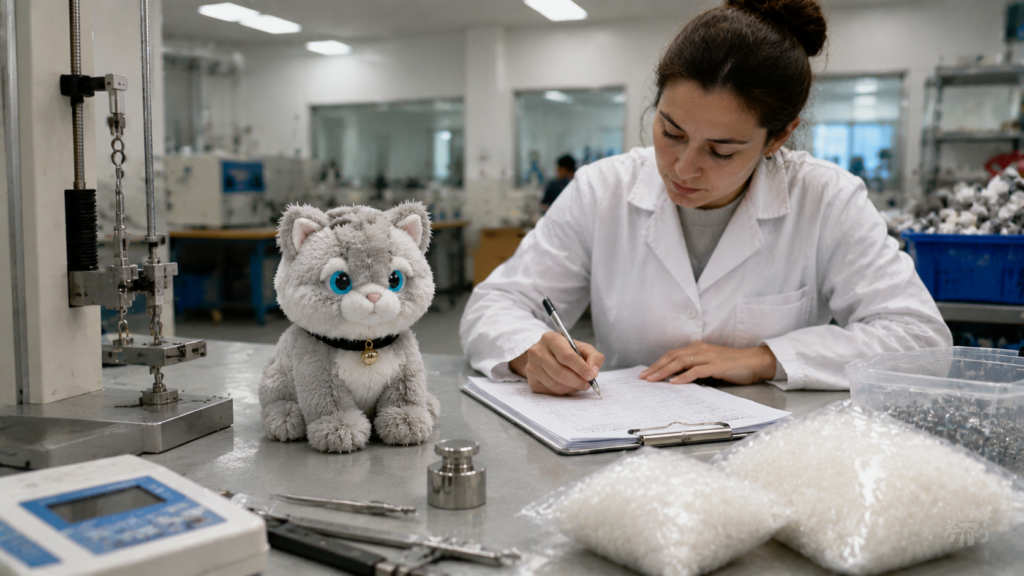
CPSIA Plush Toys: Additional US Compliance Considerations
CPSIA plush toys requirements are especially important for children’s products sold in the United States. CPSIA focuses on areas such as restricted substances, product tracking information, and children’s product safety requirements.
Manufacturers and buyers should review:
- Material composition
- Paints, prints, and coatings
- Plastic accessories or electronic parts
- Product labeling requirements
For projects involving accessories, sound modules, lights, or other electronic features, safety planning should start before sampling.
How Safety Is Considered During Custom Plush Toy Production
A reliable custom plush toy manufacturer will consider safety throughout the entire production process.
1. Material Selection
Fabric, filling materials, embroidery threads, plastic accessories, and electronic components should be reviewed before production. The selected materials influence both product quality and testing requirements.
2. Prototype and Sample Review
The sampling stage is the best time to identify potential safety issues. Manufacturers can review:
- Stitching strength
- Accessory attachment
- Stuffing density
- Product shape stability
- Component placement
3. Production Quality Control
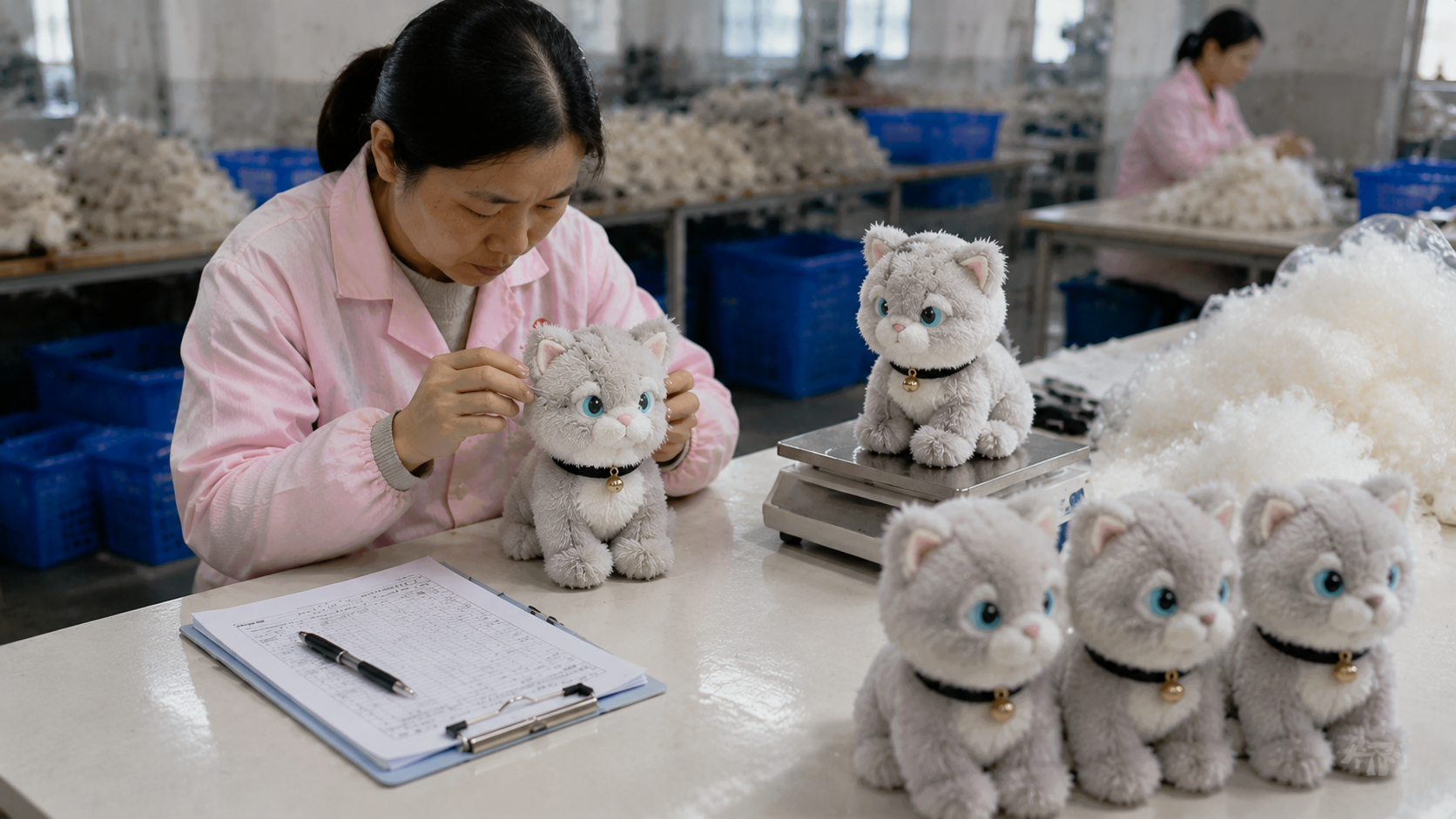
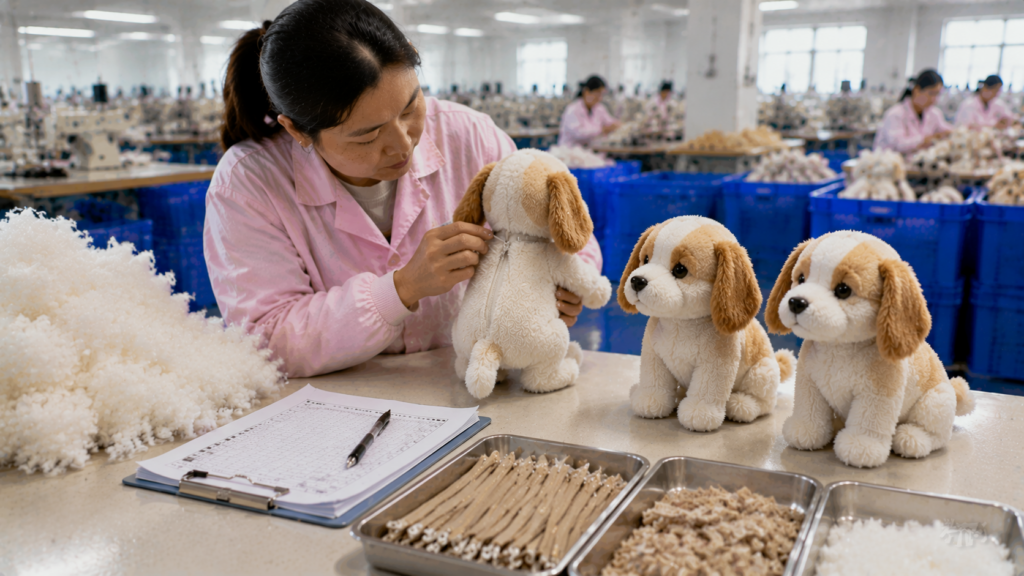
During bulk production, quality inspections help maintain consistency between approved samples and finished products.
Typical quality checks include:
- Appearance inspection
- Seam inspection
- Accessory checking
- Function testing for electronic plush toys
- Packaging verification
What Buyers Should Prepare Before Ordering Custom Plush Toys
Before contacting a manufacturer, buyers can prepare the following information:
- Target market and selling country
- Product age group
- Design files or reference images
- Expected materials and functions
- Packaging requirements
- Required safety standards
Buyer Checklist: Plush Toy Safety Preparation
- ☐ Confirm target market requirements
- ☐ Select suitable fabric and filling materials
- ☐ Review accessories and small parts risks
- ☐ Confirm labeling requirements
- ☐ Discuss testing needs before sampling
- ☐ Approve prototype before bulk production
FAQs About Plush Toy Safety Standards
What are the main plush toy safety standards?
The most common standards include EN71 for Europe, ASTM F963 for the United States, and CPSIA requirements for children’s products in the US.
Do all plush toys need safety testing?
Testing requirements depend on the target market, product type, age group, materials, and selling requirements. Buyers should confirm requirements before production.
When should safety requirements be considered?
Safety requirements should be reviewed during the design and sampling stage because changes after mass production begins can increase time and cost.
How can a manufacturer help with plush toy safety?
A professional manufacturer can help review materials, product structure, sampling details, quality control processes, and documentation preparation before production.
Final Thoughts
Understanding plush toy safety standards helps brands create products that are suitable for international markets and reduces risks during development. From material selection and prototype review to bulk production and quality inspection, safety should be part of the entire manufacturing process.
FunEnjoy Toys supports overseas brands, retailers, and product teams with custom plush toy development, sampling, material selection, quality control, and production support.