So, you’re ready to bring a line of adorable, high-quality wholesale plush animals to your customers? That’s fantastic. Finding the right manufacturing partner, making sure the toys are safe, and getting them from the factory to your doorstep is where it all begins. Think of this guide as your roadmap.
Starting Your Plush Sourcing Journey
Diving into the world of sourcing plush toys directly from manufacturers can feel like a huge task, but it doesn’t have to be. We’re here to cut through the noise and show you how to tackle this with confidence, right from the get-go.
We’ve packed this guide with real-world advice and practical steps learned from brands who’ve been there and done that. It’s all about helping you sidestep the common pitfalls and start strong.
The whole process really boils down to three key stages: finding your partner, ensuring safety, and getting your products delivered.
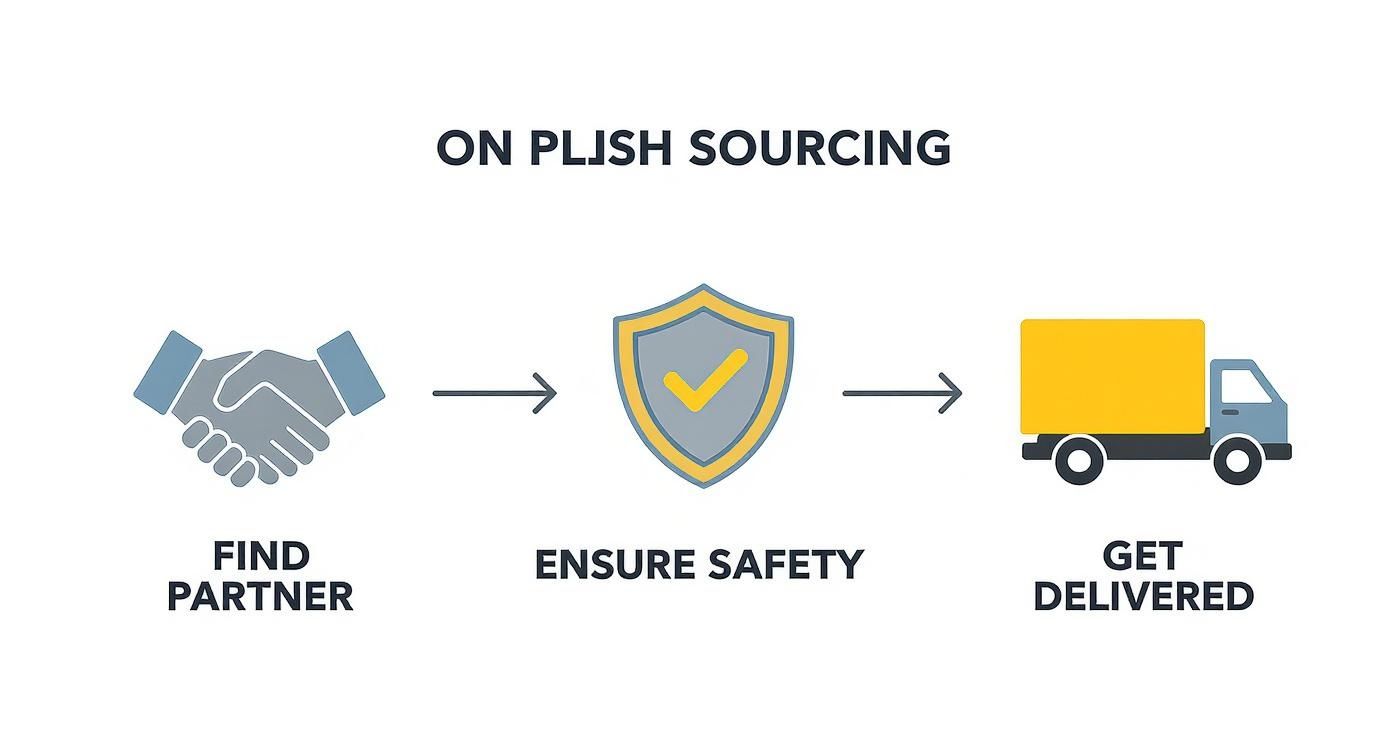
This isn’t just about placing an order. It’s about building a reliable supply chain, where each step lays the foundation for the next. The end goal isn’t just to find a factory, but to find the right one.
If there’s one thing to remember, it’s this: sourcing wholesale plush animals is a partnership. Finding a manufacturer who truly gets your vision and is obsessed with quality is the single most important key to your long-term success.
Finding and Vetting the Right Supplier
This is it—the most important step in building your wholesale plush animals business. Finding the right manufacturing partner can make all the difference. Your journey will probably kick off online, scrolling through massive B2B platforms like Alibaba where countless suppliers are just a few clicks away.
But don’t get stuck behind your screen. There’s incredible value in attending industry trade shows like the Hong Kong Toys & Games Fair or the Nuremberg Toy Fair. Nothing beats meeting suppliers in person, feeling the quality of their products firsthand, and starting a genuine relationship.
Digging Deeper Than a Company Profile
Pulling together a list of potential suppliers is easy. The real work is in the vetting process. A polished website or a friendly first email doesn’t tell you the whole story, and you need to be sure you’re partnering with a legitimate, capable factory.
It’s time to start asking for the important paperwork. A verified business licence is the absolute minimum, and it’s smart to check their export history to see if they have experience shipping to your part of the world. This isn’t just bureaucracy; it’s about making sure they’re a real, established business with a solid track record. For a deeper dive, our guide on choosing a custom plush toy manufacturer has even more tips on this.
Key Questions to Ask Potential Partners
Once you’ve narrowed down your list, it’s time to start a conversation. The questions you ask now will tell you everything you need to know about their experience, professionalism, and whether they can actually deliver what you need.
A good supplier will be open and happy to share details. Here are a few things you should definitely bring up:
- Major Retail Partners: Have they produced toys for any big-name brands? This is a huge clue that they can meet strict quality and safety standards.
- Factory Audit Reports: Don’t be shy about asking for recent audits like BSCI or Sedex. These reports give you an honest look into their factory’s ethical practices and working conditions.
- Production Capacity: Find out how many plushies they can realistically make each month. You need to know they can keep up with your orders, especially as your business grows.
Remember, you’re not just buying a product; you’re building a partnership. The effort you put into vetting now will save you a world of trouble and money later on.
Bringing Your Custom Plush Designs to Life
This is where the real fun begins—turning your idea from a sketch on paper into a soft, cuddly reality. Getting this right all comes down to clear communication with your manufacturing partner. Think of yourself as the head chef creating a precise recipe for your perfect plush.
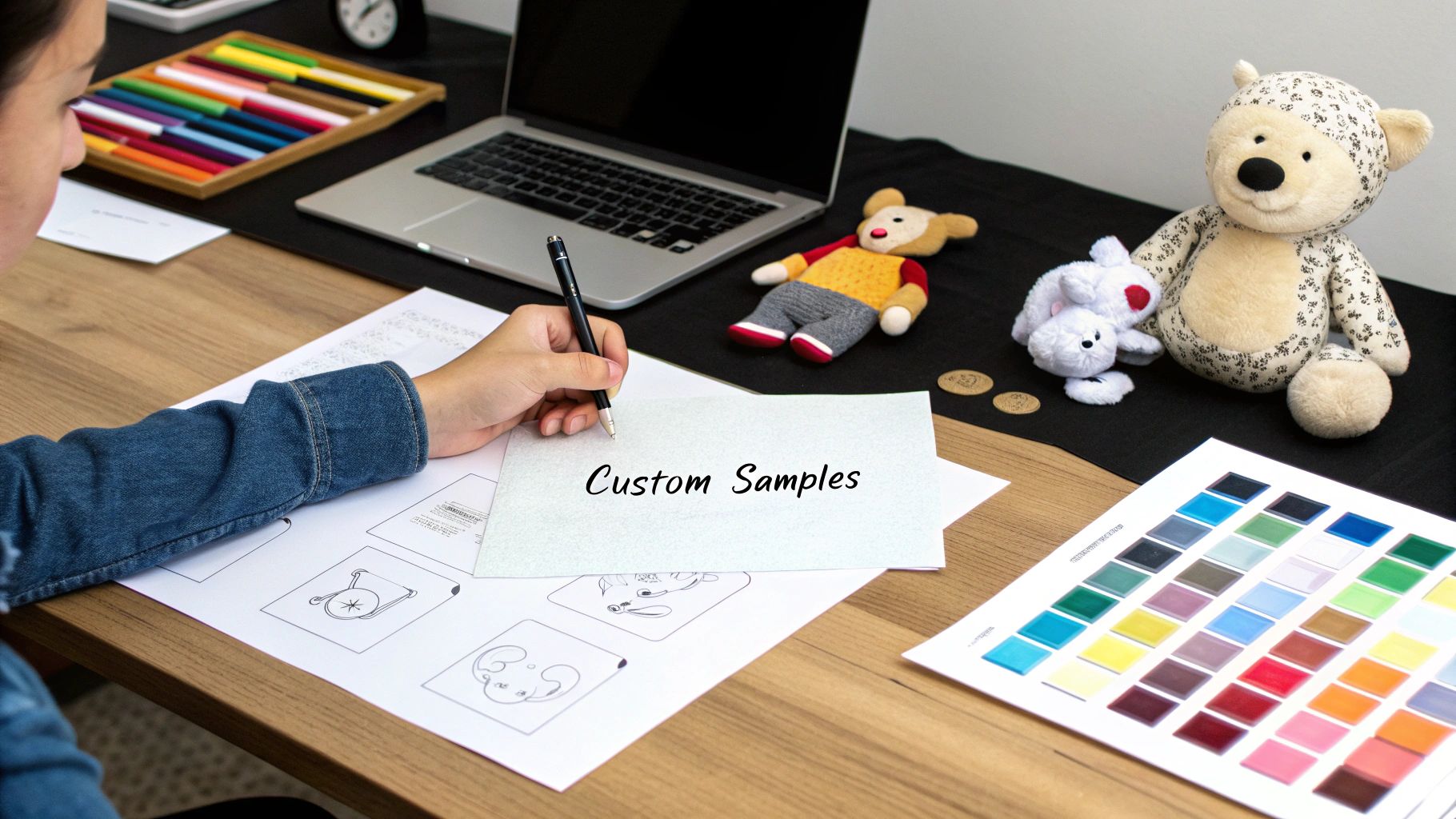
You’ll need to hand over a detailed blueprint for your design. We’re talking specifics: the exact fabrics you want, the precise Pantone colour codes for each part, and the final dimensions. Every little detail, from the type of stitching to the placement of embroidery, needs to be clearly laid out.
Understanding MOQs and the Sampling Process
When you ask for a quote on your wholesale plush animals, you’ll get a figure called the Minimum Order Quantity (MOQ). This is simply the smallest order a factory can run efficiently, mostly because they have to buy materials in bulk. For straightforward designs, you might have a little wiggle room, but it’s a standard part of the manufacturing world.
Once you’ve agreed on the quote, you move into the most important phase: sampling. This is your chance to hold a physical prototype in your hands and check the quality before you green-light a massive production run. Whatever you do, don’t skip this step.
The sampling stage is your best defence against quality control issues. A small investment of time and money here can save you from a major headache and a significant financial loss on a full order of thousands of pieces.
The sampling journey usually has a few stops. You’ll get an initial prototype to check the basic look and feel, followed by sales and pre-production samples to lock in the final details. To get a real sense of what’s happening on the factory floor, you can take a look at our production process for crafting the perfect plush.
Providing feedback is a skill. Be direct and constructive. “The head looks wrong” isn’t helpful. Instead, try something like, “The head should be 10% larger, and let’s move the eyes 5mm further apart.” Clear, measurable instructions, maybe with a quick sketch or photo markup, will get you to the final product much faster.
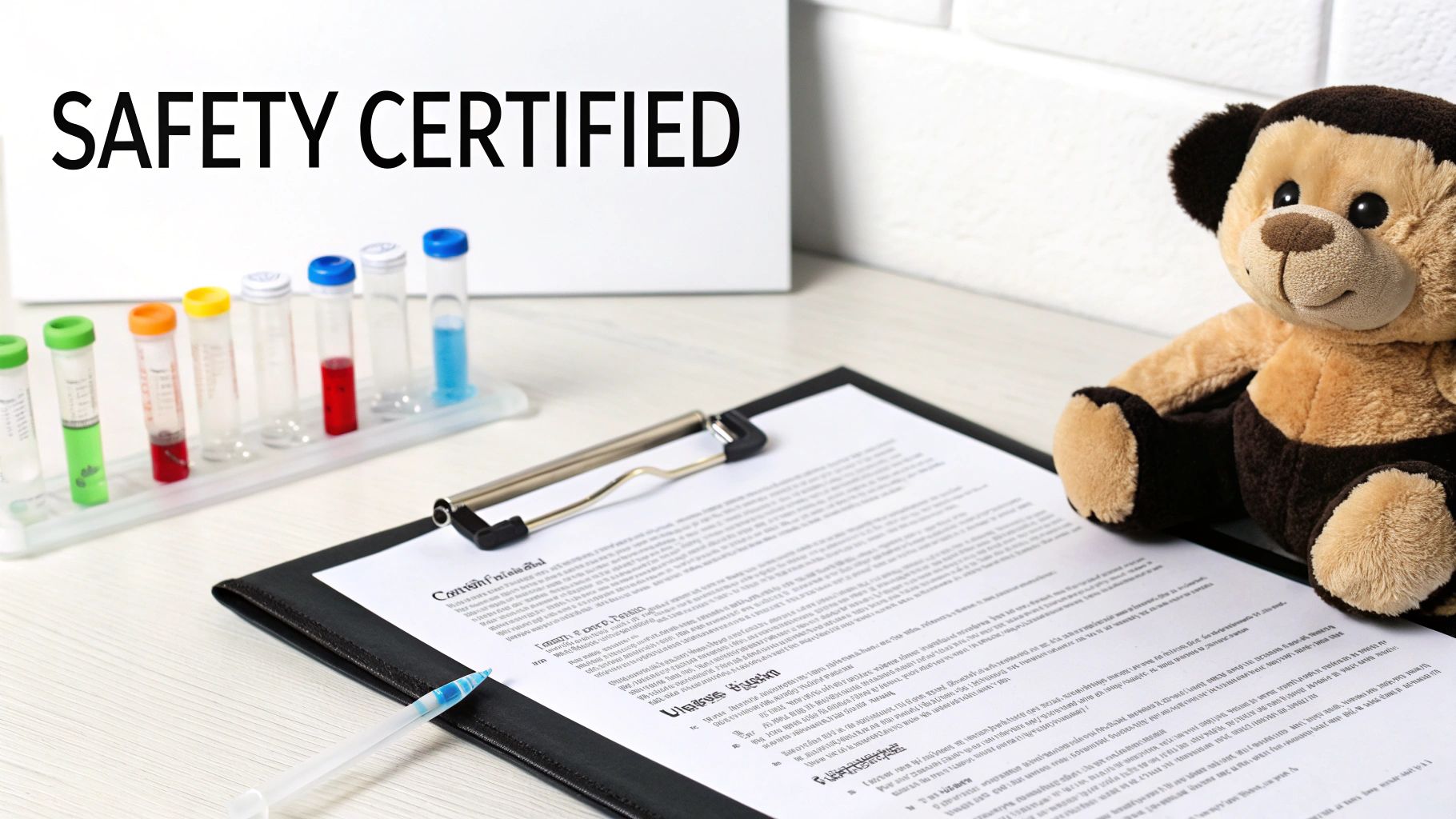
Navigating the world of safety certifications can feel a bit overwhelming at first, but it’s one of the most important parts of sourcing wholesale plush animals. This isn’t just about ticking boxes; it’s about making a promise to your customers that your products are safe for their little ones.
Getting this right from the start is absolutely crucial. A slip-up here can lead to more than just headaches—think costly product recalls, legal trouble, and a real hit to the reputation you’ve worked so hard to build. Ultimately, it’s about protecting both the children who will adore your toys and your business.
The Key Standards You Need to Know
The specific certifications you’ll need really depend on where you’re planning to sell. Different markets have their own strict rulebooks, and your supplier needs to follow them to the letter.
Here are the big two:
- Selling in the United States? You’ll need to meet ASTM F963. This is the gold standard in the U.S. and covers everything imaginable—from the strength of the seams and checking for small parts to flammability and ensuring there are no harmful chemicals like lead.
- Headed for Europe or the UK? The magic number is EN71. It’s a similarly thorough set of rules that tests for all the same potential hazards to make sure the toys are completely child-safe.
The good news is that with over 70% of the world’s plush toys coming out of China, seasoned suppliers are incredibly well-versed in these international standards. Their deep experience is a big reason why they’re the top choice for brands around the globe. For a deeper dive into this, you can get more insights on the manufacturing landscape from leading toy experts.
Here’s a pro tip: Always, always ask for the actual test reports. Don’t just accept a certificate. You need to see the full, current documentation from a recognised third-party lab that proves the specific materials in your product have passed.
How to Verify Compliance and Protect Your Brand
Never just take a supplier’s word for it. You have to be proactive here. Ask to see the full testing reports. Check the date on the report to make sure it’s recent, and confirm that the testing lab is legitimate and accredited.
For total peace of mind, the best thing you can do is write these safety requirements directly into your manufacturing agreement.
Doing this makes it a legally binding part of your contract. It’s no longer just a request; it becomes a non-negotiable term of your partnership. Our overview of plush toys wholesale practices explains more about weaving these critical steps into your overall sourcing plan. This approach turns safety from a simple checklist item into a solid, contractual guarantee.
Getting the Price Right and Getting It Home
You’ve approved the perfect sample, and now it’s time to talk money and timelines. This is where your negotiation skills can really boost your bottom line on your wholesale plush animals order. Don’t be shy about discussing the price, but think of it as a partnership. You’re looking for a fair deal that works for everyone, not just trying to squeeze every last penny out of the supplier.
Your biggest advantage in any negotiation is volume. The more you order, the more room you have to ask for a better price per piece. When it comes to payment, the standard deal you’ll see is a 30% deposit to get the ball rolling on production, with the final 70% balance due right before the goods leave the factory. Always, always get a formal manufacturing agreement that locks in every detail—pricing, payment milestones, and delivery dates. It’s your best protection.
Decoding Shipping Lingo
Your price quote will come with some acronyms like FOB or EXW, known as incoterms. It’s crucial to know what they mean because they dictate exactly when the product (and all the associated costs and risks) becomes your problem.
- FOB (Free On Board): This is the one you’ll see most often. The factory’s price includes getting your plushies all the way to the port and loaded onto the ship. The second they’re on that boat, they’re your responsibility.
- EXW (Ex Works): This price is literally just for the product sitting at the factory door. You have to arrange and pay for every single step after that—from the truck that picks it up to the ship that sails it home.
For most people just starting out, FOB is the way to go. It keeps things much simpler on the front end. Whichever term you agree on, make sure it’s spelled out clearly in your contract.
From Production Line to Your Doorstep
Once you’ve paid that deposit, your order officially enters the production queue. Be prepared for a wait. A typical run of plush toys can take anywhere from 30 to 60 days to manufacture, sometimes longer if your design is particularly tricky or the order is massive. Keep in touch with your supplier during this period for updates; a quick email every week or two shows you’re on top of things.
When production is finished, it’s time to get your plushies home. You’ve got two main choices for shipping:
- Sea Freight: The go-to for almost any bulk order. It’s slow—plan on 30-45 days just for the ocean transit—but it’s by far the cheapest option. The savings are huge.
- Air Freight: This is your express option, getting products to you in about 5-10 days. But that speed comes with a hefty price tag. Only use it if you’re in a real jam or your products are small and high-margin.
My best piece of advice? Find a good freight forwarder. These people are logistics wizards. They handle the mind-numbing process of booking space on a ship, dealing with customs agents, and sorting out all the paperwork. They turn a logistical nightmare into just another line item on your to-do list and are worth their weight in gold.
Got Questions About Sourcing Plush Toys? Let’s Clear Them Up
Even with the best-laid plans, you’re going to have questions. Stepping into the world of wholesale plush animals for the first time has a lot of moving parts, so I’ve gathered the most common questions we get and answered them straight up.
Think of this as your quick-reference guide. Getting these fundamentals down will help you make much smarter, more confident moves as you get your plush toy business off the ground.
What’s a Realistic Minimum Order Quantity?
This is the million-dollar question, and honestly, the answer is “it depends.” The Minimum Order Quantity (MOQ) isn’t a fixed number; it swings wildly depending on the factory’s scale and just how intricate your plush design is.
For a completely custom plush, you’re typically looking at a starting point between 500 to 2,000 pieces for a single design. You might find a smaller, more nimble factory willing to go a bit lower for something super simple. On the flip side, if your toy has electronics or needs special, hard-to-find fabrics, expect that MOQ to climb. It’s a great question to ask right out of the gate.
How Long Does This Whole Thing Actually Take?
Get ready to play the long game. From the moment you sign off on the final design to the day your shipment arrives, you should realistically budget for three to five months.
Let’s break that down:
- Getting the Sample Right: 2 to 4 weeks (this can go longer with lots of tweaks!)
- Full Production Run: 30 to 60 days
- Shipping & Customs: 30 to 45 days (by sea)
Of course, air freight is an option if you’re in a hurry, but the cost can be eye-watering. My best advice? Always, always build some extra time into your timeline for the unexpected hiccup. It will happen.
What Are the Absolute Must-Have Safety Certifications?
This part is non-negotiable. The safety certifications you need are dictated entirely by where you plan to sell your toys.
If there’s one golden rule in sourcing, it’s this: never just take a supplier’s word on safety. You must see the actual, up-to-date test reports from a trusted lab for the exact materials going into your product.
If you’re aiming for the US market, your plushies must meet ASTM F963 and CPSIA standards. For anyone selling in the European Union or the UK, the magic number is EN71. Any supplier worth their salt will have these documents on hand and will know exactly why they’re so important.
Ready to turn your plush toy ideas into high-quality, market-ready products? The team at FunEnjoy PlushToys simplifies the entire custom manufacturing process, from design to delivery. Start your custom plush project with us today!
Article created using Outrank