As a manufacturer rooted in the heart of China’s plush toy industry since 1993, we witness the entire lifecycle of a product, from a brand’s initial concept sketch to a global retail launch. The plush bean bag is a fascinating hybrid product, blending the structural demands of furniture with the tactile, emotional appeal of a high-quality plush toy. For B2B buyers—whether for retail, promotional branding, or licensed character merchandise—understanding the manufacturing intricacies is paramount for profitability and brand integrity.
This guide goes beyond surface-level consumer reviews. We’ll provide a manufacturer-level analysis, dissecting popular designs to expose the details that dictate quality, cost, and production complexity. We will cover critical B2B insights, from material sourcing and filling choices to safety compliance (EN71/ASTM) and logistics, equipping you with the practical knowledge to make informed sourcing decisions. When considering the ideal placement for a plush bean bag in a home or commercial setting, exploring various transformative TV room furniture ideas can help illustrate how they enhance both comfort and style.
Instead of just reviewing finished goods, we will break down what makes each one work from a production standpoint. This roundup is designed as a practical tool for buyers, explaining the specific fabrics, fillings, and construction methods used in market-leading examples. Our objective is to arm you with expert insights not found in standard articles, enabling you to develop or source a plush bean bag that meets your precise quality standards and commercial goals.
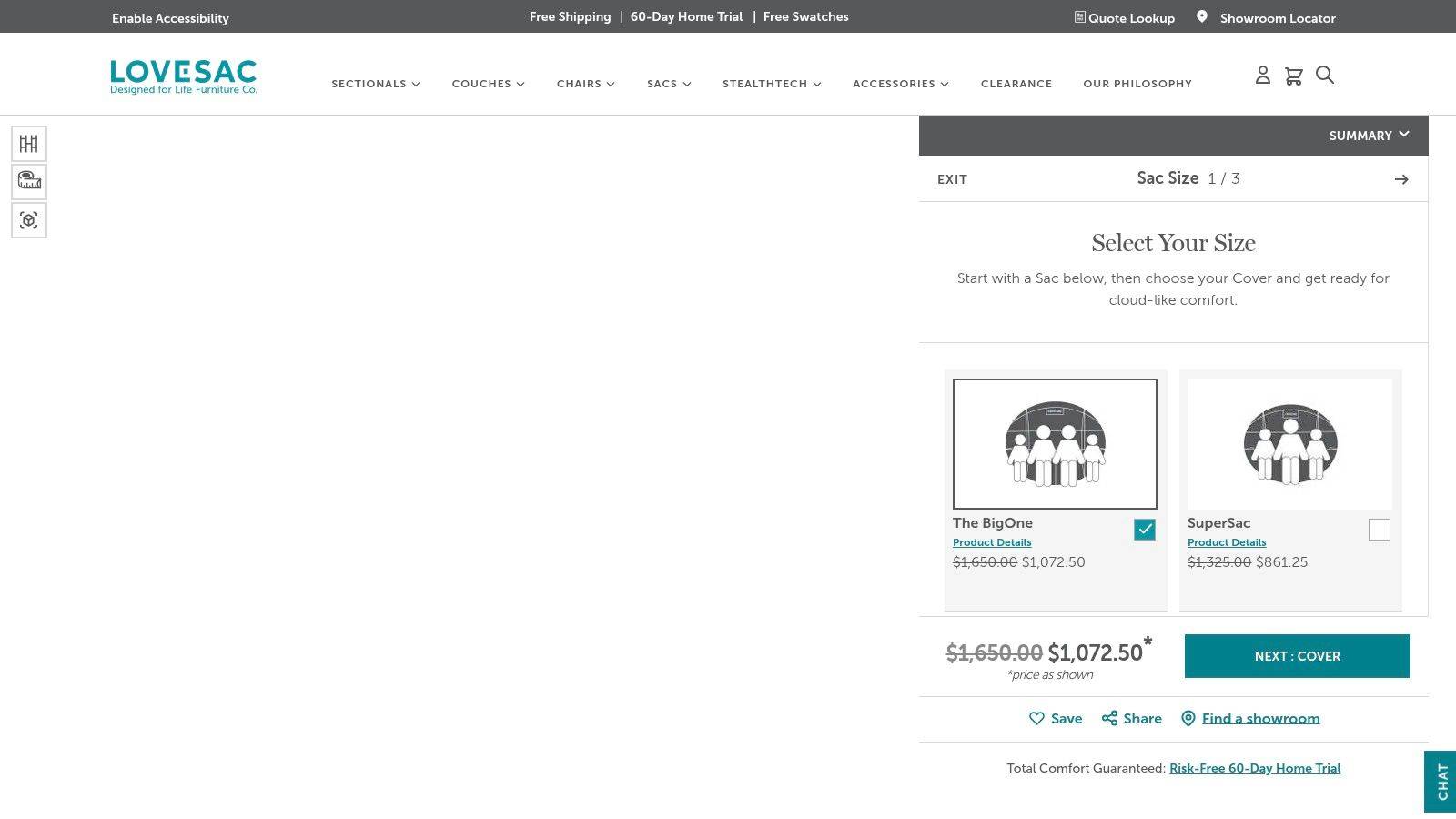
1. Lovesac Sacs with Phur Covers
Lovesac has established a premium market position by moving away from traditional bead fillings to what they call “Sacs.” These are not simple bean bags; they are high-end furniture filled with shredded Durafoam. From a manufacturing perspective, this shift from Expanded Polystyrene (EPS) beads to a proprietary foam blend is a major operational change. It demands specialized industrial shredding machinery, a more robust inner liner to contain the dense, heavy foam, and a material focus on long-term resilience. This foam is formulated to be re-fluffed and resist the compaction common in lower-cost polystyrene fillings, making it a strong choice for high-traffic commercial environments like hotel lobbies or premium office lounges.
Unique Selling Points & Product Selection
For B2B buyers, the key appeal is the blend of extreme durability and luxurious aesthetics. The covers, especially the “Phur” and “Sherpa” lines, are exceptionally soft and thick, simulating real fur. These fabrics are specified by their high pile (fiber length) and dense weight (grams per square metre, or GSM), which directly contribute to their premium feel and higher unit cost.
- Material Quality: The Phur covers are typically made from high-grade, long-pile polyester fabrics. The manufacturing focus is on achieving a specific softness, lustre, and weight (GSM) that justifies the premium price.
- Modularity: Their system of separate, machine-washable covers and durable inner sacs is ideal for commercial applications. A hospitality client can easily swap or clean covers, ensuring hygiene and maintaining appearance.
- Size Range: They offer sizes from the single-person “CitySac” to the massive “SuperSac.” This scalability allows buyers to specify products for different room sizes and uses.
B2B Considerations & User Experience
Lovesac’s website has a trade program for interior designers, but it is not structured for large-scale OEM/ODM buyers. For a brand looking to source a similar high-end plush bean bag, Lovesac serves as an excellent benchmark for material specifications and construction quality. The lifetime guarantee on their Sac inserts is a powerful marketing tool signaling immense confidence in their foam filling’s durability. The main drawback for sourcing is the high retail price point. Furthermore, their lead times reflect a more made-to-order supply chain, not mass production for wholesale distribution.
Manufacturer Insight: Using shredded foam over beads fundamentally changes logistics. Foam is heavier and denser, increasing per-unit shipping costs. However, it can often be vacuum-compressed more effectively than beads (up to 80% volume reduction), allowing for smaller shipping cartons. For any buyer sourcing a plush bean bag, understanding the trade-offs between filling material, shipping volume, and product lifespan is critical to calculating the final landed cost.
Website: https://www.lovesac.com/sacs/build/
2. Yogibo Max (Luxe and Indoor versions)
Yogibo has captured a unique market segment by focusing on versatility and sensory comfort. Unlike the dense foam of competitors, Yogibo products use near-frictionless EPS microbeads, a choice with significant manufacturing implications. Production requires specialized machinery to handle these fine, static-prone beads without spillage. The product’s core is its patented, stretchy fabric cover, which must be sourced or produced to exact elasticity and durability specifications. This allows the bag to conform to the user’s body, creating a pressure-relieving sensation popular in sensory-friendly applications.
Unique Selling Points & Product Selection
For B2B buyers, Yogibo’s appeal lies in its lightweight design and extreme adaptability. The product’s ability to function as a chair, recliner, bed, or couch makes it a practical choice for dynamic spaces like co-working offices, schools, and therapy centers. While not a traditional “plush bean bag” with long-pile fur, the softness of its fabric is a key feature. The “Luxe” line uses a higher-grade textile for a smoother feel.
- Material Quality: Standard covers are a cotton/spandex blend engineered for a specific four-way stretch. The Luxe versions use a polyester/spandex blend with a weave that offers a silkier texture and better durability.
- Modularity: A dual-liner system is crucial. The inner liner contains the microbeads, while the outer, machine-washable cover handles user contact. This separation is essential for hygiene and maintenance in commercial settings.
- Colour & Customisation: Yogibo offers a vast color palette, a strong selling point for branding and interior design. Replacement covers are sold separately, extending the product’s lifespan.
B2B Considerations & User Experience
Yogibo’s website is consumer-focused, but its product offers valuable insights for private-label sourcing. The key takeaway for a manufacturer is the interplay between the microbead fill and the high-stretch fabric. Sourcing a fabric with the correct modulus of elasticity is critical; too little stretch and the bag is rigid, too much and it lacks support. The microbead filling, while lightweight, requires careful sourcing to ensure uniform size and safety compliance. For B2B clients, the main drawback compared to foam is the eventual compaction of EPS beads, which necessitates refilling. Yogibo addresses this by selling refill beads directly.
Manufacturer Insight: The choice of EPS microbeads versus shredded foam is a fundamental production decision. Microbeads are exceptionally lightweight, which drastically reduces shipping costs per unit. However, their volume is fixed, unlike foam which can be vacuum-compressed. Sourcing high-quality, non-toxic microbeads is vital for passing EN71/ASTM tests. For a brand creating a plush bean bag, it’s a trade-off: lower shipping weight with microbeads versus longer lifespan and a denser feel with foam. Understanding different types of plush toy stuffing is the first step in product development.
Website: https://yogibo.com/products/yogibo-max
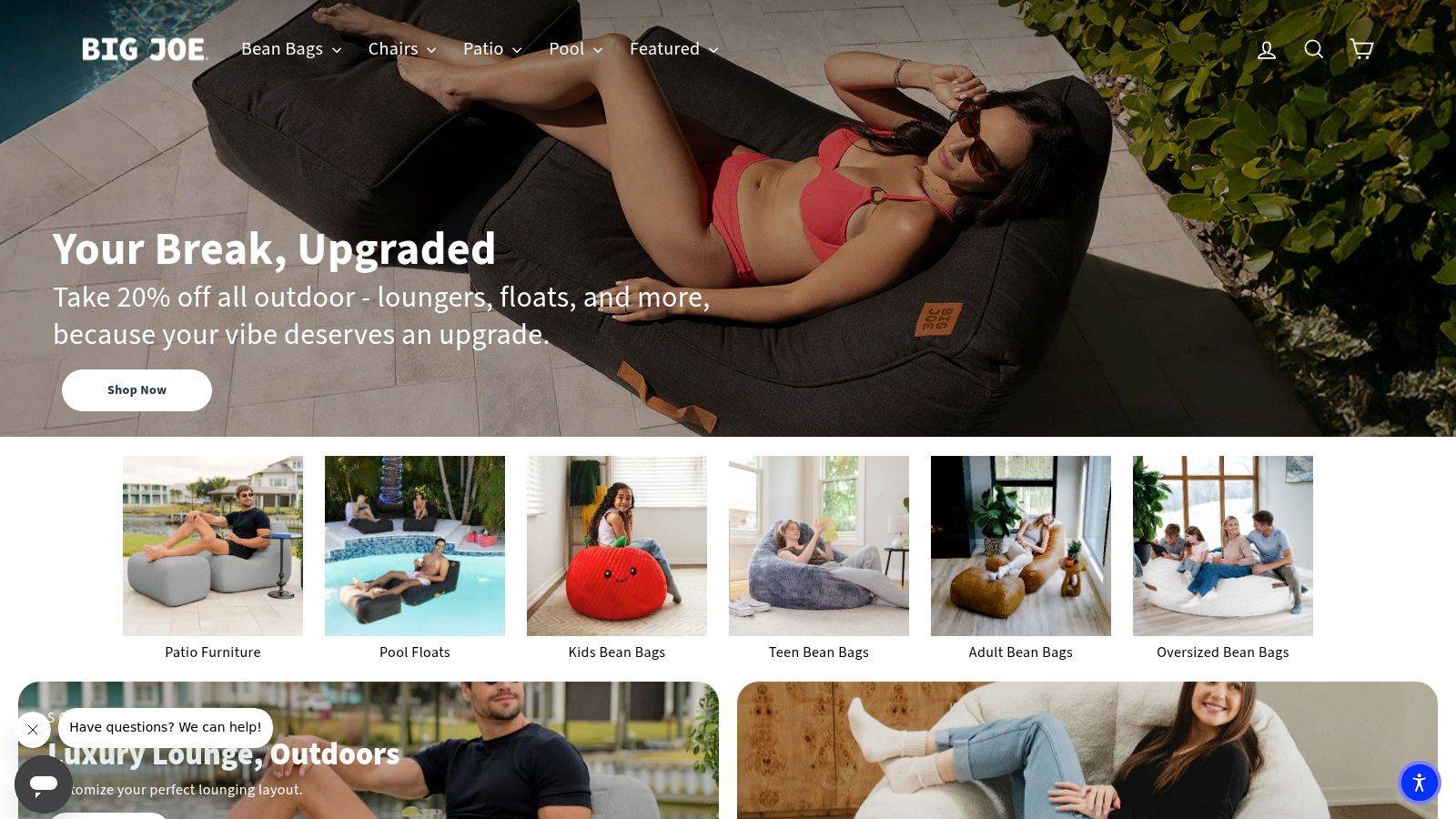
3. Big Joe Fuf (Plush and Corded Plush Fabrics)
Big Joe holds a significant position in the mass-market segment, offering oversized foam-filled loungers that prioritize value. Their “Fuf” line is a direct competitor to higher-end foam sacs but is positioned for accessibility. From a production standpoint, the Fuf’s construction is geared for cost-efficiency at scale. The filling is often upcycled or repurposed foam remnants from the furniture industry, a key strategy to keep material costs low. This approach requires machinery capable of shredding varied foam densities into a uniform mix. The inner liner is functional but less robust than premium counterparts, designed to contain the foam effectively for typical consumer use.
Unique Selling Points & Product Selection
The core appeal for retailers and volume buyers is the exceptional price-to-size ratio. Big Joe makes the giant plush bean bag concept attainable for a broader audience. The plush and corded plush fabric options provide a soft, tactile experience in a wide array of colors to match home décor.
- Fabric Choices: The plush and corded plush covers are typically polyester-based. The corded variety mimics corduroy but uses a softer, knit construction. For bean bags like the Big Joe Fuf, exploring materials such as the durable and soft properties of fleece polyester fabric can shed light on their luxurious feel and longevity.
- Cost-Effective Filling: Using shredded, repurposed foam is a key cost-control measure. While it provides a comfortable “sink-in” feel, it may compact faster than virgin, high-density foam. This is a deliberate trade-off for price.
- Broad Availability: Big Joe products are staples in major US retailers, indicating a supply chain optimized for high-volume, consistent delivery to national distribution centers.
B2B Considerations & User Experience
Big Joe’s website is consumer-facing and does not have a dedicated B2B or OEM portal, as their model revolves around large retail partnerships, not private-label manufacturing for smaller brands. For a company aiming to produce a similar value-oriented foam lounger, Big Joe is a case study in cost-effective material sourcing and mass-market appeal. The frequent promotions highlight a volume-focused strategy. The main drawback for a B2B buyer is the lack of a direct OEM/ODM channel and a design focused on consumer-grade longevity. It’s a great example of a product that’s more akin to a large-scale plush pillow than a structured furniture piece.
Manufacturer Insight: The logistics of a massive item like an 8-foot Fuf are a major operational challenge. Big Joe’s patented vacuum-compression technology allows these products to fit into surprisingly small boxes. This minimizes freight costs and warehouse space, a critical competitive advantage. For any brand developing an oversized plush product, investing in effective compression and packaging technology is as important as the product itself.
Website: https://buybigjoe.com/
4. Jaxx Bean Bags – Faux Fur line
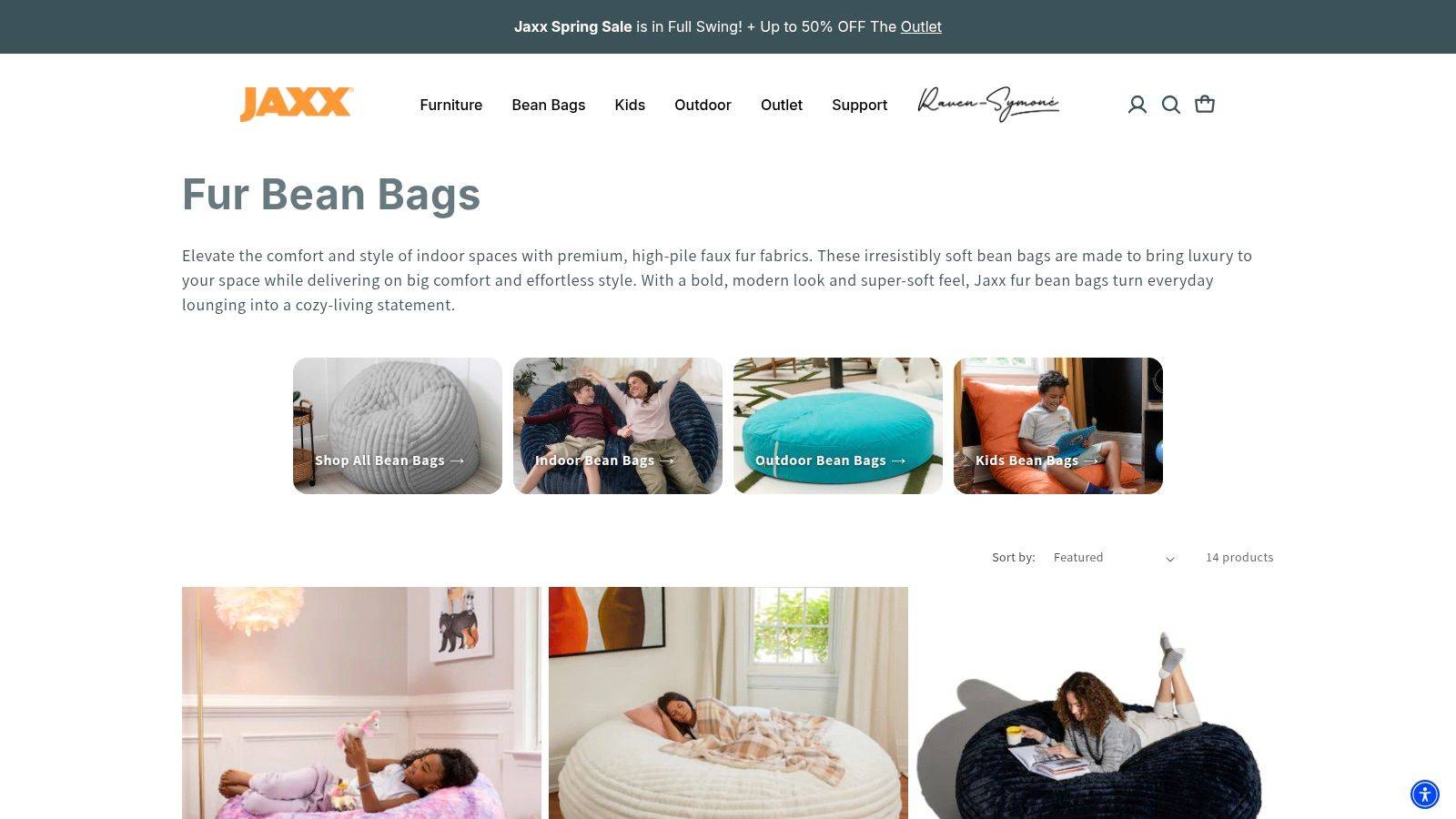
Jaxx, operating from the U.S., focuses on foam-filled loungers, with its Faux Fur line being highly relevant for buyers seeking a true plush bean bag aesthetic. Jaxx provides a focused collection emphasizing comfort and tactile experience. From a manufacturing viewpoint, their U.S.-based production allows for faster domestic fulfillment. They use shredded polyurethane foam, a common alternative to EPS beads that offers a different compression and support profile. The production model appears geared towards quick-ship domestic sales rather than long-lead-time international orders.
Unique Selling Points & Product Selection
The core appeal for retailers is the immediate visual impact of the Faux Fur products, which are excellent for merchandising. The “Cocoon” and “Saxx” models create an impressive centerpiece. The choice of materials extends to micro-velvet and microsuede, offering different textures at varying price points.
- Material Quality: The faux fur used is a long-pile polyester designed to be soft while remaining durable. The key manufacturing specification is its pile height, density, and resistance to shedding—a critical quality control point for customer satisfaction.
- Maintenance: Offering removable and machine-washable covers is an essential feature. It addresses a major B2B concern for hygiene and long-term appearance, especially in commercial settings.
- Scale and Application: The extra-large sizes, such as the 7-foot Cocoon, are designed for shared seating. This makes them a strong choice for social spaces, promotional events, or family-oriented retail environments.
B2B Considerations & User Experience
Jaxx Living’s website presents a B2B contact path, suggesting an openness to wholesale inquiries. Their U.S. manufacturing base is a significant advantage for North American buyers concerned with shipping times and import complexities. While the faux-fur material is a strong selling point, it requires more care than standard woven fabrics, a factor businesses must communicate to end-users. The product’s weight, due to the dense foam fill, also presents logistical considerations. For an international buyer, Jaxx is a strong benchmark for a mid-to-high-tier foam lounger, but direct sourcing from them may be less cost-effective than developing a similar product with an overseas manufacturer.
Manufacturer Insight: The use of shredded polyurethane foam has direct production implications. This filling is heavy and requires robust inner liners with stronger stitching, often using a bonded nylon thread, to prevent seam failure. While foam can be vacuum-compressed, the sheer volume needed for a 7-foot lounger means the final shipping carton remains large and heavy, directly impacting freight costs per unit.
Website: https://www.jaxxliving.com/collections/fur-bean-bags
5. CordaRoy’s Faux Fur Convertible Bean Bag
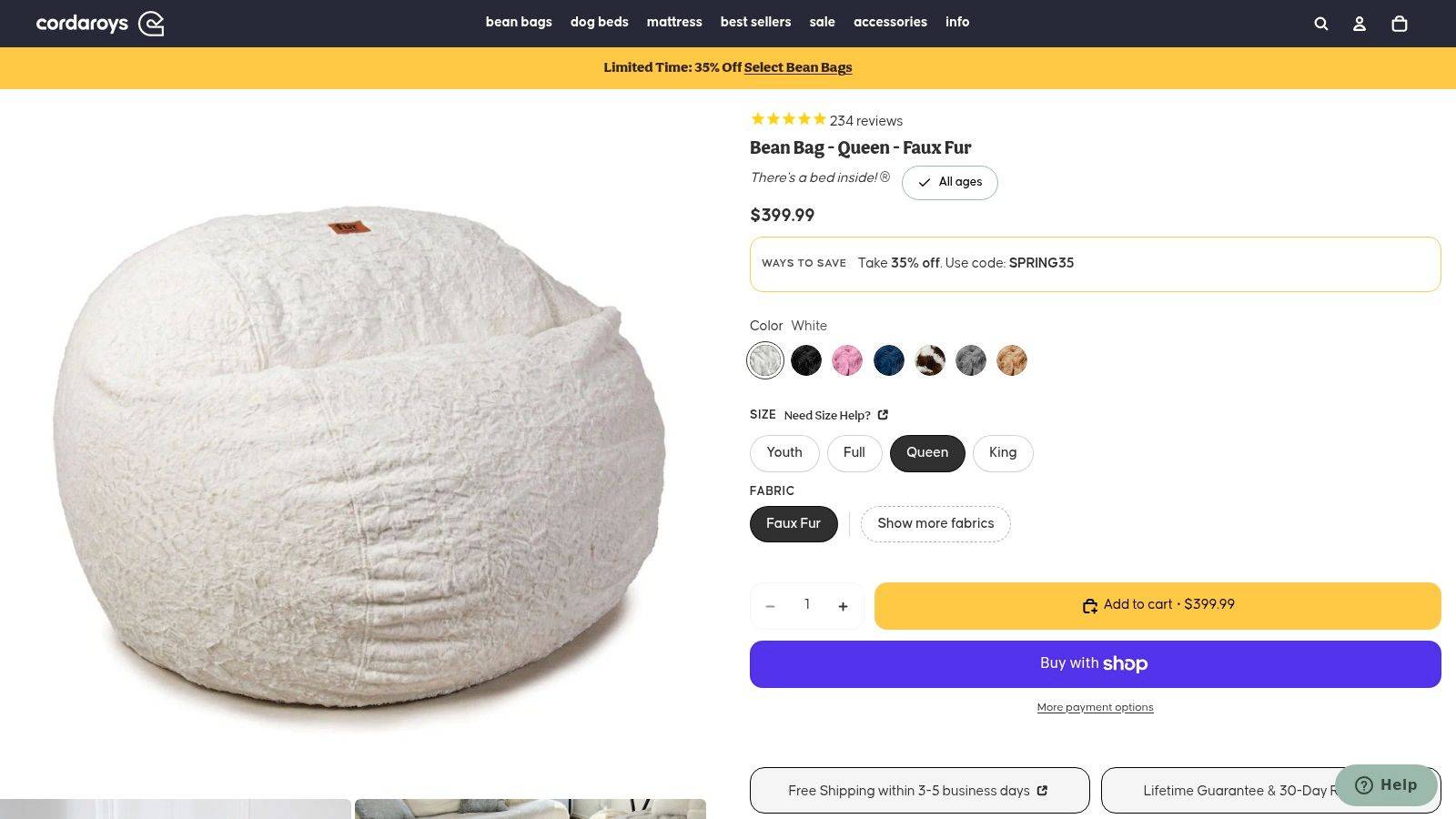
CordaRoy’s has successfully captured a unique niche by merging casual seating with practical bedding. Their product is a convertible bean bag that unzips to reveal a standard-sized foam mattress. From a manufacturing standpoint, this design is complex: it must function as both a comfortable chair and a supportive bed. The filling is a high-density, shredded polyurethane foam, but the internal construction is distinct. The foam is encased in a liner pre-shaped to unfurl into a flat mattress, requiring precise patterning and strong seam work to withstand repeated conversions.
Unique Selling Points & Product Selection
The primary value proposition for B2B buyers in hospitality or property management is its space-saving, dual functionality. Instead of buying a separate chair and a rollaway bed, this product serves both needs. The faux fur covers are a key component of its appeal as a plush bean bag.
- Dual-Use Design: The patented chair-to-bed mechanism is the standout feature. The inner liner unzips and unfolds into a Queen (152cm x 203cm) mattress. This requires a durable, large-gauge zipper and a liner fabric that can handle significant stress.
- Material & Maintenance: The plush faux fur covers are made from soft, durable polyester. A critical feature for commercial use is that they are machine-washable and dryer-safe, simplifying hygiene in hotels or rental properties.
- Brand Recognition: As a well-known brand featured on platforms like Shark Tank, CordaRoy’s carries strong consumer trust, which can be an advantage for retailers.
B2B Considerations & User Experience
CordaRoy’s website is retail-oriented but provides a clear view into a product with significant potential for OEM/ODM adaptation. The dual-use concept is highly marketable for sectors like student housing, micro-apartments, and family-friendly hotels. The lifetime guarantee signals manufacturing confidence. The main operational challenge is the manual effort required to convert it back into a chair by stuffing the mattress back into the cover. This could be a consideration for housekeeping staff. For a brand creating a similar product, the key is perfecting the internal liner’s pattern and sourcing foam that provides both seating comfort and sleeping support.
Manufacturer Insight: Creating a convertible product like this involves complex pattern-making for the inner liner to ensure it folds correctly and fills the outer cover evenly. The zipper choice is critical; a low-quality zipper will be the first point of failure. Sourcing foam of the right density is a balance: too soft, and it won’t be a supportive mattress; too firm, and it won’t be a comfortable bean bag.
Website: https://cordaroys.com/products/queen-convertible-bean-bag-faux-fur
6. MUJI Comfortable “Body Fit Cushion” (China market)
MUJI’s approach to the bean bag is a masterclass in minimalist design and material science. The “Body Fit Cushion,” sold widely in Mainland China, is not a traditional plush bean bag. It uses a unique combination of fabrics and 0.5mm EPS (Expanded Polystyrene) microbeads. From a production standpoint, handling such fine beads requires specialized filling nozzles and a factory with excellent dust control to manage static and airborne particles. The inner liner must have an extremely tight weave and reinforced seams to prevent leakage, a key quality control checkpoint.
Unique Selling Points & Product Selection
For B2B buyers in Mainland China, MUJI represents a benchmark for consistent quality. Its appeal is not a furry texture but its tactile, form-fitting comfort. The cover is ingeniously designed with two different materials: a stretchable, soft-knit polyester fabric on two sides and a more durable, non-stretch cotton fabric on the others. This allows the user to choose their seating experience: sitting on the knit side offers a softer feel, while the cotton side provides firmer support.
- Material Quality: The knit fabric is a high-quality polyester blend engineered for elasticity and pilling resistance. The cotton fabric options align with MUJI’s natural material philosophy.
- Microbead Filling: The 0.5mm EPS microbeads provide a fluid, liquid-like feel that conforms perfectly to the body. This is a deliberate choice over larger beads or foam.
- Regional Sourcing: The product is readily available through MUJI’s extensive retail network in China, making it easy to procure for local projects, commercial fit-outs, or as a quality benchmark.
B2B Considerations & User Experience
MUJI’s platform is purely retail, with no direct B2B or OEM portal. However, its transparent RMB pricing and availability make it a reliable source for smaller-scale procurement within China for projects aiming for a minimalist, high-quality aesthetic. For a brand developing a similar item, the MUJI cushion is an excellent case study in how material choice dictates function. The dual-fabric cover is a clever manufacturing detail that impacts user experience without adding excessive cost. Its limitation is its single-seat scale and lack of a traditionally plush feel, which may not suit all market segments searching for a plush bean bag.
Manufacturer Insight: The dual-fabric cover design is a key manufacturing consideration. It requires precise pattern cutting and joining of materials with different stretch properties. The seam tension must be perfectly calibrated to prevent puckering or failure. Sourcing 0.5mm microbeads also requires a supplier with stringent quality control, as inconsistent bead size will ruin the product’s signature fluid feel.
Website: https://www.muji.com.cn/
7. Bean Bags R Us “Furlah” Faux Fur Bean Bag
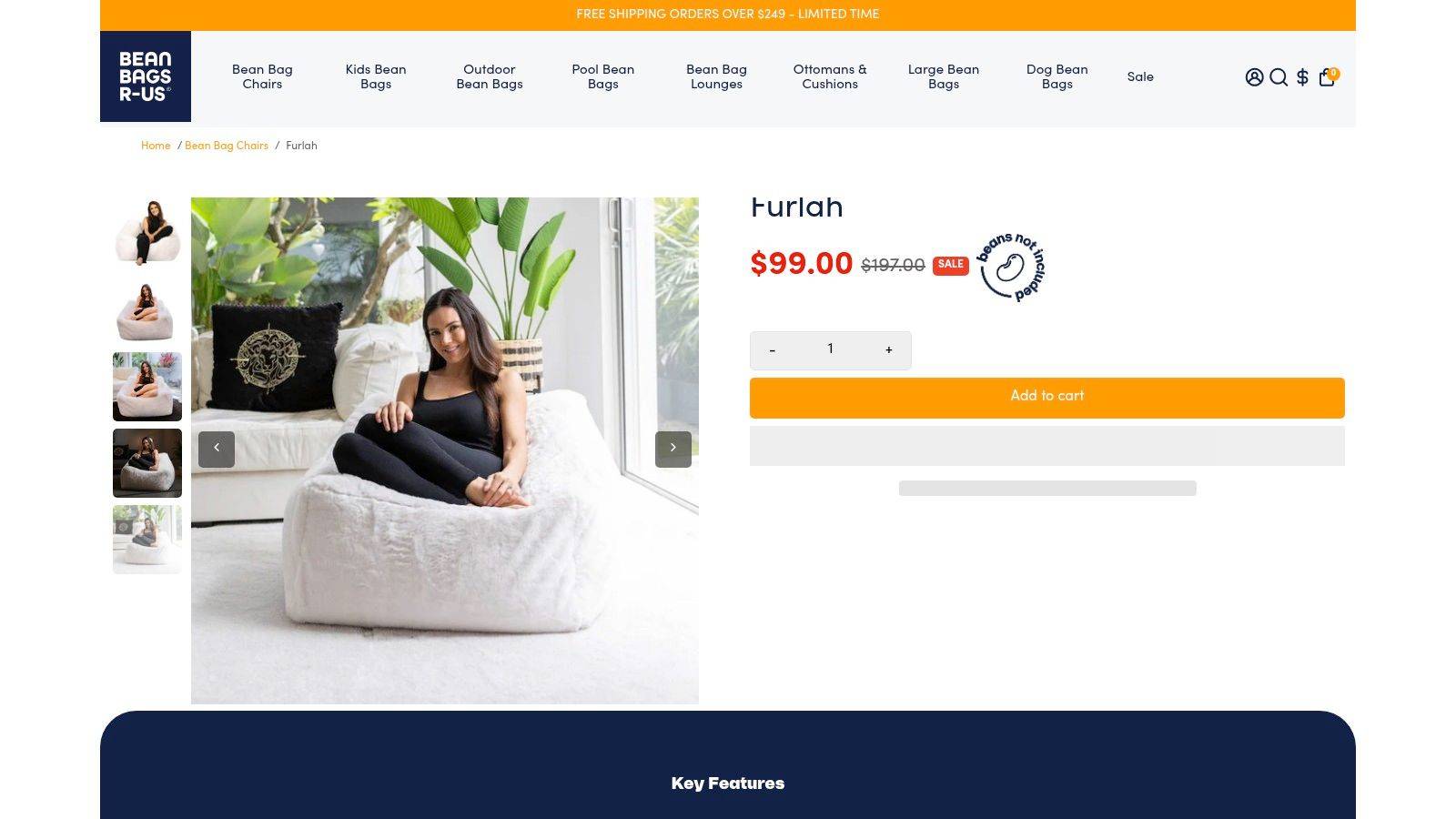
Based in Australia, Bean Bags R Us offers a premium aesthetic at a more accessible price. Their “Furlah” model focuses on the visual and tactile appeal of high-end faux fur without the high structural costs of brands like Lovesac. From a manufacturing perspective, their core strategy is logistical efficiency. By shipping the bean bag cover and liner flat-packed, they drastically reduce volumetric weight and freight costs—a critical factor for international customers. This “cover-only” model shifts the responsibility of sourcing filling to the end customer, simplifying cross-border customs and logistics for the seller.
Unique Selling Points & Product Selection
The main draw for B2B buyers, especially in e-commerce, is the ability to offer a visually luxurious plush bean bag without managing bulky, pre-filled inventory. The faux mink fur is a long-pile polyester designed for a soft, deluxe feel, making it ideal for home décor showrooms or as a high-value retail product.
- Material Focus: The fabric is a long-pile faux mink fur. The key production metric is achieving a consistent pile length and density that looks premium, while ensuring the backing is robust enough to handle the stress of being filled.
- Safety Features: The inclusion of a removable inner liner and child-safe YKK zips is a significant manufacturing detail. This demonstrates an understanding of international safety standards where preventing children from accessing internal filling is paramount.
- Logistical Simplicity: Selling the cover only is a smart business model. It allows retailers to stock more SKUs in less warehouse space and gives international buyers the freedom to source cost-effective local filling.
B2B Considerations & User Experience
Bean Bags R Us’s website is D2C, but its model is highly relevant for B2B buyers. The international shipping support makes it easy for small businesses to procure inventory. The primary challenge is the post-purchase logistics of sourcing filling. While the website suggests a volume, it can vary based on the filling type (e.g., EPS beads vs. shredded foam), adding an extra operational step for the retailer. The product is also specified for indoor use and spot cleaning, a key consideration for commercial applications where durability and easy maintenance are priorities.
Manufacturer Insight: The “ship-flat, fill-local” model is a powerful strategy for testing new international markets. It minimizes initial shipping investment and sidesteps regulations on imported filled goods. When producing a plush bean bag cover for this model, the focus shifts entirely to fabric quality, seam strength, and zipper durability, as these are the only components the customer will judge your brand on. Ensuring the inner liner is leak-proof is non-negotiable.
Website: https://www.beanbagsrus.com.au/products/furlah
Top 7 Plush Bean Bags — Side-by-Side Comparison
| Product | Implementation Complexity 🔄 | Resource Requirements ⚡ | Expected outcomes & Key advantages 📊 ⭐ | Ideal use cases | Tips 💡 |
|---|---|---|---|---|---|
| Lovesac Sacs with Phur Covers | Moderate — customization and lead times | High cost; shredded Durafoam; removable covers; financing options | Durable premium look, long-term support; high customer satisfaction ⭐ | Hospitality, premium retail displays, upscale lounges | Allow lead times for custom covers; consider QuickShip SKUs |
| Yogibo Max (Luxe / Indoor) | Low — plug-and-play, lightweight | EPS microbeads; stretchy removable covers; many colors | Highly adaptable seating positions; sensory-friendly comfort ⭐ | Homes, dorms, gaming rooms, flexible seating areas | Choose fabric line by use (Outdoor/Luxe); check regional stock |
| Big Joe Fuf (Plush/Corded) | Low — straightforward purchase/use | Foam fill; very large formats; frequent promotions | Big-size lounger with strong price-to-size value ⭐ | Family rooms, casual lounges, budget XXL seating | Monitor promotions and restock cycles |
| Jaxx Bean Bags – Faux Fur line | Moderate — heavier units, quicker if in-stock | Shredded foam; faux-fur upkeep; U.S. manufacturing/shipping | True plush/fur aesthetic for staging and shared seating ⭐ | Photography, merchandising, communal lounges | Plan for faux-fur care and heavier handling |
| CordaRoy’s Faux Fur Convertible Bean Bag | Moderate — conversion effort to deploy mattress | Foam components; heavier to move; widely retailed | Dual-use seating + guest bed; strong brand trust ⭐ | Guest rooms, teens, short-stay hospitality | Allocate time/space for unzipping and re-stuffing |
| MUJI Body Fit Cushion (China) | Low — minimalist, easy sourcing | EPS microbeads; replaceable knit/cotton covers; CN distribution | Close-molding comfort with minimal aesthetic; consistent quality ⭐ | Minimalist interiors, MUJI stores, small-scale seating | Not long-pile fur—choose knit/denim covers for palette |
| Bean Bags R Us “Furlah” Faux Fur | Moderate — ships flat; local filling required | Long-pile faux mink; filler (~300 L) not included; international shipping | Premium plush visual at accessible price (fill step needed) ⭐ | Photo ops, décor, cross-border buyers | Budget for bulk filler purchase; spot/dry-clean recommended |
The Manufacturer’s Guide to Your Custom Plush Bean Bag Project
Analyzing market leaders like Lovesac and CordaRoy’s provides a clear roadmap of what consumers demand: superior comfort, appealing fabrics, and functional designs. For brands, retailers, and IP holders, the real opportunity is not just reselling these items, but creating a unique plush bean bag that embodies your brand’s identity and serves a specific market niche. This is where a strategic manufacturing partnership becomes invaluable.
The success of a plush bean bag hinges on precise details. The choice between plush faux fur and corded velvet directly impacts unit cost and customer experience. Similarly, deciding between high-resilience shredded foam and EPS beads affects comfort, product weight, and shipping logistics. These are foundational decisions that define your product’s quality, market position, and profitability.
Key Takeaways for B2B Buyers
To successfully bring a custom plush bean bag to market, it is critical to understand these core manufacturing and sourcing principles:
-
Material Selection is Paramount: The “plush” in a plush bean bag is its primary selling point. Sourcing high-quality, durable, and safe fabrics is non-negotiable. Request fabric swatches early to test for softness, shedding, and washability. A low-cost fabric that pills or sheds will damage your brand’s reputation.
-
Understand OEM vs. ODM: If you have a detailed technical pack with precise specifications, you are pursuing an OEM (Original Equipment Manufacturer) model. If you have a concept and need the factory to handle design and engineering, you are using an ODM (Original Design Manufacturer) service. Knowing which path you are on helps you select a partner with the right capabilities.
-
Logistics Can Make or Break Profitability: A fully assembled, foam-filled plush bean bag is a large, low-density item, making it extremely expensive to ship internationally. The most cost-effective solution is to ship the plush covers and inner liners flat-packed. You can then partner with a local supplier in your target market to source the filling. This approach dramatically reduces freight volume and costs.
-
Safety Compliance is Not Optional: Adherence to standards like EN71 (Europe) and ASTM F963 (USA) is mandatory for products intended for children. This involves testing for flammability, heavy metals, and physical hazards. A reliable manufacturer will have these certifications and integrate compliance into their production line, from raw material inspection to final product testing.
Your Next Steps to a Successful Launch
Your immediate focus should be on defining your product and vetting potential partners. Create a detailed product brief: What is the target price point? Who is the end-user? What unique features will it have—a character design, a convertible bed, special embroidery? With this brief, you can begin requesting quotes (RFQs).
When evaluating manufacturers, ask for their MOQ (Minimum Order Quantity), lead times for sampling (typically 5–10 days) and mass production (20–30 days), and proof of their quality control processes and safety certifications. A transparent partner will openly discuss how factors like fabric choice, order volume, and design complexity influence the final unit cost. They will act as your guide, helping you make informed trade-offs to create a commercially viable product. The right partnership transforms manufacturing from a transaction into a strategic collaboration, ensuring your vision for the perfect plush bean bag becomes a tangible, high-quality reality.
Creating a custom plush bean bag line can set your brand apart. At FunEnjoy PlushToys, we specialise in turning concepts from brands like Starbucks and Sanrio into high-quality, compliant, and market-ready plush products. Visit our website to see our work and learn how we can manage your entire project, from initial design and prototyping to mass production and logistics.