As the general manager of a plush toy factory in China, I’ve witnessed the evolution of pillow plush animals from a niche gift item to a global market phenomenon. Brands come to us with a vision—a character, a feeling, a function. Our job is to translate that vision into a tangible, safe, and commercially viable product. This isn’t just about sewing fabric together; it’s a precise manufacturing discipline.
This guide is not generic advice. It’s a look from the factory floor, offering practical, manufacturer-level knowledge for B2B buyers. We’ll dissect the production workflow, from material sourcing and sampling timelines to the critical quality inspections that ensure your product meets international safety standards like EN71 and ASTM F963. You’ll learn what truly impacts cost, the difference between OEM and ODM production, and how to avoid the common pitfalls of partnering with low-quality suppliers.
We will analyze iconic brands like Squishmallows, LIV HEART, and Sanrio not just as consumer products, but as case studies in manufacturing excellence. You will see what makes them successful from a production standpoint—their material choices, construction techniques, and quality control. This is the insider’s playbook for B2B buyers looking to develop and manufacture their own line of custom pillow plush animals with confidence. Let’s start the production line.
1. Squishmallows (Kellytoy / Jazwares): The Art of Material Consistency
Squishmallows, now owned by Jazwares, have defined the modern pillow plush animals market. For a manufacturer, their success is a masterclass in supply chain management. The core challenge is maintaining their signature “marshmallow” feel across millions of units produced in various factories.
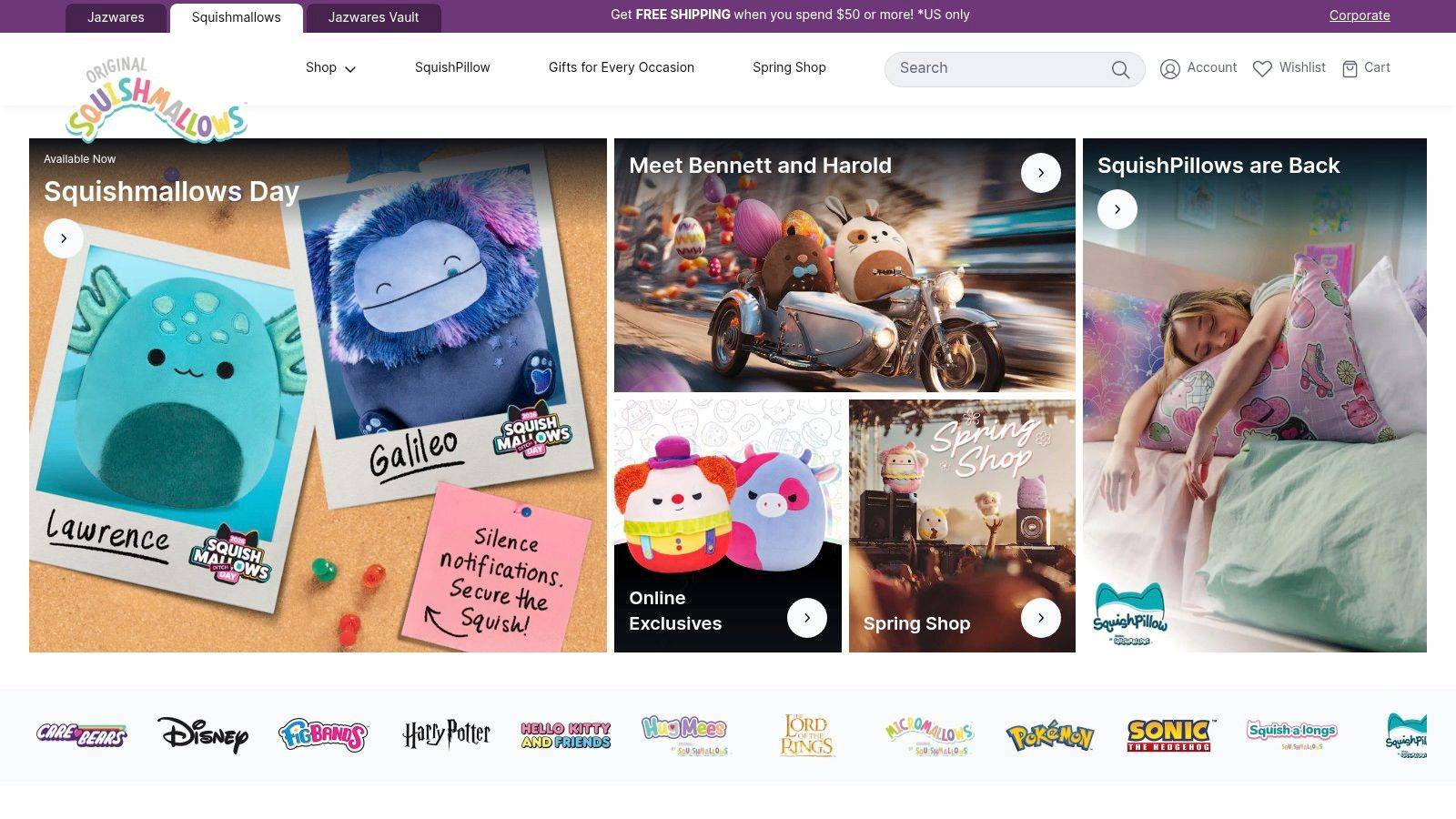
Their website is a brilliant example of product categorization, allowing users to shop by size, character Squads, or licensed collaborations. The “SquishPillows” category is a smart move, directly targeting consumers looking for functional pillows, demonstrating how one core product can serve multiple market segments.
Strategic Analysis from the Factory Floor
The viral popularity of these plush toys, often fueled by platforms like TikTok, highlights key manufacturing and sourcing principles. If you’re looking to understand this, research how to sell products on TikTok.
- Material Specification is Everything: Their unique feel comes from a very specific spandex-polyester blend fabric and a proprietary, highly elastic polyester fiber fill. For a buyer, this means your technical pack must be precise. Specify fabric weight (GSM), stretch percentage, and the exact type of fill. A small deviation changes the entire product feel. We call this the “handfeel,” and it’s a critical quality control point.
- Manufacturing for Scarcity: The model of online exclusives and limited drops requires a flexible and responsive supply chain. Factories must be able to switch production between different character designs (SKUs) quickly and manage smaller, more frequent production runs. This is more complex than producing one design in massive volume.
- Scaling with Licensing: Partnering with major IPs like Disney and Pokémon requires factories that are audited and approved by those licensors (e.g., FAMA for Disney). This is a significant barrier to entry and a mark of a high-quality, compliant factory.
Manufacturer’s Insight: The Squishmallows model proves that a single, perfected tactile experience can be the foundation of an entire brand. The manufacturing challenge isn’t just making one perfect sample; it’s achieving that same perfection on the millionth unit. This requires rigorous incoming material inspection and consistent machine calibration for stuffing.
Actionable Takeaways for B2B Buyers
For brands looking to create their own pillow plush, the Squishmallows site (shop.jazwares.com/pages/squishmallows) is a blueprint for product presentation. When sourcing, provide a physical reference sample if you want to replicate a specific feel. Ask your factory for their “spandex plush” or “crystal soft velboa” options. The diverse character designs also provide a library of ideas for different types of plush toys that can be adapted. Beware of counterfeit sites; always verify you are on the official Jazwares store.
2. LIV HEART “Nemu Nemu Animals”: Engineering for Comfort
LIV HEART, a Japanese brand, positions its “Nemu Nemu Animals” line as comfort and sleep aids. From a manufacturing perspective, their focus is on engineering a specific “mochi-mochi” texture. This isn’t just a material choice; it’s a combination of premium stretch fabric and a specialized fill that creates a unique density and weight.
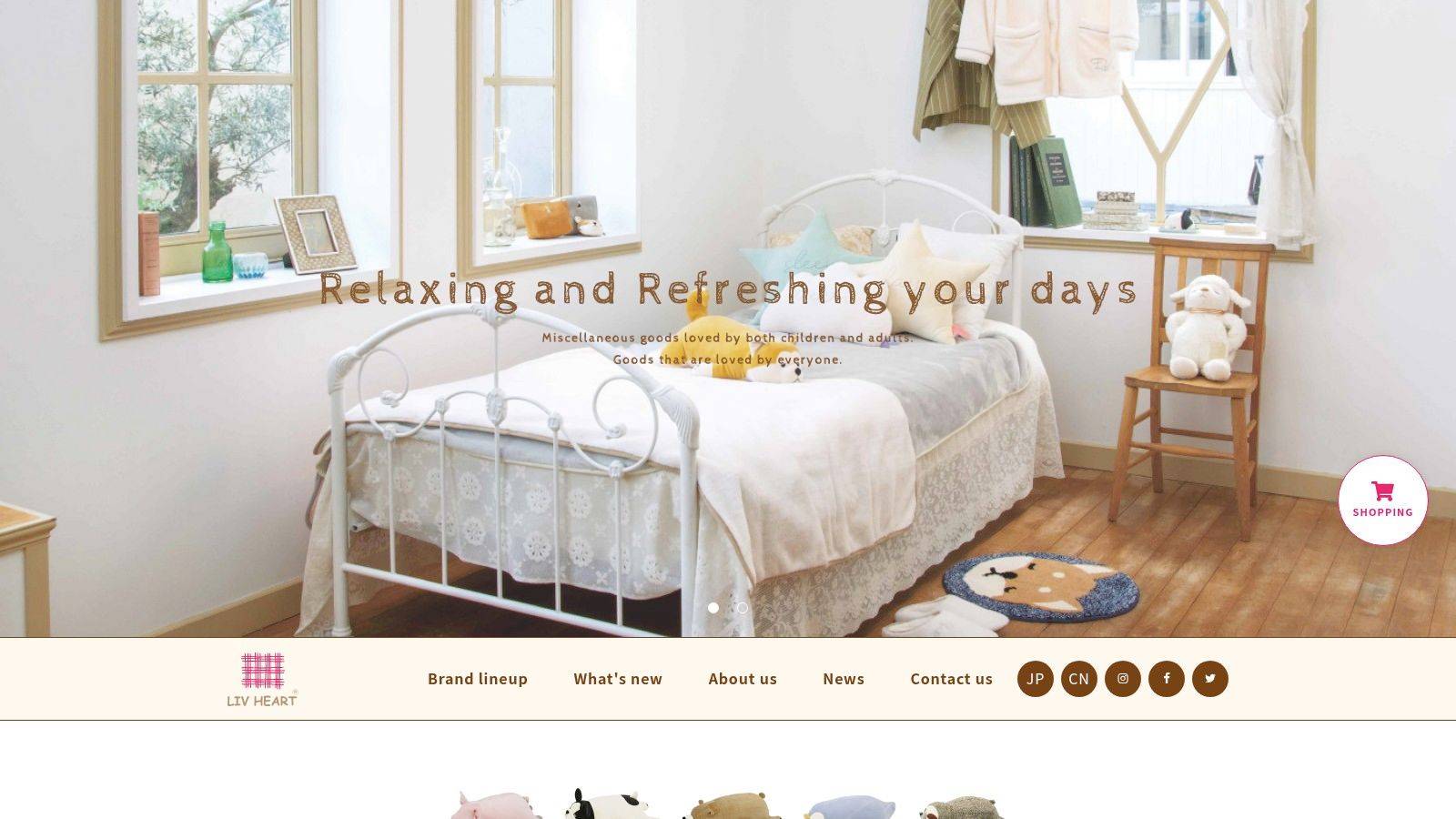
The brand markets its products as lifestyle goods, showcasing them in home settings. This deliberate positioning targets an adult demographic seeking tactile comfort, a different segment from pure toy collectors. Their product shapes are often elongated bolsters, a design choice made specifically for hugging and support.
Strategic Analysis from the Factory Floor
LIV HEART’s strategy offers a blueprint for creating a premium, function-driven product.
- Advanced Materials and Filling: The “mochi-mochi” texture is achieved with a high-quality, 4-way stretch fabric combined with either down cotton (a very fine, short-staple polyester) or a mix including microbeads. This fill is denser and more fluid than standard PP cotton, giving the product its characteristic heavy, squishy feel. Sourcing these specialized materials increases the per-unit cost significantly.
- Design for Function: The bolster shapes of Nemu Nemu Animals are not arbitrary. They are designed for ergonomic comfort. This requires careful pattern making to ensure the final stuffed product maintains its intended shape and doesn’t become lumpy. The seams must be strong enough to handle the weight and pressure of being used as a body pillow.
- Controlled Market Entry: LIV HEART’s strategy of having a strong, official presence in key Asian markets, while being harder to source elsewhere, is a deliberate choice. It allows them to maintain premium pricing and control brand perception, avoiding the commoditization that can happen with wider distribution.
Manufacturer’s Insight: LIV HEART demonstrates that a pillow plush can be a functional wellness product. For a factory, producing this requires more than just standard plush toy equipment. It requires precision in pattern grading to create the ergonomic shapes and specialized stuffing machines that can handle finer, denser fills without clumping.
Actionable Takeaways for B2B Buyers
For brands targeting the high-end comfort market, the LIV HEART website (livheart.com) is a case study in lifestyle branding. When speaking to a manufacturer, ask for samples of “4-way stretch fleece” or “down cotton filling” to understand the cost and feel. Be aware that these premium materials can increase your production cost by 30-50% compared to standard plush. The designs show how to turn simple animal forms into functional support pillows. Sourcing can be a challenge outside of Asia, making a reliable manufacturing and logistics partner essential.
3. Sanrio (Hello Kitty & Friends): The Power of IP-Driven Manufacturing
Sanrio is a titan of character-driven merchandising. For them, pillow plush animals are a core product category driven entirely by the strength of their intellectual property (IP). From a manufacturing standpoint, the priority shifts from creating a unique tactile feel to achieving absolute character accuracy.
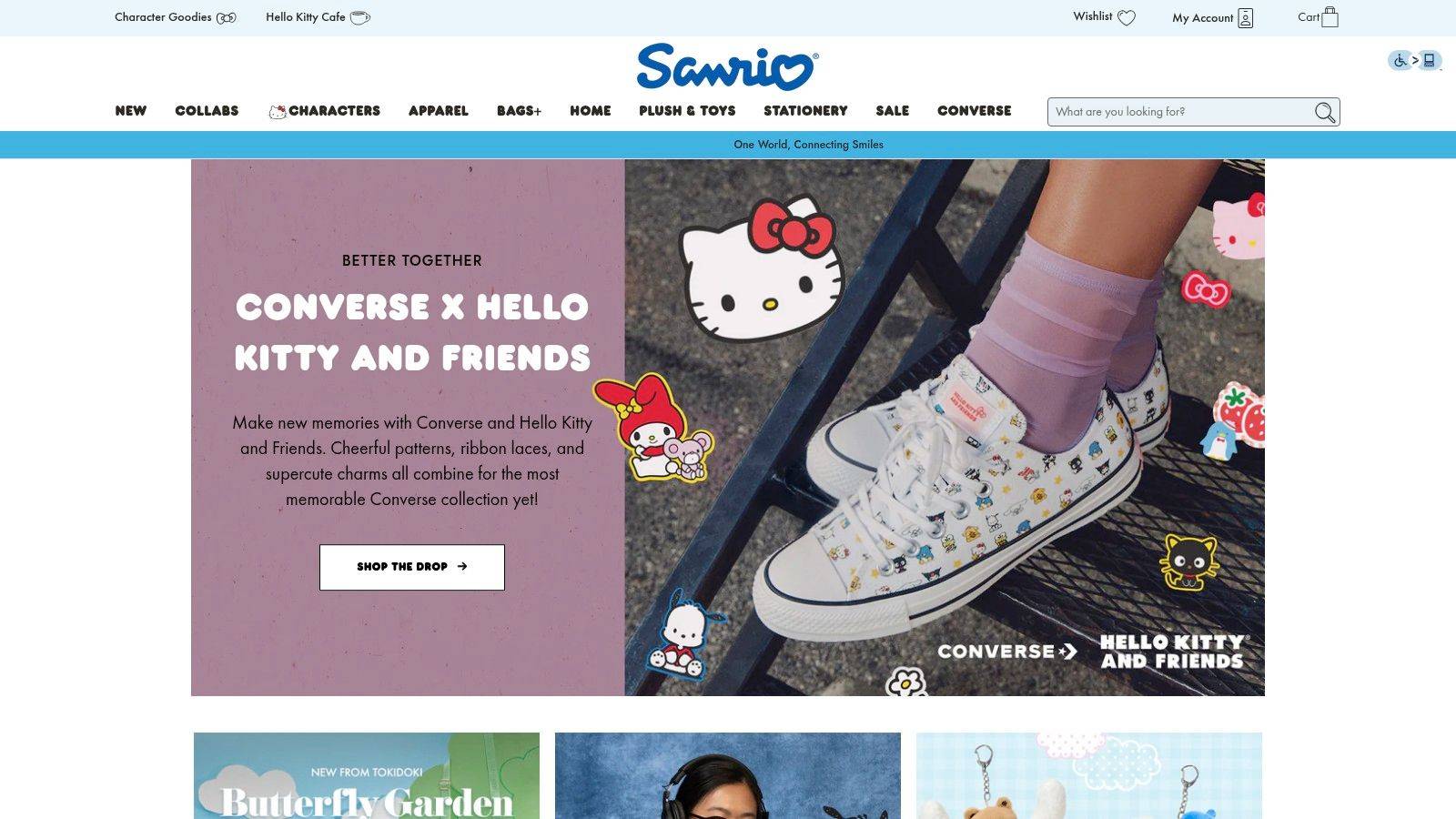
Their website’s “Cushions” category showcases everything from simple face cushions of Cinnamoroll to more complex full-body plush of Kuromi. This demonstrates how a deep IP catalog can fuel continuous product novelty without reinventing the core product.
Strategic Analysis from the Factory Floor
Sanrio’s strategy is built on the unwavering global appeal of its characters, which dictates the manufacturing process.
- Embroidery and Appliqué are Key: Character integrity is paramount. This means factories must have advanced, multi-head embroidery machines and skilled workers for precise appliqué (sewing fabric shapes onto the base fabric). The cost of a Sanrio plush is heavily influenced by the stitch count and complexity of the embroidery on the face and accessories.
- Manufacturing for Seasonal Demand: Sanrio constantly releases seasonal and collaborative collections. This requires factories to be agile, capable of quick turnarounds on new designs. The sampling process must be highly efficient to get from design approval to mass production in time for a holiday or product launch.
- Quality Control as Brand Protection: As a licensor, Sanrio enforces extremely strict quality control. Factories undergo rigorous audits (like the SMETA or ICTI ethical audits) and product inspections. Every shipment is checked to ensure it protects the brand’s premium image. Any deviation from the approved “golden sample” can result in the entire order being rejected.
Manufacturer’s Insight: For IP-driven products, the technical pack (tech pack) is the bible. It must specify exact Pantone colors for fabric and thread, embroidery file formats, and precise placement and dimensions for every feature. A good factory will work with the client to refine the tech pack to ensure it is manufacturable at scale while maintaining the character’s integrity.
Actionable Takeaways for B2B Buyers
For brands with their own IP, Sanrio’s site (www.sanrio.com) is an execution masterclass. When developing a character-based plush, invest in a detailed tech pack. This is your primary tool for communicating your vision to the factory. Studying Sanrio’s model for custom animal plush can provide a roadmap for building a merchandise ecosystem. Be aware that official sites often have regional shipping restrictions; for the China market, buyers must use authorized channels like Tmall to avoid a massive counterfeit market.
4. LINE FRIENDS / BT21: Converting Digital IP into Physical Gold
LINE FRIENDS and its BT21 collaboration are a prime example of converting digital IP from messaging apps into high-demand physical products, especially pillow plush animals. For a manufacturer, their product line is a study in maintaining brand identity across different materials while navigating a complex global distribution network.
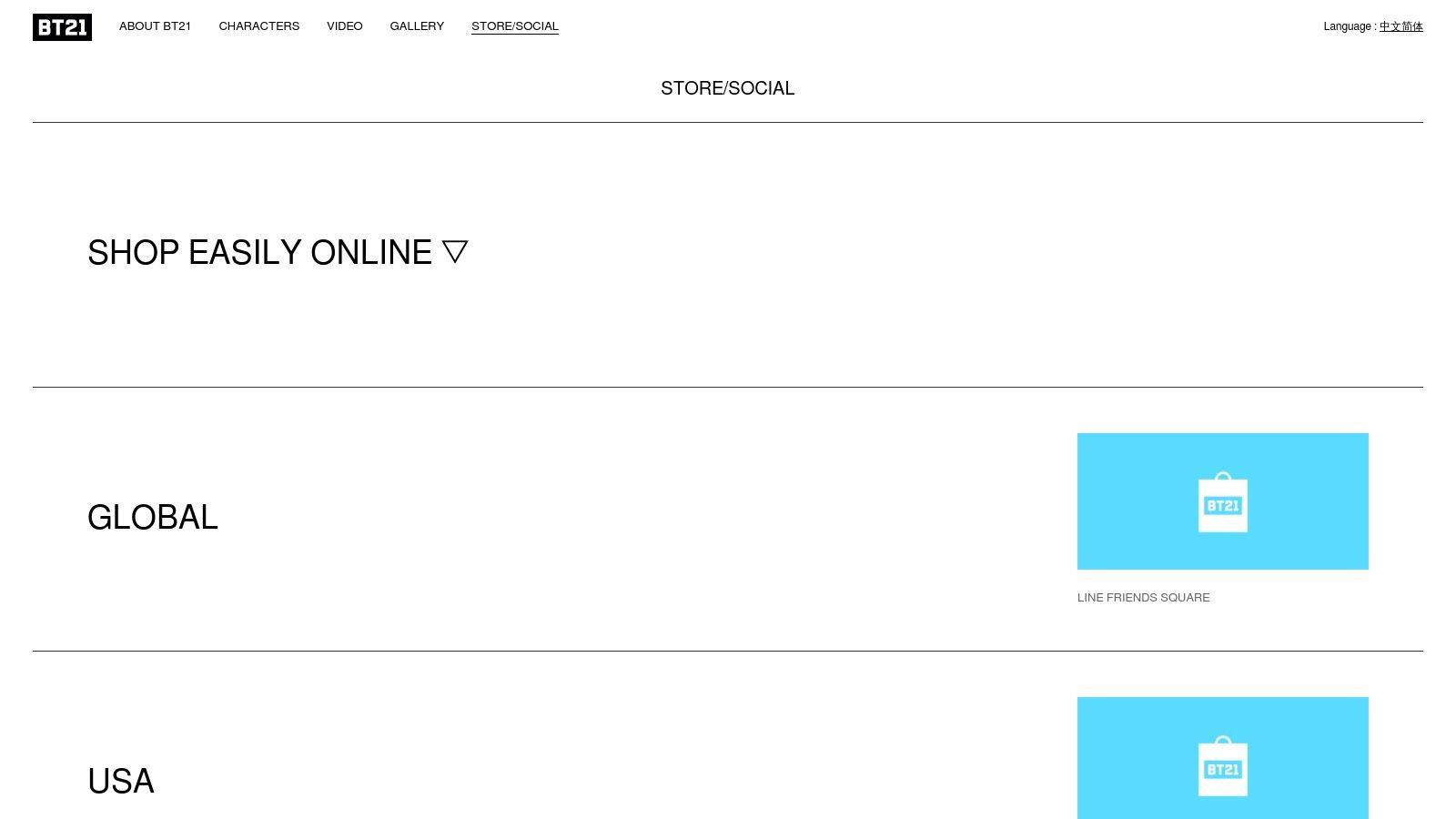
Their e-commerce strategy is smart, using regional portals like Tmall for China and LINE FRIENDS SQUARE for other global markets. This approach acknowledges local e-commerce leaders and simplifies logistics, a critical lesson for any brand scaling internationally.
Strategic Analysis from the Factory Floor
The BT21 phenomenon is driven by deep fan engagement and a savvy product diversification strategy that has direct manufacturing implications.
- Manufacturing Diverse Form Factors: They offer multiple pillow types. “Face cushions” often use standard short-pile velboa but require intricate, multi-layer embroidery, which increases the cost and production time per unit. “Mochi cushions” use a spandex-blend fabric for a softer, squishier feel. Offering both allows them to hit different price points and appeal to different consumer preferences (display vs. comfort).
- IP as the Primary Cost Driver: The value is in the character. This means a significant portion of the product’s final cost is tied to licensing fees, not just production. However, the strong IP allows the brand to command a higher retail price, absorbing the higher manufacturing costs associated with detailed embroidery and premium materials.
- Regionally-Optimized Production: The use of different e-commerce portals often ties into a regional production and logistics strategy. Production for the Chinese market might happen in one factory, while production for the Korean or US market happens in another to optimize shipping costs and lead times.
Manufacturer’s Insight: When a client wants multiple product types for the same character (e.g., a firm face cushion and a soft body pillow), we have to source different materials and use different production techniques. The challenge is ensuring the character’s colors and key features look identical across different fabrics, which can dye differently. This requires careful color lab-dipping and pre-production testing.
Actionable Takeaways for B2B Buyers
The BT21 store (www.bt21.com/store?lang=zh_CN) is a treasure trove of ideas for character merchandising. When sourcing, be clear about the intended use of your pillow. Is it for display or for hugging? This will guide your manufacturer in recommending the right fabric and filling. A “mochi” texture requires a specific spandex fabric and elastic polyester fill. A “face cushion” prioritizes fabric that holds embroidery well. Regional product exclusives are an effective strategy but require careful planning with your factory and logistics provider.
5. Kakao Friends: Mastering Simplicity and Quality
Kakao Friends, born from South Korea’s leading messaging app, excels at translating simple 2D digital characters into premium 3D pillow plush animals. Their strategy is a lesson in the power of clean design and high-quality execution, which has built a massive following in East Asia.
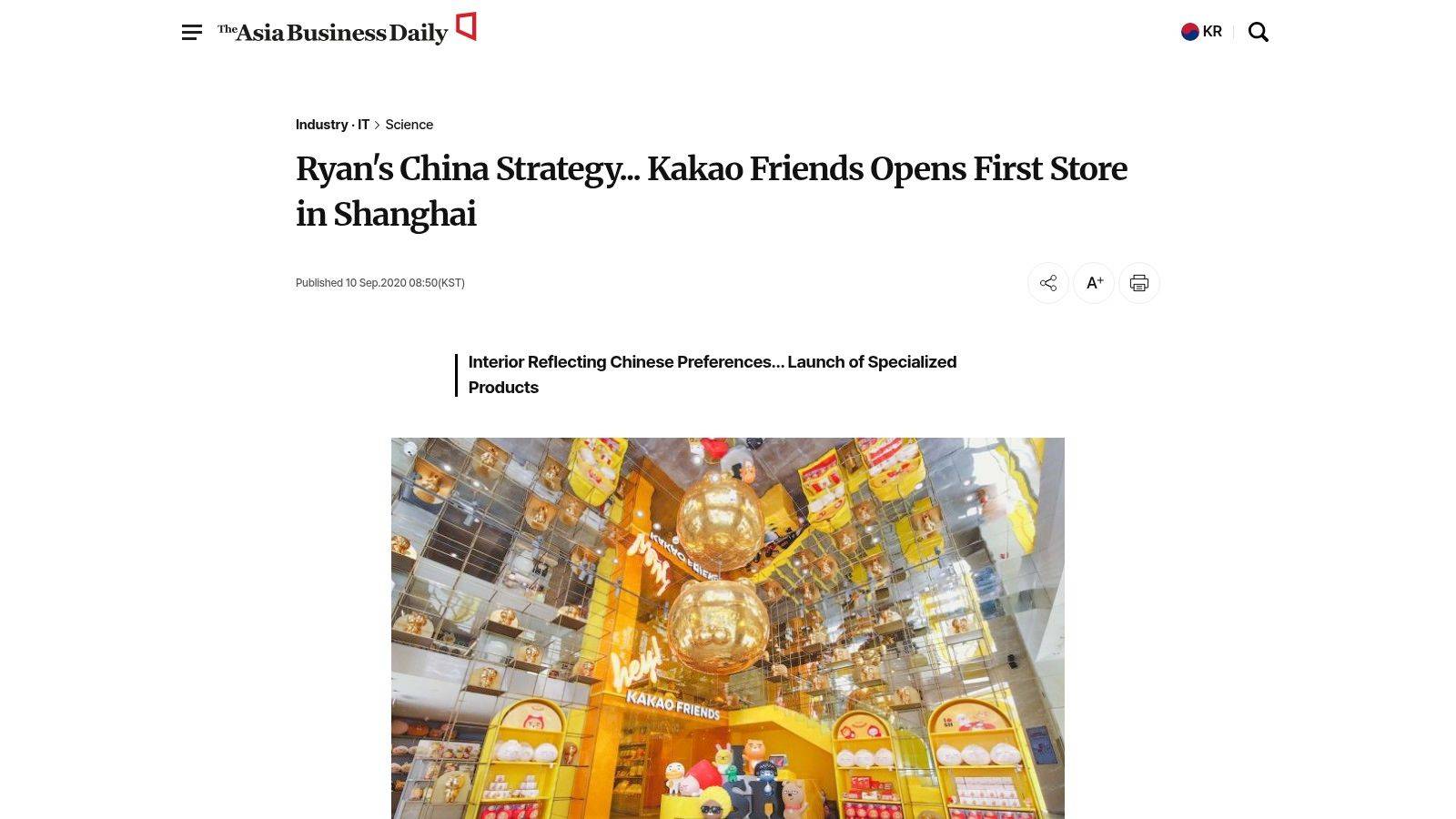
Their product ecosystem is built around beloved characters like Ryan and Apeach, offering various cushion formats—from small face pillows to large lounge cushions. This multi-format approach maximizes the value of the IP by catering to different uses, from home décor to travel comfort.
Strategic Analysis from the Factory Floor
Kakao Friends’ success provides a clear manufacturing blueprint for brands leveraging their own IP.
- Simplicity is a Manufacturing Advantage: The characters’ designs are clean and not overly complex. This is a deliberate choice that reduces production complexity, minimizes the risk of errors in embroidery or assembly, and helps maintain brand consistency across millions of units. Simple, bold features are often easier and cheaper to produce accurately than highly detailed ones.
- Quality Materials as a Brand Signal: Kakao Friends products use high-quality, short-pile velboa or minky fabrics. These materials have a dense, uniform pile that holds its shape well and provides a smooth surface for clean, precise embroidery. The choice of a dense fill ensures the pillows are firm and don’t look deflated on the shelf. This signals quality to the consumer.
- Strategic Format Diversification: Offering the same character in multiple formats (face cushion, body pillow) is a smart production strategy. Once the embroidery and key patterns are developed for one product, they can be easily adapted to others, reducing the R&D time for new SKUs.
Manufacturer’s Insight: For Kakao Friends, the emphasis is on perfection in simplicity. The embroidery for Ryan’s stoic face must be flawless. The shape of Apeach’s head must be perfectly symmetrical. Quality control focuses on stitch density, pattern alignment, and stuffing consistency to ensure every product looks exactly like the character and feels like a premium item.
Actionable Takeaways for B2B Buyers
The Kakao Friends model is highly replicable for brands with strong, simple characters. Their online stores showcase clean, IP-focused product photography. When developing your line, consider that simpler designs can often lead to higher quality and lower defect rates in mass production. Specify high-stitch-count embroidery and dense, resilient PP cotton fill in your tech pack to achieve a similar premium feel. Be aware that the official Kakao Friends store (store.kakaofriends.com) has regional shipping limitations. To enter the Chinese market, for example, partnering with a factory that understands the requirements for selling on platforms like Tmall is crucial.
6. Jellycat: The Business of Premium Whimsy
Jellycat, a UK brand, operates in the premium tier of the plush market. Their “Amuseables” range, featuring anthropomorphic objects, functions perfectly as quirky pillow plush animals. For a manufacturer, producing for Jellycat means meeting the highest standards of material quality, construction, and safety.
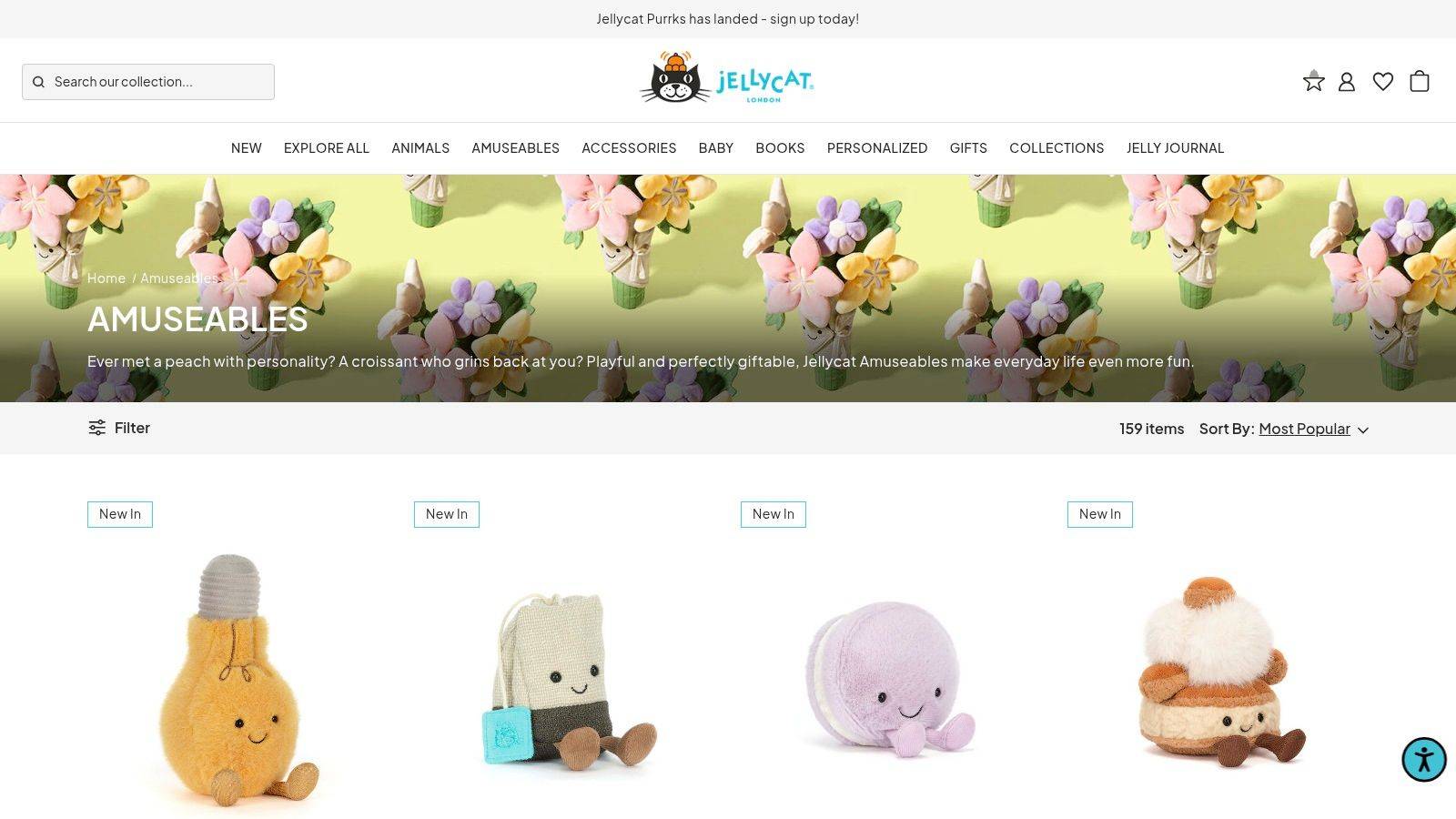
Their website organizes products by whimsical collections, not just by type or size. This design-led approach reinforces the brand’s identity. Their success in high-end retail globally demonstrates a significant market for premium, giftable plush.
Strategic Analysis from the Factory Floor
Jellycat’s strategy is about justifying a high price point through tangible quality and unique design.
- Sourcing Premium, Long-Pile Fabrics: The signature Jellycat softness comes from custom, high-grade polyester fabrics with a longer pile. These materials are significantly more expensive (often 2-3x the cost of standard velboa) and require more care during cutting and sewing to manage the longer fibers. Incoming material inspection is ruthless; any defect in the fabric results in rejection.
- Complex Construction and Mixed Materials: Jellycat designs often mix different textures and fabrics in a single toy (e.g., corduroy for legs, soft fur for the body). This increases manufacturing complexity, as different materials behave differently during sewing. It requires skilled workers and more intensive quality control at each assembly step.
- Design as a Competitive Advantage: The “Amuseables” line is a perfect example of ODM (Original Design Manufacturing) inspiration. A factory with a strong R&D team can help a brand develop such unique concepts. The idea of a smiling croissant or avocado created an entirely new product category.
Manufacturer’s Insight: Producing for a brand like Jellycat means every step is scrutinized. We perform needle detection checks multiple times. Seam strength is pull-tested to a higher force standard. Stuffing is done by weight to ensure consistent density. The entire process is about risk mitigation to protect the child using the toy and the brand’s premium reputation.
Actionable Takeaways for B2B Buyers
For brands aspiring to the premium segment, the Jellycat website (us.jellycat.com/amuseables) is a benchmark for quality and branding. When sourcing, be prepared for a higher unit cost. Ask for samples of “high-pile faux fur” or “rabbit fur plush” to understand the material options. Be aware that the higher price point makes these products a prime target for counterfeiters. Securing your supply chain and directing customers to official channels is essential for brand protection.
7. Pillow Pets: The Original Functional Innovator
Pillow Pets created and has dominated the convertible pillow plush animals category for nearly two decades. Their innovation is a simple, patented function: a plush toy that unfolds into a flat pillow. From a manufacturing perspective, the product is an exercise in durability and functional reliability.
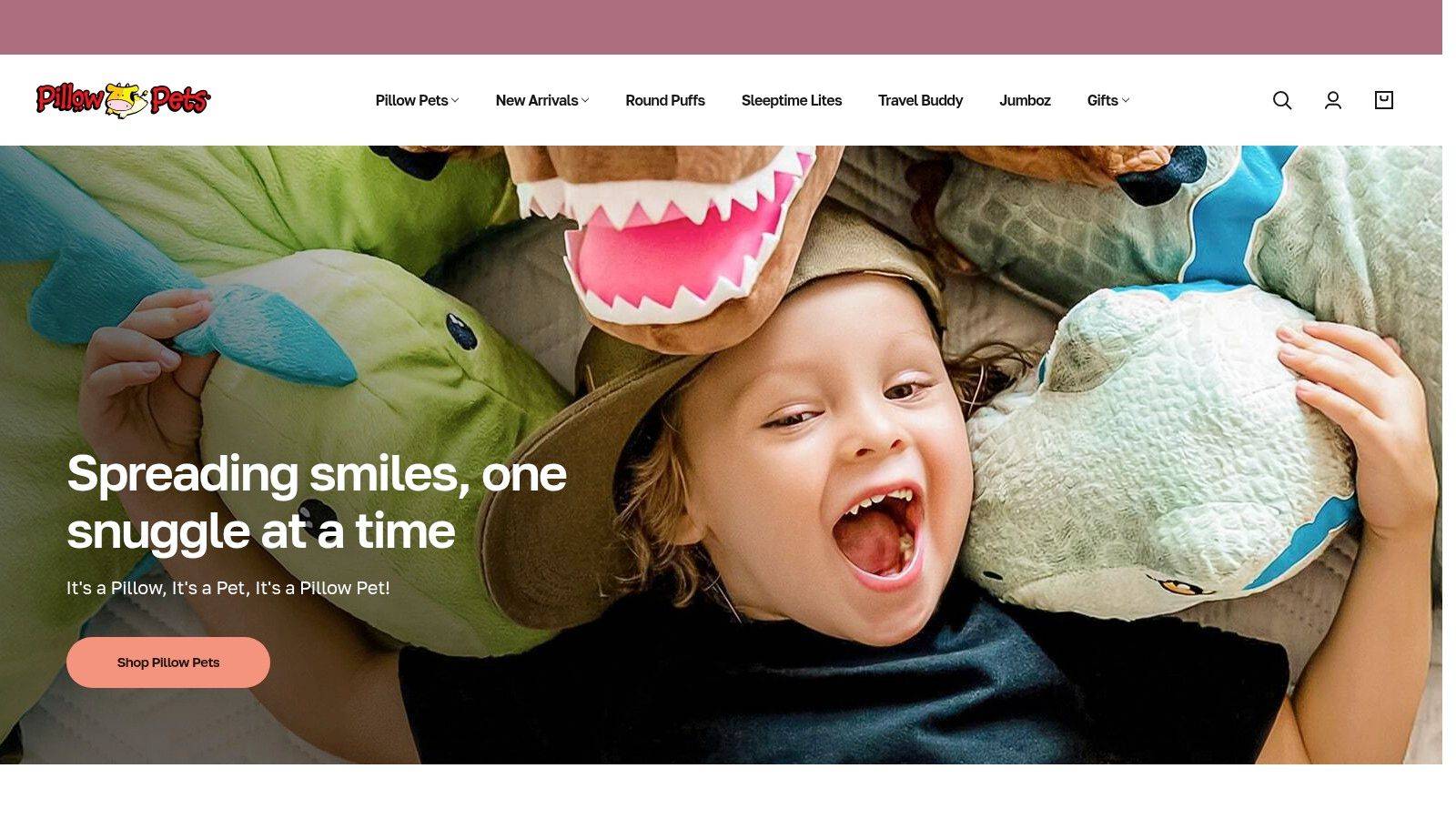
The brand’s website clearly segments products by function (Originals, Sleeptime Lites) and licensed IP (Disney, PAW Patrol). The “machine washable” feature is a key selling point, which places specific demands on the manufacturing process.
Strategic Analysis from the Factory Floor
Pillow Pets’ longevity comes from focusing on a reliable, everyday use-case.
- Engineering for Durability: The core value is the convertible function. The Velcro strap is the most critical component. It must be a high-grade hook-and-loop fastener that can withstand thousands of open-close cycles without losing its grip or fraying. The stitching that attaches the strap to the body must be heavily reinforced (e.g., with bar-tack stitching) to prevent it from tearing off.
- Material Selection for Washability: The chenille fabric and polyester fill are chosen specifically for their ability to withstand machine washing. During the sampling phase, a factory producing these would perform multiple wash-and-dry cycles on the prototype to check for color bleeding, fabric pilling, and fill clumping. These test results are a key approval milestone.
- Modular Product Ecosystem: Creating variations like “Sleeptime Lites” (which incorporate an electronic light module) adds complexity. The factory must have a separate, dust-free assembly line for electronics and ensure the final product still passes all toy safety standards (e.g., battery compartments must be secured with screws). The popularity of oversized items also creates a market for products like giant soft stuffed animals.
Manufacturer’s Insight: For functional plush like Pillow Pets, prototyping is crucial. We test the mechanism relentlessly. Does it fold and unfold easily? Is the Velcro strong but not too difficult for a child to open? We create a “use and abuse” testing protocol to simulate real-world wear and tear before we ever start mass production.
Actionable Takeaways for B2B Buyers
For brands developing a functional plush, the Pillow Pets site (www.pillowpets.com) is a study in family-friendly marketing and durable design. When writing your tech pack, specify the exact type and quality of the fastener (Velcro, snaps, zippers). Insist on wash testing during the sampling stage. If your product includes electronics, ensure your factory has experience with electronic toys and can provide the necessary compliance certifications. The consistent rotation of licensed IP shows the importance of a flexible supply chain that can adapt production to new character releases.
Pillow Plush Animals: 7-Brand Comparison
| Product | 🔄 Implementation complexity | ⚡ Resource requirements | ⭐📊 Expected outcomes | 💡 Ideal use cases | ⭐ Key advantages |
|---|---|---|---|---|---|
| Squishmallows (Kellytoy / Jazwares) | Moderate — demand-driven drops and authenticity checks | Medium–high — frequent restocks, online exclusives, inventory turnover | ⭐⭐⭐⭐ — strong sell-through, high consumer appeal; resale on rares | Collectible retail, pillows/bedroom décor, gifting | Consistent marshmallow handfeel; wide size range; large character ecosystem |
| LIV HEART “Nemu Nemu Animals” | Moderate — regional sourcing and limited English ecommerce | Low–medium — fewer SKUs but may require cross-border procurement | ⭐⭐⭐ — high comfort/softness appeal in niche markets | Nap support, sleep-focused products, specialty imports | Mochi fabric feel; designed for hugging and sleep comfort |
| Sanrio (Hello Kitty & Friends) | Low — established official channels and merchandising | Medium — seasonal SKUs, licensed programs and promotions | ⭐⭐⭐⭐ — reliable brand-driven sales and giftability | Licensed retail, seasonal collabs, gift programs | Strong IP portfolio; consistent quality and official authenticity |
| LINE FRIENDS / BT21 | Moderate — region-exclusive drops and Tmall routing | Medium — manage multiple cushion formats and hot SKUs | ⭐⭐⭐⭐⭐ — very high demand and strong gifting/bedroom use | Trend-driven retail, gifting, travel/room décor | High IP heat; diverse cushion formats and global storefronts |
| Kakao Friends | Moderate — region-locked ecommerce with Tmall presence | Medium — regional logistics and segmented online channels | ⭐⭐⭐ — solid regional demand, spikes with limited collabs | East Asia-focused retail, gifting, travel pillows | Recognizable characters; multiple formats for home/car use |
| Jellycat | Low–moderate — premium positioning with pop-ups and marketplace sales | High — higher wholesale/retail price points and controlled distribution | ⭐⭐⭐⭐ — strong perceived quality and gifting performance | Premium gifting, décor, boutique retail | Ultra-soft materials and premium build; strong brand perception |
| Pillow Pets | Low — purpose-built convertible design and established US ecommerce | Low–medium — multiple licensed SKUs, machine-washable specs | ⭐⭐⭐ — practical functionality with family appeal | Kids’ travel pillows, multifunctional plush/pillow use | Converts to pillow via Velcro; wide licensed portfolio and durable design |
The Manufacturing Blueprint: Choosing a Quality Partner for Pillow Plush Animals
We’ve analyzed how market leaders like Squishmallows, Sanrio, and Jellycat manufacture their pillow plush animals. The common thread is a deep, collaborative partnership with their factories. A successful product is not born from a purchase order; it’s forged through a process of shared expertise. The path from design to delivery is laden with critical decisions that determine your product’s quality, safety, and profitability.
A low-quality factory will give you a low price. A quality manufacturing partner will give you value. They will guide you on material selection, optimize your design for mass production, and ensure your final product is safe, durable, and matches your vision.
Key Pillars of Successful Plush Toy Manufacturing
- Material Sourcing is Paramount: The final “handfeel” of your pillow plush is its most important feature. A good factory has an extensive library of fabrics (velboa, minky, spandex plush, sherpa) and fillings (PP cotton, down cotton, foam particles). We guide our clients to the right materials to match their target cost and desired quality.
- From OEM to ODM: As an Original Equipment Manufacturer (OEM), we build exactly to your specifications. As an Original Design Manufacturer (ODM), we can help you develop a concept from scratch. A strong partner has an R&D department that can turn a simple sketch into a production-ready pattern.
- Safety & Compliance (EN71/ASTM): This is non-negotiable. Reputable factories operate under strict quality management systems (like ISO 9001) and conduct rigorous testing. This includes physical tests (seam strength, small parts), chemical tests (for lead, phthalates), and flammability tests. Always ask a potential factory for recent EN71 or ASTM F963 test reports for similar products.
- The Critical Sampling Stage: Never proceed to mass production without approving a final physical sample. A typical sampling timeline is 7-10 days. This is your opportunity to check the shape, materials, embroidery quality, and overall feel. A good factory will provide 2-3 samples for you to review and will work with you on revisions until you are 100% satisfied.
How to Vet a Plush Toy Manufacturer
When you contact a factory, the conversation should go beyond price. A true partner will ask about your target market, retail price point, and desired features. Use this checklist to evaluate them:
- Ask for Their Audit Reports: Request their BSCI, SMETA, or ICTI audit reports. These social compliance audits are a strong indicator of a factory’s professionalism and ethical standards.
- Discuss MOQ and Production Timelines: Minimum Order Quantities (MOQs) typically range from 500 to 1000 pieces per design. Ask for their standard lead time for mass production, which is usually 30-45 days after the sample is approved.
- Inquire About Their Quality Control Process: Ask them to describe their QC steps. A good factory has Incoming Quality Control (IQC) for raw materials, In-Process Quality Control (IPQC) during production, and Final Quality Control (FQC) before shipping.
- Evaluate Their Communication: Are they responsive, professional, and fluent in your language? Clear communication is the single most important factor in a successful manufacturing partnership. Delays and misunderstandings are costly.
Creating a successful line of pillow plush animals is a partnership between your creative vision and our manufacturing expertise. By choosing a partner who understands the intricacies of production, you are not just buying a product; you are investing in a blueprint for success.
Ready to turn your vision into a high-quality, market-ready product? At FunEnjoy PlushToys, we specialize in the OEM and ODM manufacturing of custom plush toys, including the pillow plush animals detailed in this guide. We act as your production partner, providing expert guidance from concept to delivery. Start the conversation with our team today and let’s build your next best-seller together.