As manufacturers operating from the heart of China’s toy production hub, we see market trends take shape long before they become global headlines. Right now, hand puppets are experiencing a resurgence, not just as playthings, but as strategic tools for brand building, digital content creation, and tourism.
The demand we’re fulfilling isn’t driven by simple nostalgia. It’s a calculated strategy by businesses recognizing new commercial channels, particularly in collectible merchandise and character licensing. This guide offers our direct, factory-floor perspective on turning a hand puppet concept into a market-ready product.
Market Overview: The Commercial Power of Hand Puppets
If your perception of hand puppets is limited to children’s theatre, you’re missing a significant commercial shift. From our vantage point as a manufacturer, the market is expanding into sophisticated and profitable sectors.
We are no longer just shipping to toy retailers. Our production lines are busy with orders from global brands launching new intellectual property, theme parks developing exclusive souvenirs, and digital creators producing limited-edition collectibles. This evolution highlights a fundamental change in the perceived value and application of hand puppets.
Benefits: Beyond Playtime to Brand Building
The primary benefit driving this trend is the unique ability of hand puppets to create a tangible connection between a character and its audience. Unlike a digital image, a physical puppet becomes a storytelling partner.
For brands, this translates into:
- Enhanced Brand Loyalty: A physical character fosters a deeper emotional bond.
- Collectible Hype: Limited-edition puppet drops create urgency and build community, a model proven by the “kidult” toy market.
- New Revenue Streams: Puppets serve as merchandise for entertainers, educational tools for institutions, and high-value souvenirs for tourist destinations.
Types of Hand Puppets We Manufacture
From a production standpoint, hand puppets fall into several categories based on complexity and function:
- Simple Glove Puppets: The most basic form, often made with fewer pattern pieces and materials like felt or simple velboa. Ideal for large-scale promotional giveaways.
- Full-Body Puppets with Movable Mouths: These require more complex patterning and internal structure to allow for expressive movement. They are the standard for performance and character-based content.
- Puppets with Added Features: This includes puppets with rod-controlled arms, intricate clothing, or embedded sound modules. Complexity and cost increase significantly.
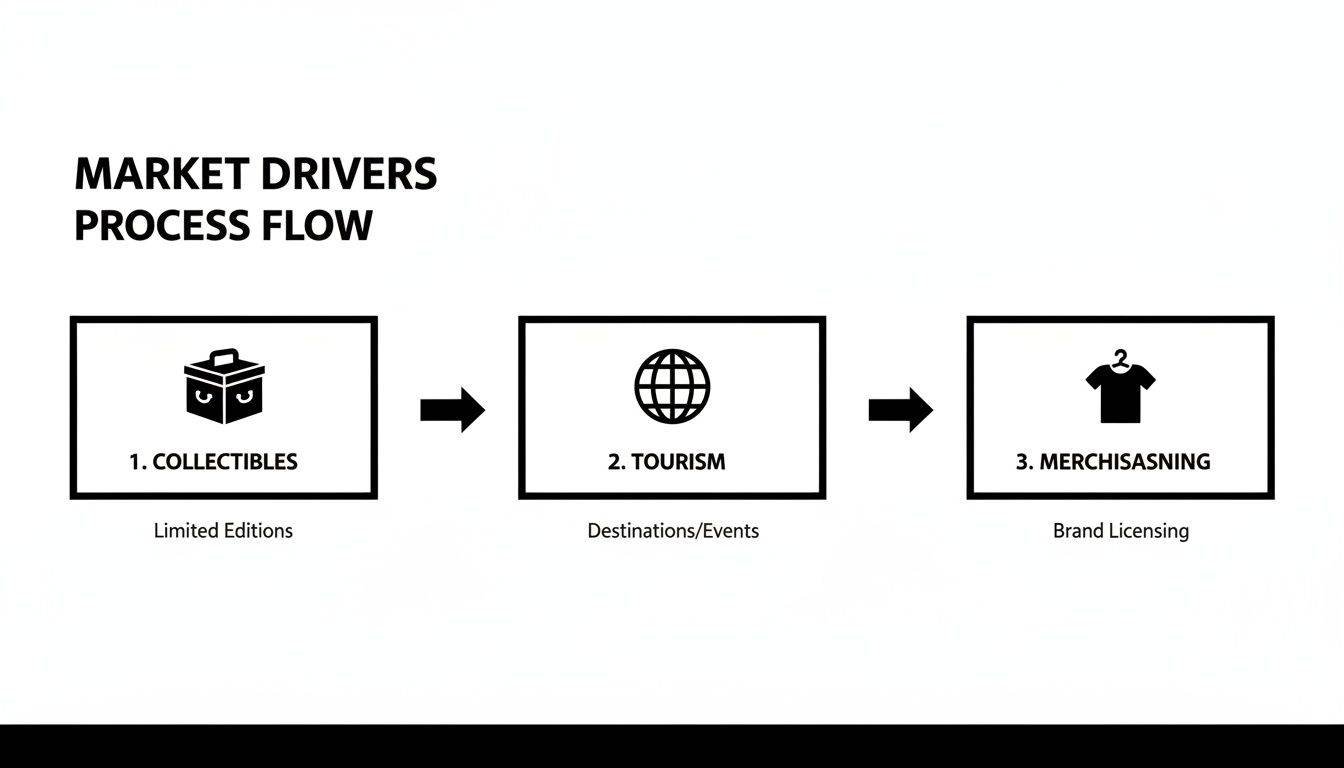
This flow from collectible characters to tourism merchandise demonstrates the strategic commercial applications we are currently seeing. You may find this article on how hand puppets can be used for kids’ educational development useful for further context.
The Manufacturing Process: An Inside Look
Transforming a 2D design into thousands of identical hand puppets is a precise, multi-stage process. Understanding this workflow is critical for any B2B buyer to manage timelines and budgets effectively.
Step 1: Design & Prototyping (7-15 Days)
It begins when we receive your design files.
- Tech Pack Analysis: Our engineers review your design for manufacturing feasibility. We identify potential issues—like complex seams that won’t hold up or materials that are difficult to source—before they become costly problems.
- Paper Patterning: Our most skilled artisans translate your 2D drawings into a set of 3D paper patterns. The precision of this manual craft dictates the puppet’s final form and proportion.
- Sample Creation (Prototype): We create the first physical sample. This involves sourcing the specified fabrics, cutting, embroidering or printing details, and hand-sewing the initial unit. This prototype is your “golden sample”—the benchmark for mass production. This phase is iterative; clear, consolidated feedback is crucial to avoid delays.
Manufacturer’s Insight: The prototype stage is your most critical checkpoint. Approve it only when you are 100% satisfied. Any change made after this point requires re-tooling and will lead to significant delays and costs.
Step 2: Mass Production (25-35 Days)
Once the prototype is approved, the factory floor moves into full-scale production.
- Material Procurement: We order all bulk materials specified in the tech pack.
- Bulk Cutting: We use industrial electric cutters to slice through hundreds of fabric layers at once, guided by the finalized patterns for maximum efficiency.
- Embroidery & Printing: Details like eyes, logos, and facial features are applied using high-speed, multi-head embroidery machines or screen-printing lines.
- Sewing Assembly: Our workforce is organized into specialized lines. Some stitch main body parts, while others focus on attaching small components like ears or clothing.
- Stuffing & Finishing: Puppets are filled with materials like PP cotton using a blowing machine to ensure consistent density. The final seam is closed by hand, and loose threads are trimmed.
The demand for character merchandise, including puppets, is heavily influenced by related industries. China’s animation sector, valued at over RMB 220 billion, is a key driver. As animated franchises achieve global success, the demand for high-quality merchandise skyrockets, creating immense commercial opportunities. The Athens Journal of Humanities & Arts provides further academic research into the growth of these cultural industries.
Pricing Factors: What Drives Your Unit Cost?
A puppet’s final price is not arbitrary. It is a direct calculation of materials, labor, and complexity. Understanding these drivers allows you to design a product that aligns with your budget.
- Complexity: The single biggest cost factor. More fabric pieces, intricate embroidery, and accessories like clothing all increase sewing time and labor costs.
- Materials: Premium fabrics like custom-dyed Minky cost more than standard velboa. The type of filling (e.g., adding structural foam) also impacts the price.
- Order Quantity: Larger orders reduce the per-unit cost due to economies of scale in material purchasing and production line setup.
- Packaging: A custom-printed retail box is significantly more expensive than a simple polybag.
Tip to Reduce Cost: Simplify your design. Reducing the number of unique fabric colors or opting for high-quality printing instead of multi-layered embroidery can significantly lower the unit price without compromising the character’s integrity.
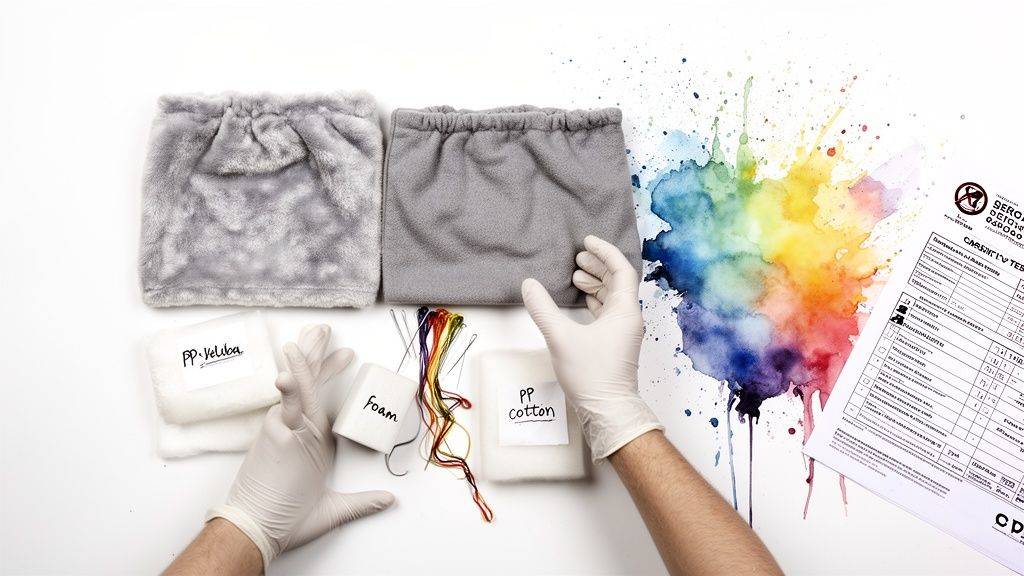
Materials & Filling Types
The choice of materials defines the puppet’s tactile quality and durability.
- Outer Fabrics:
- Velboa: A durable, low-pile plush that is cost-effective and versatile. The industry workhorse.
- Minky (Crystal Super Soft): An exceptionally soft, premium fabric with a slight sheen, ideal for high-end character puppets.
- Felt: Used for non-fraying appliquéd details like eyes, noses, or buttons.
- Filling:
- 100% New PP Cotton: The industry standard. It’s hypoallergenic, washable, and provides a classic soft feel. We only use new material to comply with safety standards.
- Structural Foam: Used internally to maintain specific shapes, like in a large head or upright ears. It is lighter than PP cotton but less cuddly.
This focus on craftsmanship has deep roots in China’s history. Quanzhou’s traditional string puppetry, dating back to the Han Dynasty, showcases an incredible commitment to quality that continues today. In 2023, these troupes performed over 900 shows for 400,000 people, proving the enduring appeal of well-crafted puppets. Learn more from this deep-dive into Quanzhou’s puppetry scene.
MOQ: Understanding Minimum Order Quantities
Minimum Order Quantity (MOQ) is the smallest order a factory will accept for a custom production run. This is dictated by the economics of manufacturing. Our raw material suppliers have their own MOQs—we must purchase fabric by the roll, not by the meter.
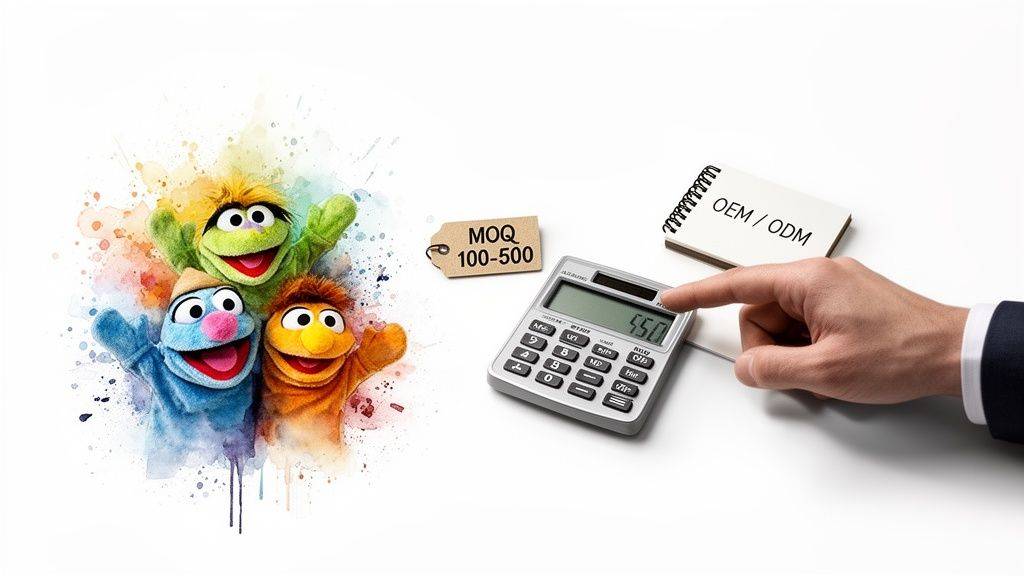
- Typical MOQ: For a fully custom hand puppet, most large factories require an MOQ of 1,000-2,000 pieces per design.
- Flexible MOQ: At FunEnjoy, we understand this is a high barrier for new brands. For simpler designs using our stock materials, we can often accommodate MOQs as low as 100-500 pieces.
OEM vs. ODM
You will encounter two primary production models:
- OEM (Original Equipment Manufacturer): You provide a unique design (your IP), and we manufacture it exclusively for you. This is the standard for custom characters.
- ODM (Original Design Manufacturer): You select one of our pre-existing designs and customize it with your branding (e.g., new colors, an embroidered logo). This is a faster, more cost-effective option for promotional items or if you don’t have a unique design.
For those looking to scale, you can learn more about our capacity for producing stuffed animals in bulk.
Quality Control & Safety Standards
Quality and safety are non-negotiable. A failure in either area can lead to product recalls, legal liability, and irreparable brand damage.
Quality Inspection Steps
Our QC process is multi-layered:
- Incoming Quality Control (IQC): All raw materials are inspected upon arrival to ensure they meet the specifications of the tech pack.
- In-Process Quality Control (IPQC): QC staff monitor the production lines, performing checks at critical stages like sewing and stuffing to catch deviations early.
- Final Quality Control (FQC): Every single finished puppet undergoes a 100% inspection for cosmetic defects, seam strength, and overall construction before being packaged. This includes metal detection to ensure no broken needles are present.
Safety Standards (EN71/ASTM)
Compliance with international toy safety standards is mandatory.
- EN71 (Europe): This set of standards covers physical and mechanical properties (e.g., pull tests on eyes), flammability, and chemical composition (toxicity).
- ASTM F963 (USA): This is the legal standard in the US, with a strong focus on preventing choking hazards, sharp points, and testing for lead and other heavy metals.
Manufacturer’s Warning: Never partner with a factory that cannot provide valid, recent test reports for EN71 and ASTM F963 for the specific materials used in your product. The risk of customs seizure and market rejection is too high.
Logistics: From Factory to Your Warehouse
Once production is complete, the final step is getting the product to you.
- Packaging: As discussed, this ranges from bulk-packed cartons to retail-ready display boxes. The choice heavily influences shipping volume and cost.
- FOB/EXW/DDP: You’ll need to understand shipping incoterms. FOB (Free On Board) is most common, where we are responsible for getting the goods to the designated port in China.
- Shipping: We work with your freight forwarder or can recommend one to handle ocean or air freight, customs clearance in your country, and final delivery. A typical ocean shipment from China to the US or Europe takes 30-45 days.
How to Choose a Supplier
Selecting the right manufacturer is the most critical decision you will make. A reliable partner acts as an extension of your team.
Common Problems Buyers Face
- Inconsistent Quality: The final product does not match the approved sample. This stems from poor QC processes.
- Communication Barriers: Slow responses, language difficulties, and a lack of transparency lead to misunderstandings and delays.
- Hidden Costs: The final invoice is higher than the quote due to unexpected fees.
The Risk of Low-Quality Factories
A rock-bottom price is a major red flag. It often indicates:
- Substandard Materials: Use of untested, unsafe, or recycled “black cotton” filling.
- Unethical Labor: Violation of labor laws, which can lead to your brand being blacklisted by retailers (failure of BSCI or SEDEX audits).
- Lack of Compliance: Inability to meet safety standards, putting your business at legal risk.
When vetting suppliers, look for established stuffed animal companies with a proven track record.
Key Verification Steps
- Audit Reports: Ask for their BSCI or SEDEX audit report to verify ethical labor practices.
- Quality System Certification: An ISO 9001 certificate indicates a formal, documented QC system is in place.
- Communication & Expertise: Assess their responsiveness and technical feedback. Do they offer suggestions to improve your design or just give a price? A true partner collaborates.
Why FunEnjoy is a Trusted Manufacturer
At FunEnjoy PlushToys, we have built our reputation on three pillars: expertise, transparency, and reliability.
- In-House Expertise: Our experienced engineering and sample teams work with you to refine your design for optimal quality and cost-efficiency.
- Rigorous Compliance: We are BSCI audited and maintain strict adherence to EN71 and ASTM standards, providing all necessary documentation for your peace of mind.
- Transparent Process: From the first quote to final shipment, you receive clear communication and regular updates. We welcome third-party inspections and are committed to delivering a product that meets your exact specifications.
Ready to turn your character concept into a real, high-quality hand puppet? The team at FunEnjoy PlushToys has the experience to make the process simple and successful. Contact us today for a no-obligation quote and let’s start creating together.