As a factory producing millions of plush toys every year, we’ve seen every type of custom animal plush project imaginable. Some concepts arrive as fully developed 3D files from major animation studios, while others begin as simple, heartfelt sketches of a beloved family pet. No matter the starting point, transforming an idea into a high-quality custom animal plush requires far more than just creativity—it demands manufacturing expertise.
The journey from concept to a finished custom animal plush toy involves material selection, pattern engineering, sampling, safety compliance, and cost control. Without insider, factory-level knowledge, many custom plush projects stall, exceed budgets, or fail to meet original expectations.
This guide is designed to pull back the factory curtain on how custom animal plush toys are truly made. As an experienced custom animal plush manufacturer, we’re sharing the practical, production-side insights you need to navigate the entire process with confidence.
Our goal is to equip you with the right knowledge to make informed decisions, avoid common production pitfalls, communicate effectively with your plush factory, and successfully bring your custom animal plush design to life—on time, on budget, and at the quality level your brand requires.
The Global Market for Custom Plush Toys
The demand for custom plush is driven by a need for tangible connection in a digital world. For brands, a custom mascot is a powerful marketing tool that builds loyalty. For creators, it’s a way to bring characters to life for their audience. The global stuffed animal and plush toy market is significant, and the Asia-Pacific region, led by China’s robust manufacturing infrastructure, is projected to contribute around 30% of the market’s growth between 2024 and 2029. You can discover more insights about the stuffed animal and plush toy market. Understanding the production process is key to tapping into this growing market.
The Benefits of a Custom Animal Plush
A custom plush is more than just a toy; it’s a physical representation of a brand, a character, or an idea.
- Brand Building: A mascot plush creates a lasting, emotional connection with your audience that digital advertising cannot replicate.
- Unique Merchandise: It offers creators and businesses a high-margin product that stands out in a crowded marketplace.
- Promotional Power: Plush toys are effective promotional items for corporate events, product launches, and marketing campaigns.
Types of Custom Animal Plush Toys
While the possibilities are endless, most projects fall into several common categories:
- Mascots: Bringing corporate or team mascots into a physical form for branding and events.
- Character Replicas: Creating plush versions of characters from video games, animations, and books.
- Promotional Items: Smaller, often simpler plushies used as high-value giveaways.
- Retail Collections: Designing unique lines of animals or characters for direct-to-consumer sale.
The Manufacturing Process: From Your Design to Our Production Line
This is the core of how your plush gets made. A clear understanding of our workflow will help you prepare your project for a smooth and efficient production run.
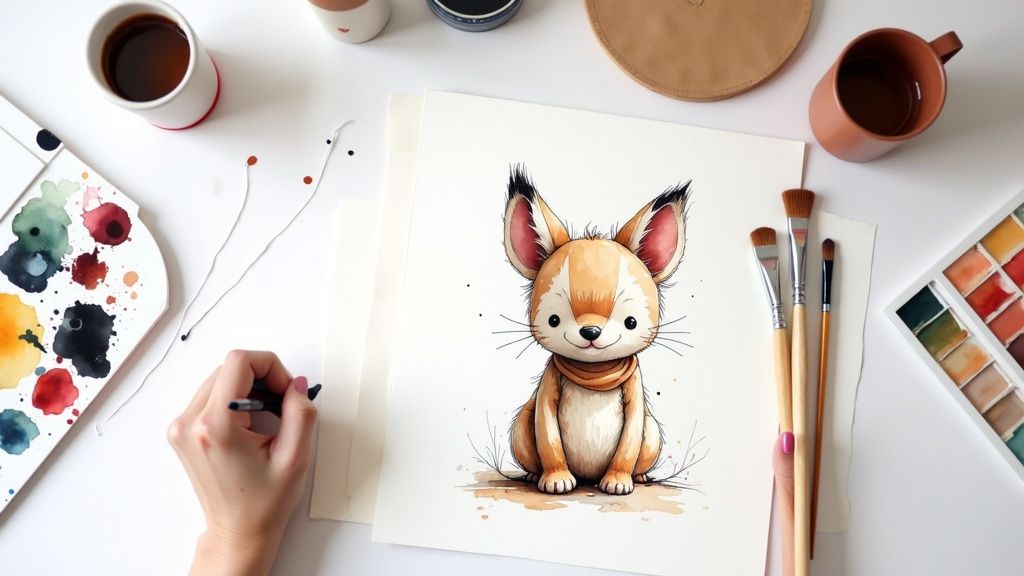
Step 1: Design Blueprint and Prototyping (Sampling)
Everything begins with a clear technical brief, often called a “tech pack.” This document is our bible. Vague instructions are the primary cause of sample revisions, delays, and increased costs.
A strong tech pack includes:
- Multi-view Artwork: We need to see the design from the front, back, and both sides. 3D renderings are ideal, but clear 2D illustrations are sufficient.
- Dimensions: Precise measurements for overall size and key features (e.g., ears, tail, logos).
- Material Specifications: Call out the specific types of fabric you want (e.g., “short-pile crystal velboa for body, long-pile sherpa for mane”).
- Pantone (PMS) Color Codes: “Sky blue” is subjective. Providing exact Pantone codes is the only way to ensure perfect color matching for fabric dyeing and embroidery thread.
Sampling Timeline: Once we have a complete tech pack, creating the first physical sample typically takes 7-10 working days. This is a highly skilled, manual process where our pattern master creates the initial templates and a single artisan hand-crafts the prototype.
Step 2: Choosing Your Path: OEM vs. ODM
Your involvement in the design phase determines the type of manufacturing partnership.
- OEM (Original Equipment Manufacturing): You provide a complete, production-ready design (the tech pack). We act as your expert manufacturing partner to execute that design precisely. This is common for established brands with in-house design teams.
- ODM (Original Design Manufacturing): You have a concept but require our design expertise to develop it. We collaborate with you on sketches and technical specifications before moving to production. This is ideal for businesses needing creative and technical support.
Step 3: Material Sourcing and Preparation
With the prototype approved, we move to sourcing materials for the bulk order.
- Fabric Selection: The most common materials we use are Crystal Velboa (super soft short plush, a versatile standard), Minky (premium feel, often used for baby products), and Sherpa (for fluffy, wool-like textures).
- Filling: The choice is typically between standard hypoallergenic PP (Polypropylene) Cotton for a classic soft feel, or Recycled Polyester Fiber for brands focused on sustainability.
- Mass Cutting: We use the finalized patterns from the sample to create steel molds. These molds are used with hydraulic presses to cut hundreds of layers of fabric at once, ensuring every piece is identical.
Step 4: Assembly Line Production
This is where scale and precision come together.
- Embroidery & Printing: Details like eyes, logos, and patterns are added first using computer-guided embroidery machines or screen/heat-transfer printing.
- Stitching: Sewing teams work in stages. One station may only sew ears, while another attaches limbs. This specialization ensures high speed and consistent quality.
- Stuffing & Closing: The stitched “skins” are turned right-side out and filled with a precise amount of filling by a blow-stuffing machine to achieve the desired density. The final opening is closed with an invisible “ladder stitch.”
- Finishing: Each plush is brushed, cleaned of loose threads, and shaped for final inspection.
For a more detailed look, you can explore a deep dive into our production process.
Critical Pricing Factors: What Really Impacts Cost
The unit price of your custom animal plush is a direct calculation of materials, labor, and complexity.
- Size and Materials: A larger toy requires more fabric and filling. Premium materials like Minky cost more than standard velboa.
- Complexity: This is the biggest cost driver. A simple spherical character is far cheaper to produce than a complex dragon with wings, scales, and multiple small parts. Each additional seam and component adds significant labor time.
- Custom Features: Adding components like sound boxes, articulated joints, or custom-molded plastic accessories will increase the unit cost.
- Order Quantity: Manufacturing has economies of scale. An order of 5,000 units will have a significantly lower per-unit cost than an order of 500 because fixed setup costs are spread across more pieces.
Manufacturer’s Tip to Reduce Cost: Simplify your design. Swapping complex appliqué (sewn-on fabric shapes) for high-quality embroidery can often achieve a similar aesthetic while dramatically reducing labor costs and the final unit price.
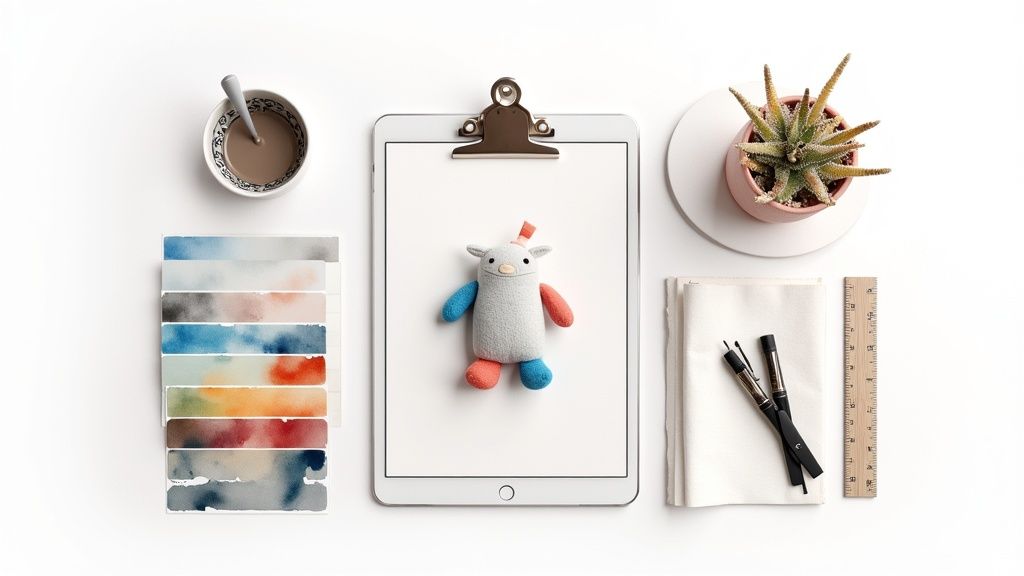
Understanding Minimum Order Quantity (MOQ)
For a fully custom plush design, a typical factory MOQ ranges from 500 to 1,000 pieces per design. This isn’t an arbitrary number. It’s based on the minimum raw material orders we must place—fabric is dyed in large batches and produced in long rolls. Furthermore, the setup cost for the production line (creating cutting molds, programming machinery) is substantial, and the MOQ ensures this cost can be distributed effectively to achieve a viable unit price.
Quality Control and Global Safety Standards
Quality Control (QC) is not a single step; it’s a continuous process integrated throughout production. Safety is non-negotiable.
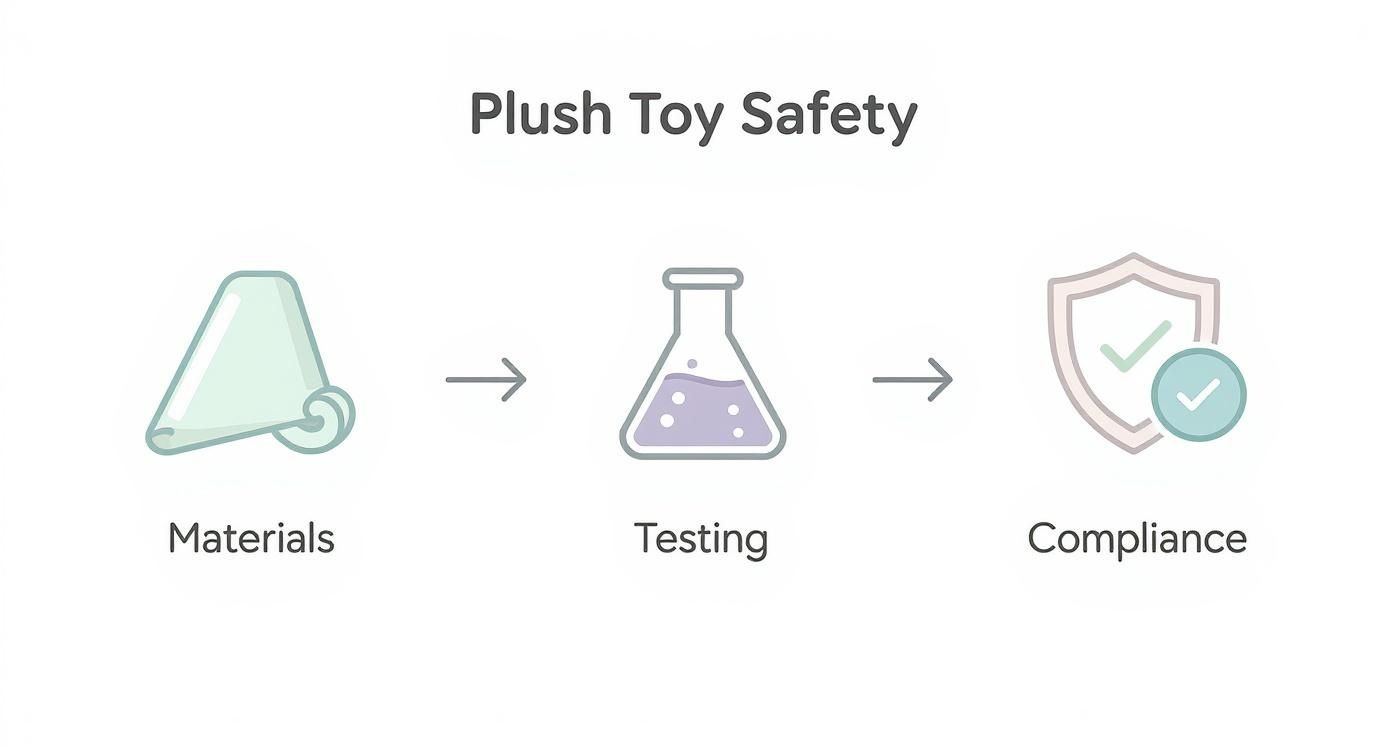
Key Safety Standards: EN71 & ASTM F963
Your product must comply with the safety standards of its target market. The two most critical are EN71 (for the European Union) and ASTM F963 (for the United States). Compliance involves rigorous third-party lab testing for:
- Physical & Mechanical Hazards: Pull tests on seams, eyes, and other components to ensure they don’t detach and become choking hazards.
- Flammability: Testing the rate of flame spread to ensure the material is sufficiently flame-retardant.
- Chemical Content: Screening for heavy metals like lead and harmful substances like phthalates in all materials.
Our Multi-Stage Inspection Workflow
- Incoming Quality Control (IQC): We inspect all raw materials upon arrival from our suppliers to check for defects, color accuracy, and proper certification.
- In-Process Quality Control (IPQC): Our QC staff patrol the production lines, pulling random units at key stages (e.g., post-stitching, post-stuffing) to compare against the approved “golden sample.”
- Final Quality Control (FQC): Every single finished unit undergoes a 100% manual inspection for aesthetic flaws, seam strength, and correct labeling. Each toy must also pass through a metal detector to ensure no broken needle fragments are present.
Logistics: Shipping Your Products from China
Once production is complete, the final step is shipping. Most quotes are based on FOB (Free On Board) terms, which means the price covers production and delivery to the departure port in China. The buyer is then responsible for ocean freight, insurance, customs clearance, and inland transport in the destination country.
- Sea Freight: The most common and cost-effective method for bulk shipments. Transit time is typically 30-40 days to North America or Europe.
- Air Freight: Significantly more expensive but much faster, usually 7-10 days. This is reserved for urgent deadlines or high-value, lightweight goods.
The market for unique custom plush toys is growing rapidly, with the China market itself projected for a 9.2% CAGR from 2025 to 2035. A well-planned logistics strategy is essential to meet this demand.
How to Choose a Supplier: Beyond the Price Tag
Selecting the right factory is the most critical decision you will make. A low-price quote from an unreliable factory can lead to quality failures, missed deadlines, and failed safety tests, costing you far more in the long run.
Common Problems Buyers Face with Low-Quality Factories
- Poor Communication: Vague answers and slow response times are major red flags.
- “Bait and Switch” Samples: A perfect sample followed by a low-quality bulk production run.
- Failed Safety Tests: Cutting corners on materials can result in products containing lead or phthalates, rendering your entire shipment unsellable.
- Intellectual Property Theft: Your unique design could be sold to other clients.
What to Look for in a Trusted Manufacturer
- Certifications: Ask for proof of ISO 9001 (quality management systems) and BSCI (Business Social Compliance Initiative) audits, which verify ethical labor practices.
- Expertise and Transparency: A good partner will ask clarifying questions about your design to prevent problems before they happen. They should be able to show you examples of similar, complex work they have produced.
- Clear Communication: Look for a team that is responsive, professional, and communicates clearly in English.
Why FunEnjoy is a Trusted Manufacturer
At FunEnjoy PlushToys, we are not just a vendor; we are a manufacturing partner. We combine decades of craftsmanship with modern, ethical production standards. Our process is built on transparency, from detailed quoting to our multi-stage QC system. We understand the nuances of bringing a custom animal plush from a simple idea to a globally compliant, retail-ready product.
We’ve helped hundreds of brands, creators, and businesses navigate this process successfully. Let our experience guide your next project. Start your project with us today!