Clean plush toys the right way helps extend the life of a cherished companion far beyond our factory walls. As plush toy manufacturers, we know that meticulous material selection, durable stitching, and strict safety testing are only the first steps. Clean plush toys properly is not only about hygiene, but about protecting the craftsmanship and material science that keep each toy safe and soft for years.
Why Proper Cleaning is a Manufacturer’s Priority
From our production facility, we see the intricate engineering involved in creating a single plush toy. The choice between short-pile crystal velboa and high-pile polyester fleece isn’t arbitrary—it dictates the toy’s texture, aesthetic, and durability. Once a toy leaves our controlled environment, it faces real-world challenges that can degrade these carefully selected materials.
Preserving Material Integrity and Texture
The primary threats to a plush toy are often microscopic. Dust mites, skin oils, and airborne pollutants embed themselves deep within the fibres. This buildup acts like fine-grit sandpaper, causing the delicate strands of fabric to break down over time. This is precisely why a once-fluffy toy can become matted and rough.
Consider the polyester fleece we use for its exceptional softness. It consists of fine, brushed fibres. When oils and dirt adhere to these fibres, they clump together, and the toy loses its signature loft. A correct cleaning routine gently removes these contaminants without damaging the material, effectively resetting its texture.
From a material science perspective, regular, gentle cleaning is a form of preventive maintenance. It halts the gradual degradation of synthetic fibres, extending the toy’s lifespan far beyond what improper care would allow.
Protecting Colour and Appearance
Have you ever noticed a beloved plush toy looking dull or faded? It’s often more than just sun damage. A thin film of grime can obscure the vibrant, azo-free dyes we use in production. Environmental pollutants can even react with these dyes, causing them to lose intensity.
A proper wash removes this film, restoring the original colour saturation. This is particularly crucial for toys with detailed embroidery or airbrushed features, as dirt can settle in these crevices and permanently alter their appearance if neglected.
The demand for these companions is significant. In China alone, the stuffed and plush toy market revenue recently reached approximately USD 976.3 million, with stuffed animals comprising 35.95% of that share. This highlights the vast number of these items in homes requiring proper care. You can discover more insights about the plush toy market on Grand View Research.
Ultimately, learning how to clean a plush toy is the final step in quality assurance—a step that transitions from our factory to the owner. By following the correct care instructions, you are not just cleaning; you are preserving the craftsmanship that went into creating a treasured friend.
Reading Your Toy’s Care Label Like an Expert
That small tag stitched into a seam is the single most important piece of information on any plush toy. From a manufacturer’s perspective, this care label is the culmination of our quality control process. It is our direct communication with the end-user, based on extensive material testing. Disregarding it is like discarding the user manual for a complex electronic device.
The instructions on that tag are not suggestions; they are directives based on the toy’s construction and materials. When a label specifies “surface wash only,” there is a critical reason. It could indicate the presence of an internal electronic soundbox, a delicate battery pack, or a mechanical music box with metal components that will corrode if submerged.
Decoding the Care Symbols
Care labels use a universal, symbolic language. While they may appear cryptic, understanding a few key symbols will enable you to provide appropriate care and prevent accidental damage to the fur or stuffing.
- The Washtub: This symbol governs washing. A simple tub indicates machine washability. A hand in the tub means hand-wash only, typically due to delicate stitching or appliqué. A large ‘X’ through the tub is a strict prohibition: do not wash. Submersion will cause irreversible damage.
- The Triangle: This is the bleach symbol. An empty triangle permits bleach, but this is almost never advisable for a colourful plush. A crossed-out triangle means do not bleach, as it will strip colour and weaken the polyester fibres.
- The Square: This guides the drying process. A square with an internal circle allows for tumble drying. A dot within that circle specifies low heat. An ‘X’ through the symbol means do not tumble dry. High heat can melt synthetic fur or shrink components. A square with a curved line at the top indicates line dry.
Why “Surface Wash Only” Is a Strict Rule
When we affix a “surface wash only” or “spot clean only” label, it serves as a critical warning. This is reserved for toys with mixed materials that react differently to water or those with extremely delicate decorations.
Consider a teddy bear with soft, airbrushed blush on its cheeks. Submerging this toy will cause the non-permanent airbrushed paint to bleed and run, ruining its expression. The same applies to toys with glued-on components like plastic eyes or felt pads; a full wash will dissolve the adhesive, causing parts to detach.
As the manufacturers, we have intimate knowledge of each component’s tolerance. A surface-wash label is our way of communicating that submersion will damage the toy’s aesthetics, electronics, or structural integrity.
What if the Tag is Gone?
It’s a common scenario for a well-loved toy to lose its care tag. In this situation, you must become a material detective.
Conduct a thorough inspection. Does the toy make a sound when squeezed? Can you feel a hard, box-like shape within? These are clear indicators of electronics, mandating a surface-only clean.
If no electronics are present, examine the materials. Is the fur long and delicate, or is it a short, durable velboa? Are there numerous stitched-on patches, sequins, or intricate embroidery? The more complex the construction, the more cautious you must be.
For any tagless toy, the safest approach is always a gentle hand wash with lukewarm water and a mild detergent, followed by air drying. This method mitigates the risks associated with machine washing and high heat. It requires thinking like a manufacturer—understanding the materials and their assembly to make an educated care decision.
Picking the Right Cleaning Method for Any Situation
From our factory floor, we oversee every stage of a plush toy’s creation, from raw fabric to the final huggable product. We know its longevity ultimately depends on post-purchase care. Selecting the correct cleaning method is paramount—it is the difference between preserving a cherished item and causing accidental damage.
Every cleaning technique we recommend is derived from years of material testing. We understand precisely how different fabrics—from crystal super soft velboa to fluffy sherpa fleece—react to water, heat, and agitation. The same applies to the PP cotton filling; an incorrect method will result in hard, lumpy clumps instead of a soft, resilient fill.
This flowchart serves as an excellent initial guide. It walks you through the essential questions to ask before cleaning a toy, starting with the most critical: what does the manufacturer’s tag say?
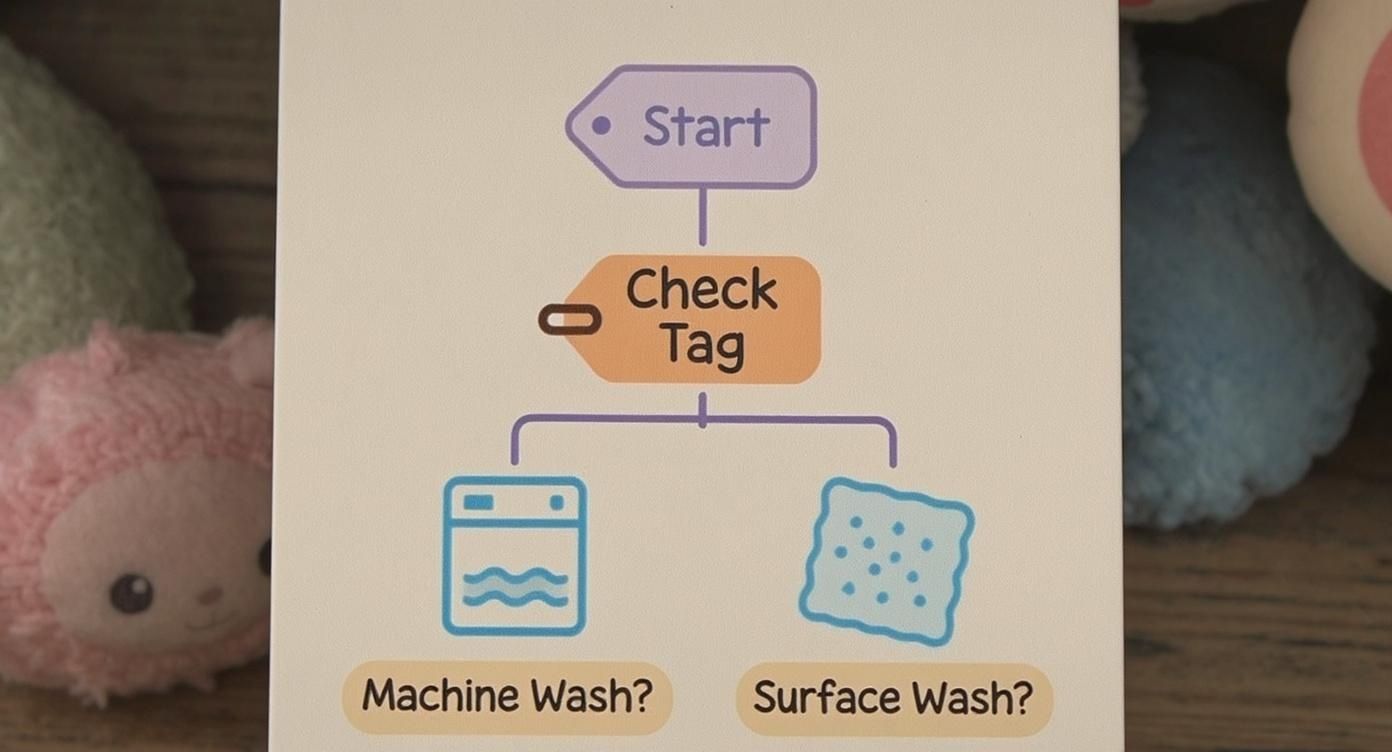
Think of the flowchart as a decision-making tool. It directs you to the safest option based on the manufacturer’s specifications, which should always be your primary reference.
To help you decide, here’s a comparison of the three main cleaning methods.
Plush Toy Cleaning Method Comparison
Use this guide to select the optimal cleaning method based on your toy’s material, construction, and condition.
| Method | Best For | Risk Level | A Manufacturer’s Key Tip |
|---|---|---|---|
| Spot Cleaning | Minor spills, non-washable toys (e.g., with electronics), delicate details. | Low | Always dab, never scrub. Scrubbing damages fibres and pushes the stain deeper into the filling. |
| Hand Washing | Deeper cleaning for most toys, especially those with delicate parts like sequins or embroidery. | Medium | Never wring or twist the toy to dry. Gently squeeze out water to protect seams and filling distribution. |
| Machine Washing | Durable, tag-approved toys without glued-on parts or electronics. | High | Always use a mesh laundry bag and wash on a cold, gentle cycle with a balanced load. |
Ultimately, referencing the care tag and understanding the toy’s construction will provide the confidence to choose the right method and maintain its quality.
Surface Spot Cleaning: Your First Line of Defence
For minor incidents and for any toy that cannot be submerged, spot cleaning is the required method. This is the only safe option for plushies with internal music boxes, battery packs, or fragile airbrushed details. A small stain on a collectible does not necessitate a full wash.
Mix a small amount of mild detergent with lukewarm water. We recommend using a detergent free of optical brighteners, as these chemicals can leave a residue that yellows or alters the fabric’s colour over time.
Dip a clean, soft cloth into the solution, wring it out thoroughly, and gently blot the stained area. Avoid vigorous scrubbing, which can fray fabric fibres or force the stain deeper into the stuffing. Once the stain is lifted, use a separate cloth dampened with plain water to “rinse” by blotting again. Finish by blotting with a dry towel and allowing it to air dry completely.
Gentle Hand Washing for a Deeper Clean
When a toy is too soiled for spot cleaning but too delicate for a washing machine, hand washing is the ideal solution. This method gives you complete control, which is essential for protecting fragile embroidery, sequins, and other embellishments that a machine’s spin cycle would damage.
Fill a basin with cool or lukewarm water. Hot water is prohibited, as it can weaken the adhesive on plastic eyes or even warp the synthetic fibres of the fur. Stir in a small amount of a gentle, pH-neutral detergent.
Submerge the toy and gently squeeze the soapy water through it. Focus on the dirtiest areas, working the suds into the fabric with your fingers. This action is akin to a gentle massage, helping to loosen dirt from both the fabric and the stuffing without causing it to clump.
A critical factory tip for hand washing is to never twist or wring out the plush toy. This places extreme stress on the seams and can permanently stretch the fabric out of shape. Instead, gently squeeze the excess water out while supporting the toy’s main body.
After washing, drain the basin and refill with clean, cool water for rinsing. Repeat the gentle squeezing motion until no more suds are visible. This step is crucial; residual detergent can leave the fur feeling stiff and attract more dirt over time.
Safe Machine Washing for Durable Toys
The washing machine should only be used if the care label explicitly permits it. From a manufacturing standpoint, toys marked “machine washable” are constructed to withstand this process. They typically feature reinforced stitching, durable fabrics like short-pile velboa, and no delicate, glued-on parts.
Before machine washing, some preparation is necessary.
- Protect the Toy: Place the plushie inside a mesh laundry bag or a pillowcase tied shut. This creates a protective barrier, preventing snags on the machine’s drum and reducing friction that can wear down the fur.
- Balance the Load: Wash the toy with other lightweight items, such as towels or t-shirts. This helps balance the drum and prevents the machine from agitating the toy too aggressively.
- Select the Right Settings: Always use the gentle or delicate cycle with cold water. Cold water is safer for synthetic fibres and prevents colour bleeding.
Finally, use a minimal amount of mild liquid detergent. Powdered detergents may not dissolve completely in cold water, leaving a chalky residue on the fur. Avoid fabric softener, as it can coat the fibres and reduce their softness over time. Remove the toy immediately after the cycle finishes to begin the drying process, which is as critical as the wash itself.
The Art of Drying and Restoring Fluffiness
After a successful wash, the drying stage is what determines the final outcome. From our experience in the factory, this step is as crucial as the initial material selection. Improper drying can lead to a clumpy, misshapen toy or, worse, mildew growth within the stuffing.
Proper drying is how you restore that fresh-from-the-factory softness. It requires patience and adherence to the correct methodology.
Air-Drying: The Safest Method
In manufacturing, gentle handling is key to preserving quality. That’s why we universally recommend air-drying as the gold standard for plush toys. It is the safest and most reliable method for protecting the toy’s shape, fabric integrity, and filling distribution.
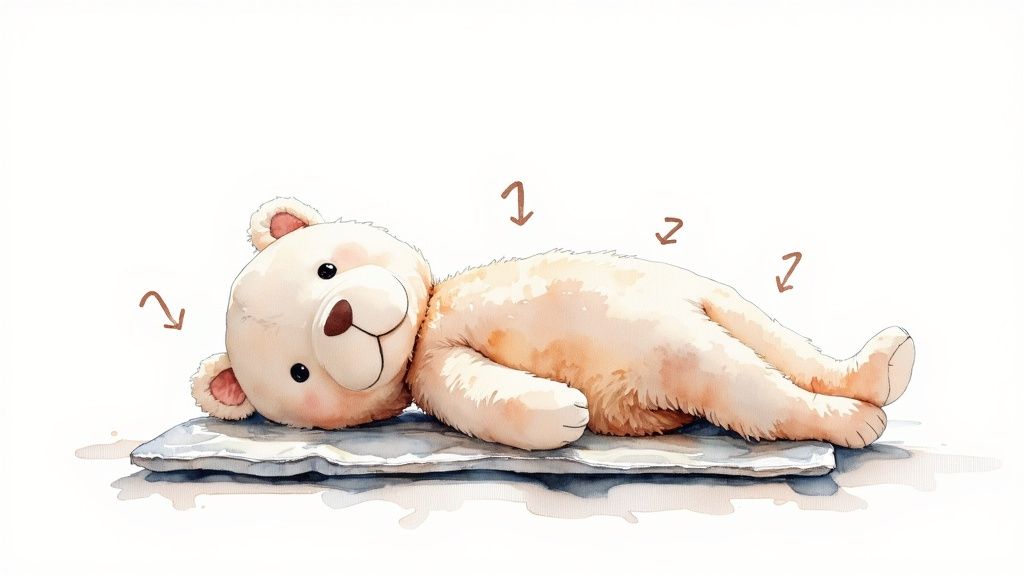
First, gently squeeze out as much water as possible. Under no circumstances should you wring the toy, as this will strain seams and displace the filling. Lay it flat on a clean, dry towel in a well-ventilated area. Alternatively, hang it from a clothesline, using clips on a sturdy seam or tag to avoid imprinting the plush fabric.
A few professional tips to ensure a perfect result:
- Rotate frequently: Turn the toy every few hours. This simple action ensures all parts dry evenly and prevents water from pooling in one area.
- Reshape while damp: As it begins to dry, gently fluff and reposition its limbs and body. This helps the PP cotton filling spread evenly and prevents clumping.
This careful approach aligns with broader trends in the Chinese toy market. With per capita disposable income recently rising by 6.3%, consumers are investing in higher-quality toys and expect them to be durable. Proper care techniques like air-drying are essential to protect that investment. You can learn more about these market trends and consumer expectations to understand how the industry is evolving.
Using a Tumble Dryer Cautiously
While air-drying is the preferred method, a machine can be used to expedite the process under strict conditions. The non-negotiable rule is to use a no-heat or air-fluff setting only. High heat is the primary enemy of synthetic plush fur.
High temperatures can melt the fine polyester fibres, causing them to fuse into a rough, matted texture. This damage is irreversible and will permanently ruin the toy’s signature softness.
Before placing the toy in the dryer, enclose it in a mesh laundry bag or pillowcase to protect it from direct contact with the drum. Adding a few dry towels can help absorb moisture and provide cushioning. Check its progress every 20-30 minutes and remove it while still slightly damp to finish air-drying.
Restoring That Original Factory Fluff
Once the toy is completely dry, the final step is to restore its fluffiness. Even with careful drying, the plush fibres can appear compressed or tangled.
The solution is straightforward. Use a soft-bristled brush—a clean pet brush with plastic-tipped bristles or a new, soft toothbrush works well. Gently brush the fur in its natural direction. Employing short, light strokes will detangle the fibres and lift them, restoring the original loft and softness.
This final brushing is our technique for making a freshly cleaned toy look and feel almost as it did the day it left our production line. It ensures the toy remains a soft, comforting companion for years to come.
Handling Special Cases: Electronics and Collectibles
As manufacturers, we know that simpler plush toys are easier to maintain. However, market demand drives innovation, leading to toys with internal electronics, sound modules, and delicate, high-value decorations. Cleaning these special cases requires a different approach focused on protection, not deep washing.
Submerging a toy with a battery pack or sound module in water will cause irreparable damage. Moisture will corrode the circuitry and destroy the electronic components. For these toys, “surface wash only” is not a suggestion—it is a critical directive to protect the features that make the toy unique.
Safeguarding Toys with Electronics
For a plush toy with internal electronics, spot cleaning is the only safe method. Submersion is not an option. Your essential tools are a damp cloth, a mild detergent, and a careful hand. The goal is to clean the exterior fabric without allowing any moisture to penetrate to the internal components.
Here is the process our quality control team uses:
- Mix a gentle solution: Add a single drop of mild, pH-neutral soap to lukewarm water. The solution should be barely sudsy to avoid residue.
- Dampen your cloth minimally: Dip a soft, clean cloth into the solution and wring it out until it is almost dry. It should not drip.
- Blot, do not rub: Gently dab at soiled spots. Avoid scrubbing, which can grind dirt deeper into the fibres and push moisture through seams.
- “Rinse” with a fresh cloth: Dampen another cloth with plain water and blot the area again to remove any soap residue.
- Air dry thoroughly: Place the toy in a well-ventilated area, away from direct heat or sunlight, until it is completely dry.
A common error is using an overly wet cloth. If you can squeeze a single drop of water from it, it is too saturated. You need just enough moisture to lift surface dirt.
Caring for Delicate Embellishments
Many of our custom animal plush toys feature details like sequins, glued-on felt shapes, or intricate embroidery. These are often attached with specialized adhesives or fine stitching that cannot withstand the agitation of a washing machine or even vigorous hand washing.
For toys with sequins or glitter, a very soft brush, like a clean makeup brush, is ideal for gently removing dust. For a small stain, use the same careful blotting method as for electronics, working patiently around the decorations. For any glued-on components, moisture is the primary risk, as it can weaken the adhesive over time.
The Preservation of Collectible Plush Toys
Collectible toys represent a distinct category where value preservation is as important as cleanliness. These items are often investments, and the approach to their care is more akin to art restoration—minimal intervention is key to maintaining original condition.
The market for collectible plush toys, particularly in China, has seen explosive growth. For instance, the Pop Mart Labubu series generated RMB 3 billion (approx. USD 418 million) for the company in a single year, with the segment growing by 726.6% year-over-year. This demonstrates the scale of the market and the importance of proper preservation. You can discover more insights about China’s collectible toys market on China Briefing.
For these high-value collectibles, regular, gentle dusting with a soft, dry brush is the best practice. If a stain occurs, spot-cleaning is the only safe option, executed with extreme caution. Always test your cleaning solution on an inconspicuous area first to ensure it does not cause colour bleeding. For any significant cleaning of a valuable piece, we strongly recommend consulting a professional toy restoration specialist.
Common Questions We Hear About Cleaning Plush Toys
With decades of experience in the plush toy industry, we’ve encountered nearly every question imaginable from our B2B partners and their customers. From routine maintenance to emergency cleaning after a major spill, certain concerns arise repeatedly.
Here are our direct, from-the-factory answers to the most common questions about plush toy care.
How Often Should I Be Cleaning a Plush Toy?
The frequency of cleaning depends entirely on its use. For a child’s constant companion that travels everywhere, a light surface clean every few weeks is advisable to prevent dirt from setting in.
A deeper, more thorough wash should be reserved for every few months or when it is visibly soiled. This frequency strikes a balance between maintaining hygiene and ensuring the toy’s long-term durability.
For collectibles on display, cleaning should be limited to dust removal or spot treatment. Over-cleaning can degrade materials and reduce value, so a minimalist approach is best.
Can I Use Disinfectant Sprays on Plush Toys?
We strongly advise against using commercial disinfectant sprays directly on plush toys. While the intent is to kill germs, these sprays often contain harsh chemicals, alcohols, or bleaching agents that are detrimental to synthetic fur.
Potential consequences include:
- Fibre Damage: Chemicals can break down the delicate polyester fibres, leaving the fur stiff and matted.
- Colour Fading: Harsh ingredients can strip the dyes, causing faded or patchy areas.
- Unsafe Residue: Sprays can leave a chemical residue that is unsafe for children, especially if they put toys in their mouths.
The most effective way to disinfect is a proper wash with a mild, child-safe detergent followed by thorough drying. For a quick sanitizing solution, a cloth lightly dampened with a highly diluted water-and-vinegar mixture is a much safer alternative.
What’s the Best Way to Get Rid of Smells?
Plush toys are porous and can easily absorb environmental odours like smoke, cooking smells, or mustiness from storage. Before washing, we recommend a deodorizing pre-treatment that we use in our quality control process.
Place the toy in a large, sealable plastic bag. Add a generous amount of baking soda, seal the bag, and shake it vigorously to coat the toy. Let it sit for at least 24 hours; for very strong odours, 48 hours is more effective.
Baking soda is a natural absorbent and will extract a significant amount of the odour from the fabric and stuffing. Afterward, take the toy outside, shake off the excess powder, and then proceed with a gentle wash. This pre-treatment significantly enhances the effectiveness of cleaning for odour removal.
The Fur Is Matted After Washing! How Can I Fix It?
This is a common issue and is almost always correctable. Matting occurs when the fine fibres of the plush fur clump together during the wash and dry cycle.
It is critical to wait until the toy is 100% dry before attempting to fix it. Brushing wet fur will stretch and break the fibres, exacerbating the problem.
From a manufacturing perspective, restoring fluffiness involves gently separating and realigning the fibres. The correct tool for this final grooming step is a simple, soft-bristled brush.
Once completely dry, use a soft brush, such as a pet grooming brush with plastic-tipped bristles or a new toothbrush. Gently comb the matted areas using short, light strokes in the natural direction of the fur. Work patiently on one small section at a time. This gentle action will separate the tangled fibres and restore the soft, fluffy texture, making the toy look nearly new.
At FunEnjoy PlushToys, we integrate decades of manufacturing expertise into every project, ensuring your custom plush toys are not only beautifully designed but also durable and easy to care for. Partner with us to create high-quality plush companions that stand the test of time.