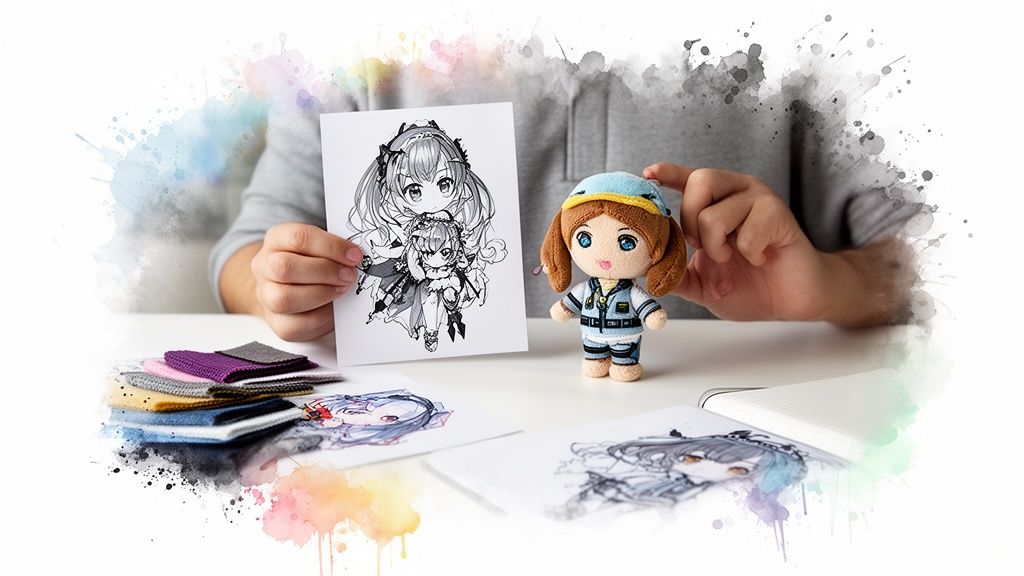
Turning a 2D digital drawing into a tangible, high-quality plush toy is a complex blend of artistry and precision engineering. For Anime Plush Toys, the process goes far beyond simply sewing fabric together—it requires a deep understanding of character design and manufacturing constraints.
From our perspective as a manufacturer in China, producing custom Anime Plush Toys means translating a character’s essence—the unique hairstyle, the specific expression in their eyes, and the texture of their clothing—into a physical product that truly resonates with fans. This guide offers an insider’s view, sharing practical, factory-level knowledge to help brands navigate the complexities of anime plush toy production with confidence.
The Market for Anime Plush Toys: A Manufacturer’s Overview
The global demand for authentic anime merchandise, especially Anime Plush Toys, is immense and continues to grow. Fans are no longer passive consumers; they are collectors and connoisseurs who can instantly distinguish between a low-quality knockoff and a premium, officially licensed product. This puts significant pressure on manufacturers to deliver products that truly honor the source material.
The data supports this trend. An in-depth market report highlights that the Asia-Pacific region, led by China, is a dominant force in the global plush toy market. Our position at the heart of this manufacturing ecosystem gives us a unique perspective on the industry’s trajectory and the evolving expectations of brands and consumers alike.
The Benefits of Creating Custom Anime Plush Toys
For IP holders, anime studios, and brands, Anime Plush Toys offer significant advantages beyond simple merchandise sales:
- Deepening Fan Engagement: A well-made plush transforms a digital character into a physical companion, creating a stronger emotional connection with the fanbase.
- Brand Extension and Visibility: Plush toys act as tangible brand ambassadors, appearing in fan photos, on social media, and at conventions, continuously promoting the IP.
- High Perceived Value: Unlike disposable merchandise, a high-quality plush is often seen as a collector’s item, justifying a premium price point and generating substantial revenue.
- Diversified Revenue Streams: Plushies open up new sales channels, from direct-to-consumer online stores to partnerships with major retailers and distributors.
Types of Anime Plush Toys: A Production Perspective
From a manufacturing standpoint, Anime Plush Toys represent a broad category. The complexity, materials, and production techniques vary significantly based on the intended design and function.
Common Plush Toy Categories
- Standard Character Plush: These are the most common type, focusing on accurately recreating a character’s appearance in a huggable form. The primary challenges are achieving facial accuracy through embroidery and constructing complex hairstyles and outfits.
- Chibi or “Kawaii” Style Plush: These feature simplified, oversized heads and smaller bodies. While aesthetically simpler, the challenge lies in capturing the character’s key features in a stylized format while maintaining brand recognition.
- Posable Plush: These toys contain an internal wire or plastic armature, allowing their limbs to be bent and posed. This adds a significant layer of complexity to the assembly process and requires rigorous safety testing to ensure the internal structure is secure.
- Plush with Functional Elements: This includes toys with attached keychains, suction cups for windows, or small pouches. Each added element requires a different attachment method and must be tested for durability.
The Manufacturing Process: From Blueprint to Bulk Production
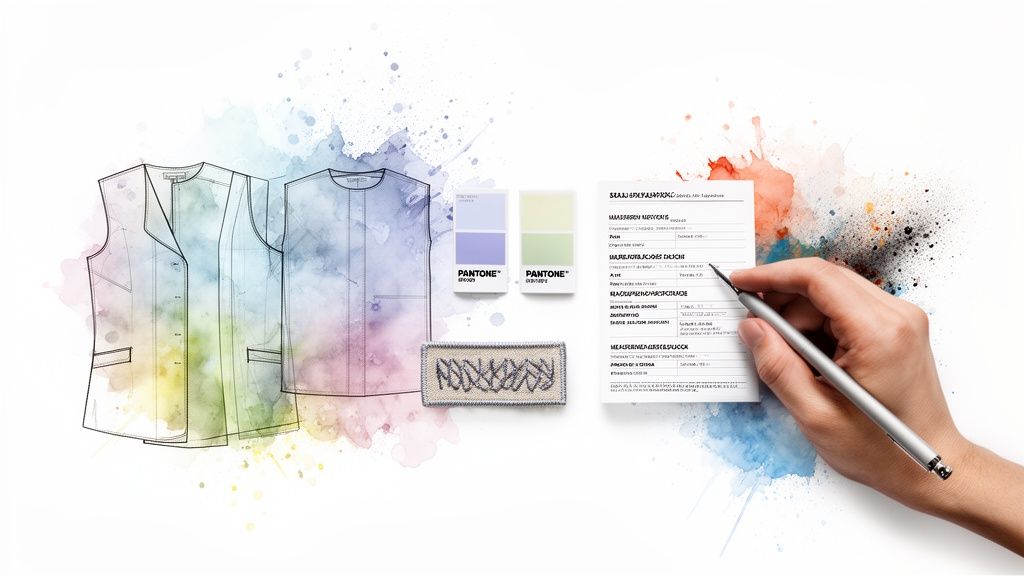
Bringing an anime character to life is a systematic, multi-stage process. Each step builds upon the last, and a mistake at any stage can have cascading effects on the final product.
The Real Manufacturing Workflow
- Technical Design & Pattern Making: Your 2D artwork is deconstructed into a 3D pattern. Our pattern masters translate every curve and angle into fabric pieces that will be sewn together. This is where engineering meets art; a complex hairstyle might become 10-15 individual fabric pieces.
- Prototyping (Sampling): We create a handmade “golden sample.” This is the most crucial feedback loop. The typical sampling timeline is 7-10 business days. This sample is sent to you for approval. Revisions are common and necessary to perfect the design before mass production.
- Material Sourcing & Cutting: Once the sample is approved, we procure the specified fabrics in bulk. These materials are then stacked and cut using industrial die-cutting presses, which use steel molds of the pattern pieces to ensure every single component is identical across thousands of units.
- Embroidery & Printing: Cut fabric pieces requiring facial features or other details are sent to our embroidery or printing departments. Computer-controlled machines execute these details with precision before the plush is assembled.
- Sewing & Assembly: Skilled workers stitch the individual pieces together in an assembly line. This is a labor-intensive process that requires precision and consistency.
- Stuffing & Closing: The sewn “skins” are filled with PP cotton using high-pressure blowers to ensure uniform density. A small opening is then hand-sewn shut using an invisible stitch.
- Quality Control & Finishing: Every single unit undergoes a final inspection. We trim stray threads, clean off any dust, and pass each toy through a metal detector to ensure no foreign objects (like broken needle tips) are inside.
This structured workflow, detailed further in our guide on making custom plush toys, ensures efficiency and consistency from the first unit to the last.
Pricing Factors: What Really Impacts Your Cost
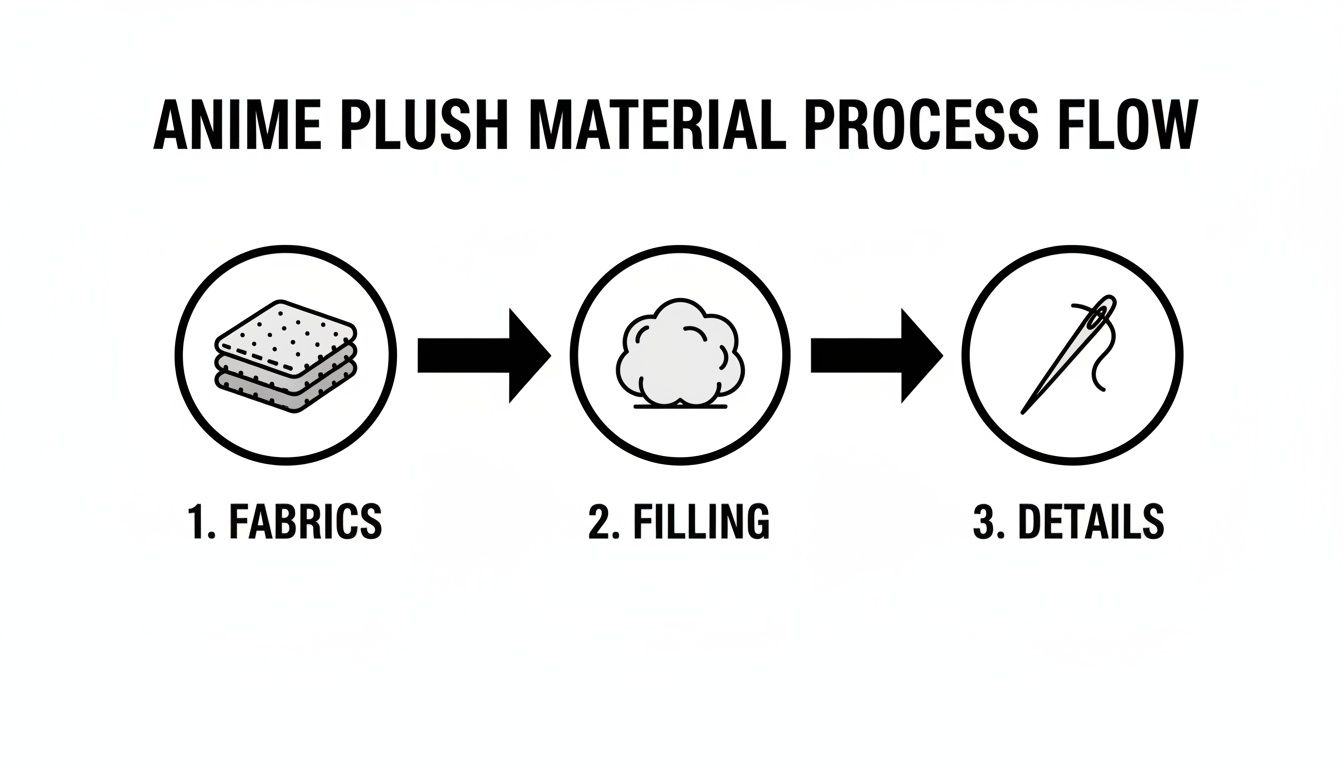
Understanding the factors that influence the per-unit cost is critical for budgeting and project planning.
Key Cost Drivers
- Complexity: This is the single biggest factor. The number of individual pattern pieces, the density of embroidery, and the inclusion of layered clothing or accessories directly increase labor time and, therefore, cost. A small, complex plush can easily cost more than a large, simple one.
- Materials & Filling: The choice of fabric (e.g., standard Crystal Velboa vs. premium long-pile Minky) and filling (standard PP cotton vs. adding weighted pellets for stability) directly impacts the raw material cost.
- Size & Weight: While not the primary driver, size does affect the amount of fabric and filling required. It also impacts shipping costs.
- Order Quantity: Higher order volumes allow us to leverage economies of scale, reducing the per-unit cost by spreading fixed setup expenses (like die-cutting mold creation) over more units.
- Safety Testing & Certification: The cost of third-party lab testing to certify compliance with standards like EN71 or ASTM is often factored into the total project cost.
A simple tip to reduce cost is to simplify non-essential details. For instance, reducing the number of layers in a character’s clothing can significantly lower assembly time without compromising the character’s core identity.
Understanding Minimum Order Quantity (MOQ)
We are frequently asked why we can’t produce just 20 or 50 units. The answer lies in the economics of mass production. Our typical MOQ for custom anime plush toys ranges from 300 to 500 units.
This isn’t an arbitrary number. It’s determined by the substantial fixed costs required to set up a production run:
- Fabric Minimums: Fabric mills have their own MOQs for custom-dyed materials, often hundreds of meters.
- Tooling Costs: We must create a unique set of steel cutting dies for your specific patterns.
- Machine Programming: Time is spent programming the embroidery machines with your specific designs.
- Line Setup: The entire assembly line must be configured and workers trained for your specific product.
Spreading these upfront costs across a small batch would make the per-unit price prohibitively expensive. The MOQ ensures that the final cost per toy is commercially viable for our clients. For more on this, see our guide on buying stuffed animals in bulk.
Quality Control and Safety Standards
For a toy manufacturer, quality and safety are non-negotiable. A product recall can destroy a brand’s reputation and lead to significant financial loss. Our quality control is a continuous process, not a final step.
Key Quality Inspection Steps
- Incoming Material Inspection: We inspect all raw materials for defects, color accuracy (against Pantone specs), and proper texture before they enter production.
- In-Process Quality Checks (IPQC): Supervisors on the production line perform random checks at critical stages (cutting, embroidery, sewing) to catch any deviations from the approved “golden sample” early.
- 100% Final Inspection: Every finished plush toy is individually inspected for seam strength, embroidery quality, proper stuffing, and overall cleanliness. This is also when we conduct metal detection.
Critical Safety Standards: EN71 & ASTM
Compliance with international safety standards is mandatory for selling in major markets.
- EN71: The European Union’s safety standard for toys. It covers mechanical properties (e.g., choke hazards), flammability, and chemical composition (heavy metal limits).
- ASTM F963: The equivalent standard for the United States, with similarly strict requirements for physical, flammable, and chemical hazards.
Working with a factory that cannot provide valid, up-to-date compliance certificates for these standards is a major risk. Low-quality factories often cut costs by using untested, cheaper materials that may contain banned substances like lead or phthalates, which can lead to your entire shipment being seized at customs.
How to Choose a Supplier: A Buyer’s Guide
Choosing the right manufacturing partner is the most important decision you will make. A good supplier acts as a collaborative partner, not just a vendor.
OEM vs. ODM
First, understand the type of partnership you need:
- OEM (Original Equipment Manufacturer): You provide a complete, production-ready design (a “tech pack”). We act as the executor, manufacturing your product exactly to your specifications. This is ideal for brands with in-house design teams.
- ODM (Original Design Manufacturer): You provide a concept or character art, and we help develop it into a manufacturable product. This is a more collaborative process where we provide design and engineering expertise.
Common Problems Buyers Face
- Poor Communication: Language barriers and slow response times can lead to costly misunderstandings and delays.
- Inconsistent Quality: The bulk production units do not match the quality of the approved sample. This is often a sign of a factory cutting corners on materials or QC.
- Hidden Costs: The final invoice is higher than the initial quote due to undisclosed fees for samples, revisions, or shipping.
- Intellectual Property Risk: Less reputable factories may sell your design to other clients or produce unauthorized overruns.
The risk of choosing a low-quality factory is immense. They may offer a temptingly low price, but this often comes at the cost of poor materials, safety violations, and unreliable delivery, ultimately costing you more in the long run.
Why FunEnjoy Is a Trusted Manufacturer
At FunEnjoy Toys, we have built our reputation on a foundation of expertise, transparency, and reliability. We understand the unique challenges of creating high-quality anime plush toys because we live and breathe this industry every day.
Our process is designed to be a true partnership. We provide dedicated project managers to ensure clear communication, detailed quotes with no hidden fees, and a multi-stage quality control system that guarantees your final products are as perfect as the approved sample. The entire process, from design to delivery, can be explored in our guide on the entire process of making stuffed animals.
We are not just a factory; we are a team of passionate creators committed to helping you bring your beloved characters to life.
Ready to start your custom plush project? Visit us at funenjoytoys.com to get a quote and see how we can turn your vision into a reality.