For brands, intellectual property (IP) holders, and retailers, the plush animal backpack represents a unique intersection of merchandise, fashion, and pure fun. But transforming a creative concept into a market-ready product involves a complex supply chain journey filled with critical decisions. As a manufacturer with decades of experience producing plush toys for global brands from our factory in Yiwu, China, we’ve seen what separates a successful launch from a costly failure.
This guide is not about generic advice. It is a deep dive into the practical, factory-floor realities of creating a custom plush animal backpack. We will cover the entire process, from initial design and material selection to navigating Minimum Order Quantities (MOQs), ensuring safety compliance (EN71/ASTM), and managing costs. This is the insider knowledge you need to choose the right partner, avoid common pitfalls, and bring a high-quality, commercially viable product to life.
We will deconstruct every stage, providing actionable insights for B2B buyers. You’ll learn the key differences between OEM and ODM, understand what factors truly impact your unit cost, and discover how to implement effective quality control. Once your product is complete, presenting it effectively is crucial. Showcasing the final product requires high-quality visuals, and leveraging modern tools like AI product photography can streamline this final marketing step. Let’s begin by exploring the key stages of the manufacturing journey, from the first sketch to the final shipment.
1. FunEnjoy Toys: A B2B Manufacturer’s Guide to Custom Backpack Plush
For brands, IP owners, and retailers aiming to develop a high-quality, custom plush animal backpack, sourcing directly from an experienced manufacturer is the most direct path to success. FunEnjoy Toys presents a definitive guide for B2B buyers, offering a complete OEM/ODM solution that covers every stage of the process, from initial design consultation to export-ready shipment. This is not simply a product page; it is a gateway to a full-service manufacturing partnership with a factory that has been operating since 1993 and is trusted by global names like Sanrio and Starbucks.
What distinguishes this offering is its foundation in genuine manufacturing expertise. Operating from a 2,000 square-metre factory in Yiwu with over 200 skilled artisans, FunEnjoy provides an end-to-end service designed for commercial-scale projects. Their process is built for clarity and efficiency, ensuring brands can translate a creative concept into a tangible, retail-ready product line with confidence.
Key Features and Manufacturing Capabilities
FunEnjoy’s approach is centred on deep customisation and transparent production. They provide direct access to the factory floor’s capabilities, allowing for precise control over every element.
- Total Customisation: Your design dictates the final product. This includes full-body plush shapes, intricate embroidered details, custom-printed fabrics, and branded hardware like zippers and strap adjusters.
- Functional Additions: Beyond aesthetics, you can specify practical features like internal padding for structure, specific pocket configurations, or even integrated electronics such as sound modules or squeakers.
- Material and Safety Compliance: As an established exporter, FunEnjoy’s production aligns with international safety standards, including EN71 (Europe) and ASTM F963 (USA). This ensures the final plush animal backpack is safe for its intended market, a critical requirement for children’s products and brand-conscious merchandise. The factory’s deep knowledge of materials extends beyond standard plush; they can guide you on everything from soft boa and velboa to specialised fabrics. This expertise is also applied to their wider product range; you can learn more about their process for standard stuffed animals to understand their material philosophy.
The B2B Partnership Model
FunEnjoy’s service is structured for B2B clients who need reliability and scale. The process is clear and predictable:
- Initial Quote & Consultation: Submit your design, and their team provides a quote within 24 hours, outlining potential costs based on complexity.
- Prototyping: A physical sample is created in 5–10 days. This crucial step allows you to test the design, materials, and construction before committing to a full production run.
- Mass Production: Once the sample is approved, mass production typically takes 20–30 days, depending on the order size and complexity. Minimum Order Quantities (MOQ) usually start at 500–1,000 pieces, making it accessible for both established brands and growing businesses.
- Quality Control & Logistics: Rigorous quality checks are performed throughout production, and the team manages logistics to ensure a smooth delivery process.
The indicative unit cost of $4 to $12 per piece provides a useful budget benchmark, though the final price will depend on your specific design choices, materials, and any licensing fees involved.
| Pros | Cons |
|---|---|
| Brand-Grade Manufacturing: Factory serves major global brands and adheres to strict EN71/ASTM standards. | Not for Small Batches: MOQ of 500–1,000 pieces is not suitable for buyers needing fewer than 500 units. |
| Deep Customisation: Control over shape, fabric, hardware, packaging, and even electronic components. | Variable Pricing: The $4–$12 ballpark is indicative; final costs depend heavily on design and licensing. |
| End-to-End Service: Fast quotes (24 hours), quick sampling (5–10 days), and reliable production timelines. | |
| Scalable and Competitive: MOQs are set for commercial launches with competitive factory-direct pricing. |
Ultimately, FunEnjoy Toys is the ideal partner for businesses seeking to create a professional, safe, and highly customised plush animal backpack line. Their direct-from-factory model removes intermediaries, giving you greater control, better value, and the assurance of working with a seasoned industry expert.
Visit FunEnjoy’s Custom Backpack Plush Guide
2. Sanrio – Hello Kitty Classic Red Plush Backpack
For brands and buyers looking to understand the pinnacle of licensed character merchandise, the official Sanrio website serves as an essential case study. While it is a direct-to-consumer platform, it provides invaluable insights into how a global brand manages product consistency, quality, and market appeal for a beloved character like Hello Kitty. Analysing this product reveals the high standards that consumers expect from an authentic plush animal backpack.
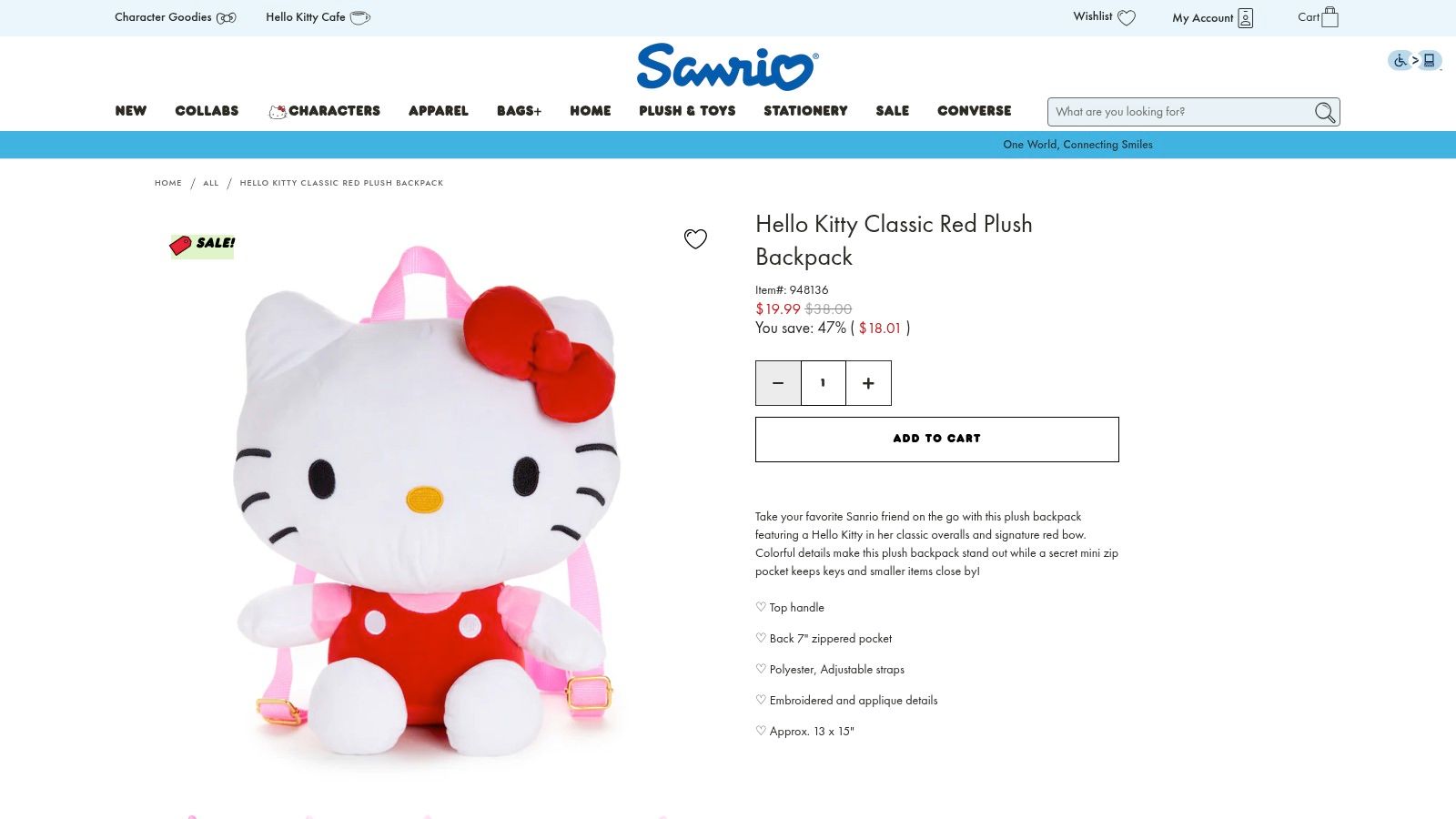
The Hello Kitty Classic Red Plush Backpack is a masterclass in translating a 2D character into a 3D functional product. From a manufacturing perspective, achieving this level of brand accuracy is a primary goal. Sanrio’s control over its intellectual property means every detail, from the specific shade of red for the bow to the precise stitch count on the embroidered whiskers, is non-negotiable. This product is a prime example of a premium-character plush item, which you can learn more about in our guide to different plush toy categories.
Manufacturer’s Analysis: Why This Product Works
The design strikes a deliberate balance between being a plush figure and a functional bag. At approximately 33 x 38 cm, it’s a statement piece rather than a utility-focused school bag. This decision directly impacts its target audience: fans, collectors, and gift-givers. The small, 7-inch hidden pocket is a clever design choice; it provides just enough function to justify the “backpack” label without compromising the plush character’s shape and feel.
Factory Insight: Reproducing this design for a custom project would require meticulous attention to embroidery and appliqué. The facial features are not printed but stitched, a more durable and premium method. The polyester plush material is standard, but the density and pile height are chosen to match Hello Kitty’s iconic look, demonstrating strict material sourcing specifications.
Key Takeaways for B2B Buyers
For those sourcing custom plush backpacks, Sanrio’s official site offers clear lessons:
- Product Photography & Specs: The website provides multiple high-resolution images and exact dimensions. This transparency builds buyer confidence and sets clear expectations, a practice all brands should adopt.
- Brand Consistency: Every licensed Sanrio item adheres to a strict style guide. This ensures that a fan buying a product in the US receives the same quality and character representation as one in Japan.
- Pricing and Availability: As an official retail site, pricing and stock can change. For B2B buyers, this highlights the stability of working directly with a manufacturer, where wholesale pricing is locked in and production runs are scheduled.
Website: https://www.sanrio.com/products/hello-kitty-classic-red-plush-backpack
3. Loungefly – Pokémon Teddiursa Limited Edition Sherpa Cosplay Mini Backpack
Loungefly, a subsidiary of Funko, represents a different segment of the character goods market: the “collectible fashion” accessory. This platform is a crucial reference for brands wanting to target a more adult, fan-centric demographic. Instead of creating a pure plush toy with straps, Loungefly integrates plush materials into a structured, high-end mini backpack, merging function with fandom in a way that commands a premium price. Analysing this product provides a blueprint for creating a high-value plush animal backpack.
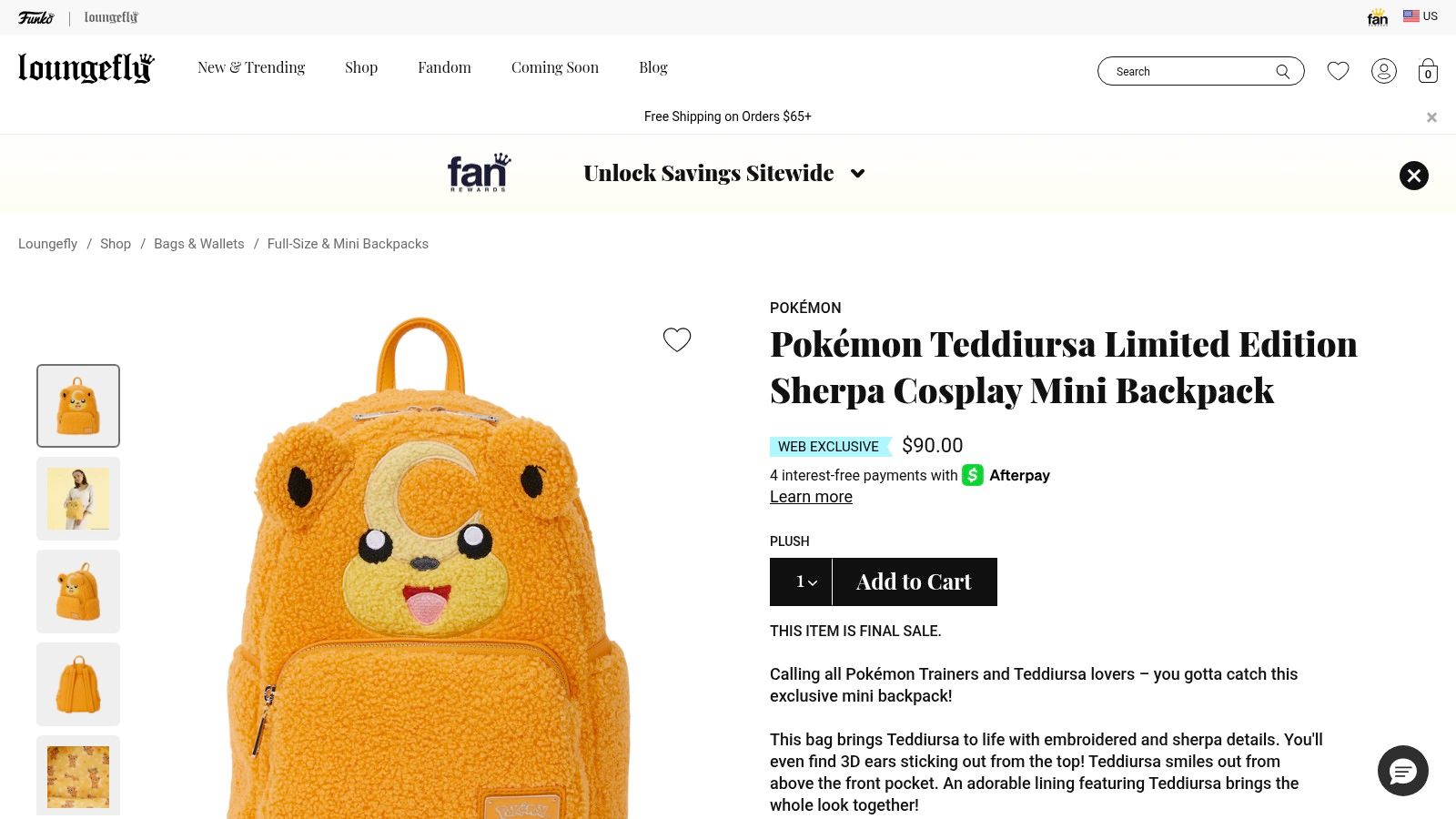
The Teddiursa Sherpa Cosplay Mini Backpack is an excellent case study in material selection and hybrid construction. The use of sherpa fabric for the main body is a deliberate choice to texturally mimic the character’s fur, offering a tactile experience that standard polyester plush cannot. This moves the product beyond a simple character likeness into a more immersive “cosplay” item. This approach elevates the product’s perceived value significantly and is a strategy often explored when dealing with plush toys wholesale for premium markets.
Manufacturer’s Analysis: Why This Product Works
The success of this design lies in its hybrid construction, blending soft plush elements with the durable structure of a vegan leather mini backpack. At approximately 23 x 27 x 11.5 cm, its primary appeal is as a fashion statement and collector’s piece. The integration of high-quality hardware, a themed interior lining, and an enamelled brand plaque are hallmarks of Loungefly’s collectible-focused approach.
Factory Insight: Manufacturing a product like this is more complex than a standard plush backpack. It requires a factory with dual expertise in both soft goods (plush, sherpa) and structured bag-making (stitching vegan leather, setting hardware, structured panels). The sherpa appliqué for the face and ears must be precisely cut and stitched onto the main body, while the embroidered facial details demand high-stitch-count machinery for a clean, premium finish. The combination of materials increases production steps and quality control checkpoints.
Key Takeaways for B2B Buyers
For brands aiming to create premium, collectible plush accessories, Loungefly’s strategy offers important lessons:
- Hybrid Material Use: Don’t limit your design to just one material. Combining plush with other textiles like vegan leather, canvas, or denim can create a more sophisticated, durable, and higher-value product.
- Collector-Focused Details: Elements like custom-printed lining, branded metal hardware, and limited-edition numbering add significant perceived value. These details signal to the consumer that the item is a special piece, not a mass-market toy.
- Structured vs. Soft: While a full-plush backpack appeals to a younger audience, a structured mini backpack with plush accents targets older fans and fashion-conscious consumers willing to pay more. This widens the potential market for a plush animal backpack.
Website: https://loungefly.com/pokemon-teddiursa-limited-edition-sherpa-cosplay-mini-backpack/PMBK0333.html
4. Pokémon Center – Penny’s Eevee-Themed Plush Backpack
The official Pokémon Center is a masterclass in leveraging a global intellectual property to drive demand for merchandise tied directly to in-game content. For brands exploring licensed or character-inspired products, this platform offers a crucial look at how to launch a product with a built-in narrative. Penny’s Eevee-Themed Backpack, from the Pokémon Scarlet and Violet games, is a prime example of turning a digital asset into a physical, highly desirable plush animal backpack.
This product’s success is rooted in its authenticity; it is a direct replica of a character’s accessory, making it an instant hit with fans for cosplay and collecting. From a production standpoint, the goal is not just to create an “Eevee bag” but to precisely replicate Penny’s bag. This demands extreme accuracy in colour matching the plush fur, capturing the character’s specific ear shape, and sizing it to be functional yet true to its on-screen appearance. You can explore how such character-specific designs are developed in our guide to the OEM plush manufacturing process.
Manufacturer’s Analysis: Why This Product Works
The design brilliantly fuses fandom with function. The backpack is instantly recognisable as Eevee, yet its design is integrated seamlessly as a bag. The adjustable straps and small back zippered pocket make it a practical accessory for carrying small items like a phone, wallet, and keys. This limited capacity is a deliberate choice, prioritising the plush form over utility, which aligns with its target market of fans and collectors rather than students needing a school bag.
Factory Insight: Manufacturing this backpack involves complex pattern-making to achieve Eevee’s three-dimensional head and ear structure. The long-pile, two-tone plush for the neck ruff and ear tips requires careful sourcing to match the official character art. The embroidered eyes and nose must be digitised with high precision to capture the specific expression. A key challenge is ensuring the strap anchor points are reinforced internally without distorting the plush shape, a common quality control checkpoint for complex plush backpacks.
Key Takeaways for B2B Buyers
For businesses aiming to create merchandise with strong narrative ties, the Pokémon Center provides valuable lessons:
- Canon-Inspired Design: Linking a product directly to a specific character or story element creates immediate demand and emotional connection. This is a powerful strategy for licensed goods.
- Authenticity is Paramount: The website’s product photography and descriptions emphasise its status as an official product. This guarantee of authenticity is a primary driver for consumer purchases, justifying a premium price point.
- Managing Scarcity: High-demand items on the Pokémon Center often use a queue system or sell out quickly. While this can be a frustration for consumers, it creates a sense of urgency and exclusivity. For B2B, this highlights the importance of forecasting and planning production runs to meet anticipated demand spikes, especially for product launches tied to media releases.
Website: https://www.pokemoncenter.com/
5. Claire’s – Plush Panda Small Backpack
Claire’s represents a key segment of the plush animal backpack market: fast-fashion, high-volume retail. For B2B buyers and brands, their website is a valuable reference for understanding product trends, price sensitivity, and design choices that appeal directly to a young, trend-driven audience. While Claire’s is a retailer, its product selection reveals much about the mass-market manufacturing process, where cost-efficiency and speed-to-market are primary drivers.
The Plush Panda Small Backpack is a textbook example of a product designed for impulse buys and accessibility. It’s not positioned as a premium collectible but as a fun, affordable accessory. From a production standpoint, achieving this price point requires strategic decisions in materials, construction, and complexity. The design is simple, using standard plush fabric and minimal complex shaping to keep manufacturing costs low. This product is a perfect example of a budget-friendly customisable plush, which you can explore further in our guide to plush production cost-saving strategies.
Manufacturer’s Analysis: Why This Product Works
The design prioritises a cute aesthetic over large storage capacity, perfectly aligning with its target audience of children and tweens who use it more for style than utility. Its small size makes it lightweight and manageable for younger users. The adjustable straps are a standard feature, but keeping them simple (basic webbing and plastic adjusters) is another cost-control measure. The panda’s simple, rounded form is easy and fast to produce on an assembly line, minimising labour hours per unit.
Factory Insight: To mass-produce a design like this, efficiency is everything. The eyes and nose are likely plastic “safety” eyes and noses that can be attached quickly, rather than time-consuming embroidery. The plush material is a standard short-pile polyester, which is cost-effective and readily available. The focus is on creating a recognisable and appealing shape with the least number of pattern pieces and sewing operations possible.
Key Takeaways for B2B Buyers
For brands aiming for the mass market or promotional gift sector, Claire’s approach offers important lessons:
- Design for Cost: The panda backpack is a masterclass in value engineering. Every element, from the material to the construction method, is chosen to hit a specific retail price point. This demonstrates how to simplify a design without losing its core appeal.
- Trend Velocity: Claire’s product catalogue changes rapidly. This highlights the fast-fashion model, where products have a short lifecycle. For buyers, this means that working with a factory that can offer fast turnaround times on samples and production is a significant advantage.
- Retail Accessibility: The combination of a strong physical retail presence and an e-commerce site creates widespread availability. For B2B buyers, this reinforces the power of a multi-channel distribution strategy to maximise sales volume for a trendy item like a plush animal backpack.
Website: https://www.claires.com/us/claires-club-plush-panda-small-backpack—white-268413.html
6. ShopZoo (San Diego Zoo Wildlife Alliance) – Cheetah/Giraffe Plush Backpacks
For brands operating in the educational, tourism, or conservation sectors, ShopZoo offers a superb case study in mission-driven merchandise. As the official retail arm of the San Diego Zoo Wildlife Alliance, its products are not just souvenirs; they are extensions of the organisation’s brand and conservation message. Analysing their approach to the plush animal backpack reveals how to create a product that generates revenue while reinforcing core values.
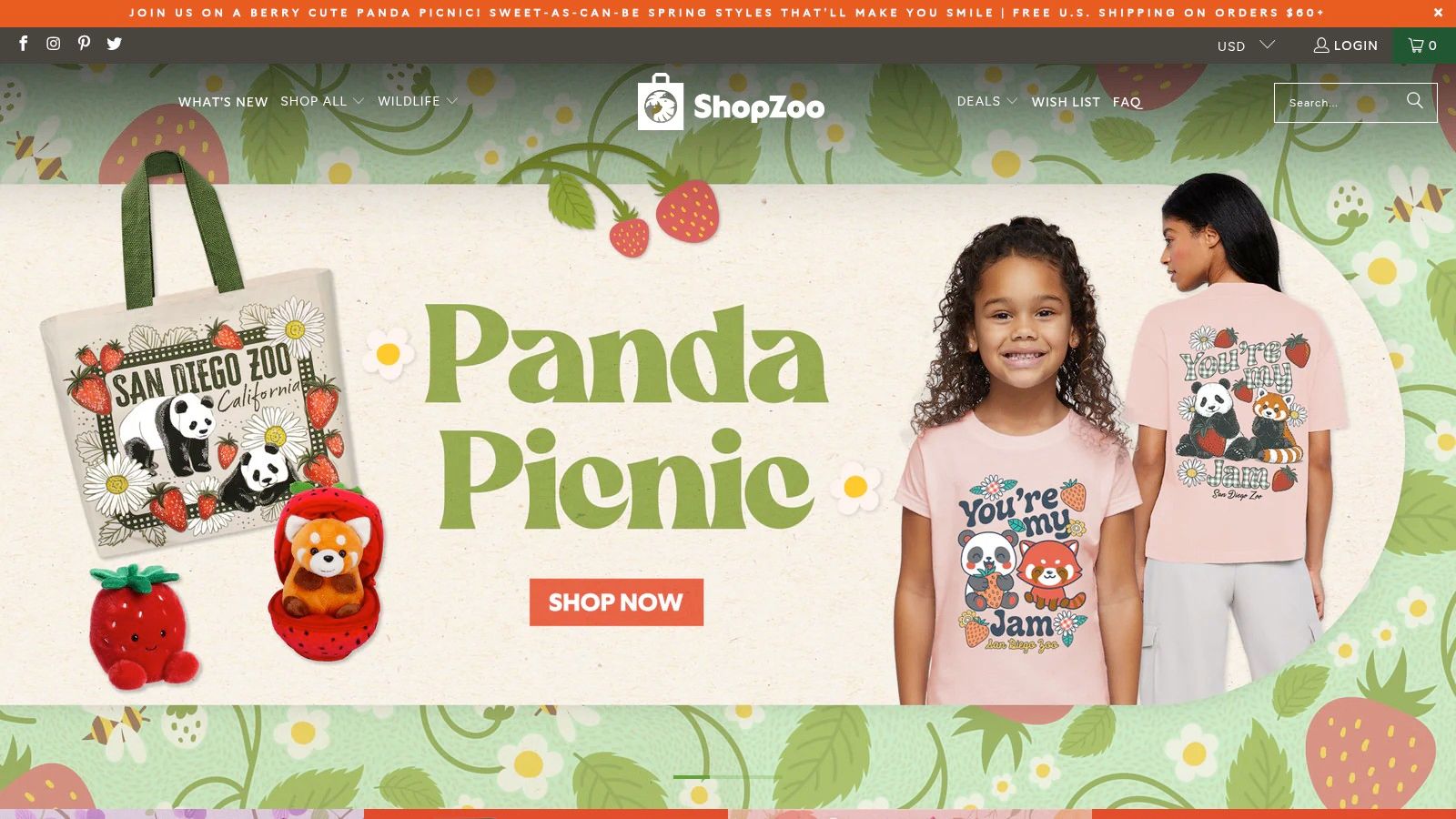
The Cheetah and Giraffe plush backpacks sold by ShopZoo are prime examples of purpose-built retail products. These items are designed for a specific context: a child’s day out at the zoo. The design prioritises the “plush animal” aspect over the “backpack” function, creating a companion toy that happens to have a small storage pocket. This strategy is ideal for impulse buys and gift-giving, as the emotional connection to the animal is the primary sales driver.
Manufacturer’s Analysis: Why This Product Works
The design’s effectiveness lies in its realism and authenticity. Unlike stylised cartoon characters, these backpacks aim for a recognisable, semi-realistic representation of the animals. This connects directly to the zoo experience, allowing a child to carry a plush version of an animal they have just seen. The size (approximately 19 inches for the cheetah) and soft, huggable material make it a wearable friend rather than a heavy-duty bag. The small zippered pocket is sufficient for a few small treasures, which is all the target user needs.
Factory Insight: To manufacture a product like this, the key is balancing realism with child-friendly safety and softness. The cheetah’s spots, for example, would likely be achieved through a custom-printed Minky fabric rather than appliqué to keep the surface smooth and production costs manageable. The embroidered San Diego Zoo Wildlife Alliance (SDZWA) seal on the strap is a critical detail, adding a mark of authenticity that elevates the product above generic animal toys and justifies a premium price point.
Key Takeaways for B2B Buyers
For brands, especially those with a strong story or mission, ShopZoo’s strategy offers valuable lessons:
- Authenticity as a Feature: The embroidered logo is not just branding; it’s a seal of authenticity that links the product directly to the respected conservation organisation. This adds significant perceived value.
- Context-Specific Design: The backpacks are not trying to compete with school bags. They are designed for a specific use case: a light, fun accessory for a family outing. This focused design avoids feature bloat and keeps production costs aligned with the product’s purpose.
- SKU Rotation and Assortment: As a retail site, product availability is tied to inventory and seasonal promotions. This highlights a key benefit for B2B buyers who work directly with a manufacturer: the ability to commission consistent production runs of specific SKUs, ensuring stable supply for your own retail channels.
Website: https://shopzoo.com/products/cheetah-plush-backpack
7. Wild Republic – Black Bear Backpack 14″
Wild Republic serves as a strong case study for brands targeting the educational, tourism, and specialty retail markets, such as zoos, aquariums, and museums. Their website showcases how to successfully merge a lifelike plush animal with a functional product. Examining their Black Bear Backpack provides a clear blueprint for creating a plush animal backpack that feels both like a toy and a souvenir, appealing directly to children and gift-buyers in these specific retail environments.
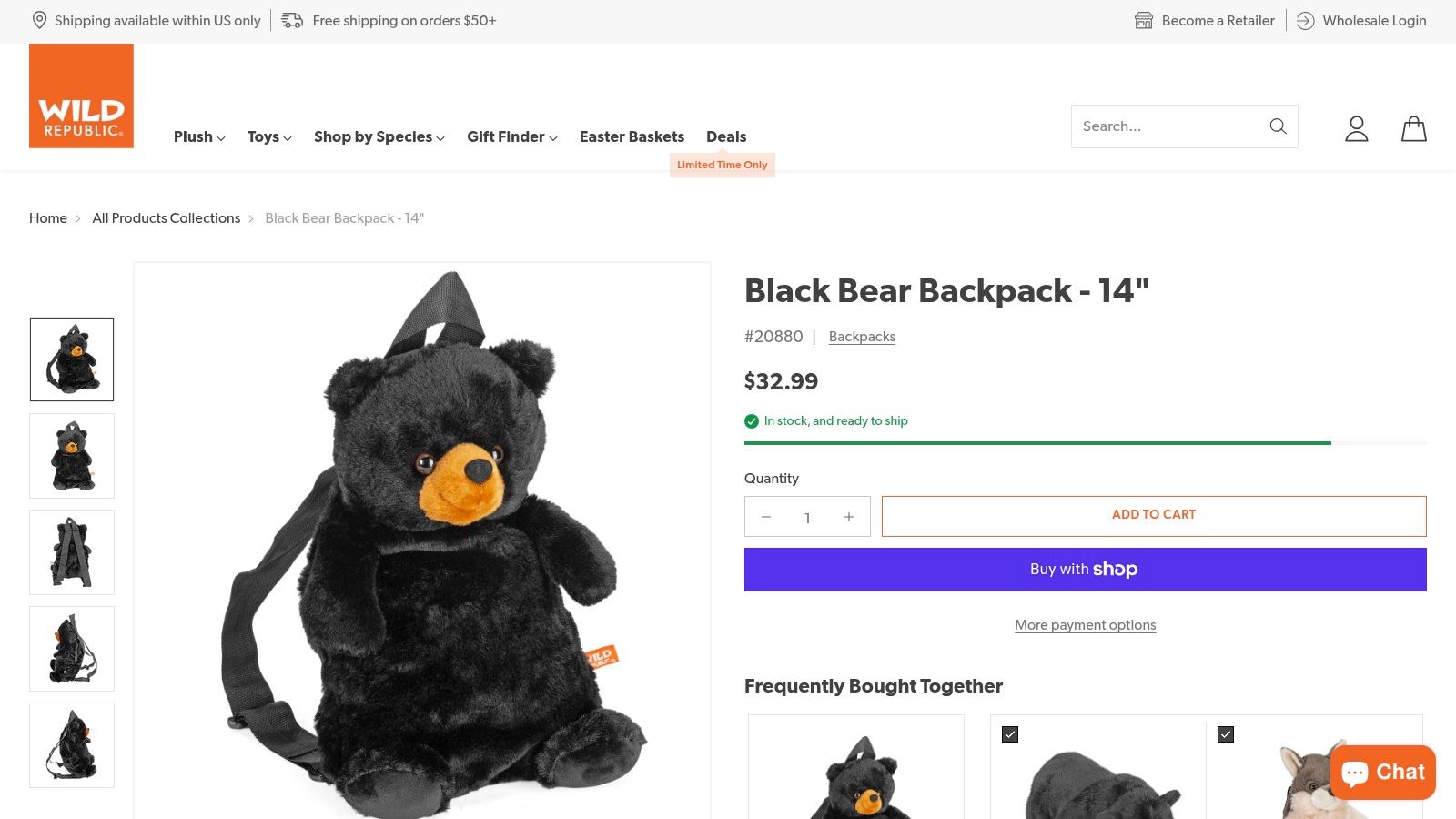
The 14-inch Black Bear Backpack is a prime example of a nature-themed product designed for high-volume sales. From a production standpoint, the emphasis is on creating a realistic animal form while maintaining child-friendly softness and safety. Unlike character-licensed products where brand accuracy is paramount, Wild Republic’s focus is on recognisable animal features and durability. This approach allows for more flexibility in material selection and construction, prioritising a balance between cost-effectiveness and perceived quality for the retail price point.
Manufacturer’s Analysis: Why This Product Works
The design prioritises its identity as a plush toy first and a backpack second. At 14 inches, its size is substantial enough to be huggable for a child, reinforcing its value as a companion. The small zippered compartment is a secondary feature, designed to hold small treasures rather than schoolbooks. This intentional design choice keeps the backpack’s form soft and cuddly, without the structural rigidity that a larger, more functional pocket would require. It perfectly meets the needs of its target market: a memorable souvenir that is also fun to carry.
Factory Insight: To manufacture a similar product, the key is efficient pattern design to capture the bear’s shape with minimal fabric waste. The plush material is a standard short-pile polyester, chosen for durability and ease of cleaning. Unlike the embroidered details on a premium character plush, this design uses plastic safety eyes and a moulded nose, which are faster and more cost-effective to install during mass production. The straps are simple webbing, often attached with reinforced stitching directly into the main body seams for strength.
Key Takeaways for B2B Buyers
For businesses looking to source souvenir or educational plush backpacks, Wild Republic’s product offers several key lessons:
- Market-Specific Design: The product is not trying to be a fashion accessory or a school bag. It knows its audience is children in a specific retail setting (e.g., a national park gift shop). This targeted approach makes it highly effective.
- Balance of Quality and Cost: The use of cost-effective components like plastic eyes and simple straps keeps the production cost down, allowing for healthy retail margins. The perceived value comes from the plush’s size and softness, not premium detailing.
- Wholesale Reliability: Wild Republic is an established brand with a wide distribution network. For retailers, this means reliable stock replenishment. For brands creating custom products, it demonstrates the importance of a streamlined supply chain to keep popular items consistently available.
Website: https://shop.wildrepublic.com/products/black-bear-backpack-14
Top 7 Plush Animal Backpack Comparison
| Item | 🔄 Implementation complexity | ⚡ Resource requirements & lead time | ⭐ Expected outcome / quality | 📊 Ideal use cases | 💡 Key advantages / tips |
|---|---|---|---|---|---|
| A B2B Manufacturer’s Guide to Custom Backpack Plush | Moderate–High: full design → prototype → production workflow (OEM/ODM) | MOQ commonly 500–1,000; samples 5–10 days; mass production 20–30 days; licensing/tooling may add cost | ⭐⭐⭐⭐⭐ Brand-grade, export‑ready, EN71/ASTM compliant | Character merchandise, licensed retail lines, promos, corporate gifting | End‑to‑end service and scalable pricing; not suited for ultra‑small runs |
| Sanrio – Hello Kitty Classic Red Plush Backpack | Low: off‑the‑shelf licensed SKU, minimal buyer setup | Purchase stock; immediate shipping when available; standard retail lead times | ⭐⭐⭐⭐ Authentic Sanrio finish and branding | Gifts, character retail, licensed product displays | Strong brand appeal and easy ordering; stock/pricing can fluctuate |
| Loungefly – Pokémon Teddiursa Sherpa Mini Backpack | Low–Medium: collectible release, simple purchase but limited runs | Higher unit price; limited editions may require preorders; variable restock timing | ⭐⭐⭐⭐⭐ Premium craftsmanship and collectible detail | Collectors, fashion/lifestyle, cosplay | High perceived value; can sell out and appreciate on secondary market |
| Pokémon Center – Penny’s Eevee-Themed Plush Backpack | Low: official retail product, ready to buy | Often high demand; restock unpredictability; retail shipping timelines | ⭐⭐⭐⭐ Canon-accurate, cosplay-friendly quality | Fandom merchandise, cosplay, gifting | Strong brand/authenticity; expect sell-outs and variable restock |
| Claire’s – Plush Panda Small Backpack | Very Low: mass‑retail SKU, plug‑and‑play | Low price point; widespread retail/online availability; fast replenishment | ⭐⭐⭐ Budget‑level quality sized for kids/tweens | Impulse purchases, party favors, kid retail | Accessible pricing and returns; limited capacity and lower durability |
| ShopZoo – Cheetah/Giraffe Plush Backpacks | Very Low: zoo shop SKU with simple retail sourcing | Mid-price; available in shop/online; family‑oriented stocking cycles | ⭐⭐⭐ Kid‑friendly, conservation‑branded quality | Souvenirs, family visits, conservation retail | Storytelling adds value; sizes and SKUs rotate with shop assortment |
| Wild Republic – Black Bear Backpack 14″ | Low: standard wholesale/retail product, easy to source | Wholesale availability; reliable replenishment for retailers | ⭐⭐⭐ Practical plush‑toy + small compartment | Zoo/museum stores, educational/novelty retail, gifts | Good replenishment and clear positioning; limited teen/adult appeal |
Your Next Step: Choosing a Manufacturing Partner for Your Plush Vision
We have journeyed through the entire production lifecycle of a custom plush animal backpack, from the initial spark of a design concept to the final, ready-for-market product. You have seen how retail giants like Sanrio and specialty brands like Loungefly execute their vision, and you now understand the critical steps involved: material selection, detailed sampling, rigorous quality control, and adherence to international safety standards.
The single most important takeaway from this guide is the profound impact of your manufacturing partner. A factory is not just a set of hands; it is your strategic collaborator, your quality gatekeeper, and your guide through the complexities of global production. The difference between a best-selling product and a container of unusable goods often rests on this choice.
Key Insights Summarised
As you prepare to bring your own plush animal backpack to life, keep these core principles at the forefront of your decision-making process:
- Design for Manufacturability: Your creative vision must be balanced with practical production realities. Complex shapes, multiple materials, and intricate embroidery all affect cost, MOQ, and lead times. A good partner will help you refine your design to be both appealing and efficient to produce.
- Material and Safety are Non-Negotiable: The feel of the plush, the durability of the straps, and the safety of the zippers are paramount. Always insist on materials that meet your quality expectations and have clear documentation for safety compliance with standards like EN71 (for Europe) and ASTM F963 (for the USA). Never compromise on child safety.
- The Power of the Prototype: The sampling stage is your most critical checkpoint. It is where you approve the look, feel, function, and safety of your backpack. A detailed, multi-stage sampling process, from a simple mock-up to a final pre-production sample, prevents costly errors during mass production.
- Transparency is the Bedrock of Trust: Your manufacturer should provide clear, itemised costing. You should understand how material choices, order quantity, and design complexity influence your final unit price. Hidden fees or vague cost structures are significant red flags.
Actionable Next Steps for Your Project
Translating this knowledge into action requires a structured approach. Before you contact any potential manufacturer, organise your project details.
- Prepare a Detailed Tech Pack: This is your blueprint. It should include design sketches from all angles, precise dimensions, material specifications (e.g., “1.5mm crystal super soft plush”), colour references (Pantone codes are ideal), and details on zippers, straps, and lining.
- Define Your Target Cost and Quantity: Have a realistic cost-per-unit in mind. Understand your initial order quantity, as this will heavily influence which factories can meet your Minimum Order Quantity (MOQ).
- Create a Supplier Questionnaire: Develop a list of critical questions to vet potential partners. Inquire about their primary export markets, ask for copies of their business license and factory audit reports (like BSCI or Sedex), and request proof of safety standard compliance.
Choosing the right partner is less about finding the lowest price and more about finding the best value. An experienced manufacturer like our team at FunEnjoy PlushToys acts as an extension of your own, providing the factory-floor expertise to foresee problems, suggest cost-saving alternatives, and ensure your final plush animal backpack is a product you can be proud of. The journey from a simple drawing to a huggable, functional backpack is complex, but with the right partner, it is an achievable and rewarding process.
Ready to turn your design into a high-quality, market-ready product? As a specialised manufacturer with decades of experience in creating custom plush toys and backpacks, FunEnjoy PlushToys provides the end-to-end expertise and production capacity brands need. Contact our team today for a detailed quote and let’s start the sampling process for your unique plush animal backpack.