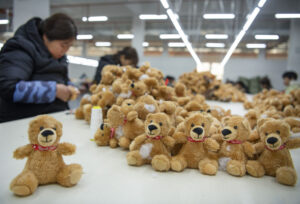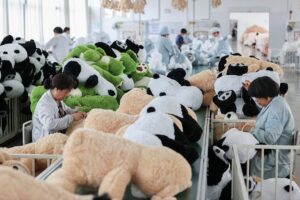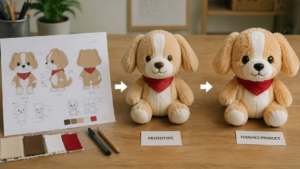
As a plush toy factory in China, we see thousands of designs cross our desks. The most common question we get from brands, creators, and artists is, "Can my 2D character drawing actually become a high-quality, 3D plush toy?" The answer is almost always yes, but the journey from a digital file to a physical product is a precise manufacturing process. This guide provides a factory-floor perspective on how to successfully turn drawings into plush toys for the global market.
The Plush Toy Manufacturing Process: From Design to Delivery
Transforming a 2D concept into a tangible, high-quality plush toy involves a structured workflow. This process isn't just about sewing and stuffing; it's a multi-stage operation designed to ensure quality, safety, and scalability. Each step builds upon the last, turning your creative vision into a product ready for mass production.
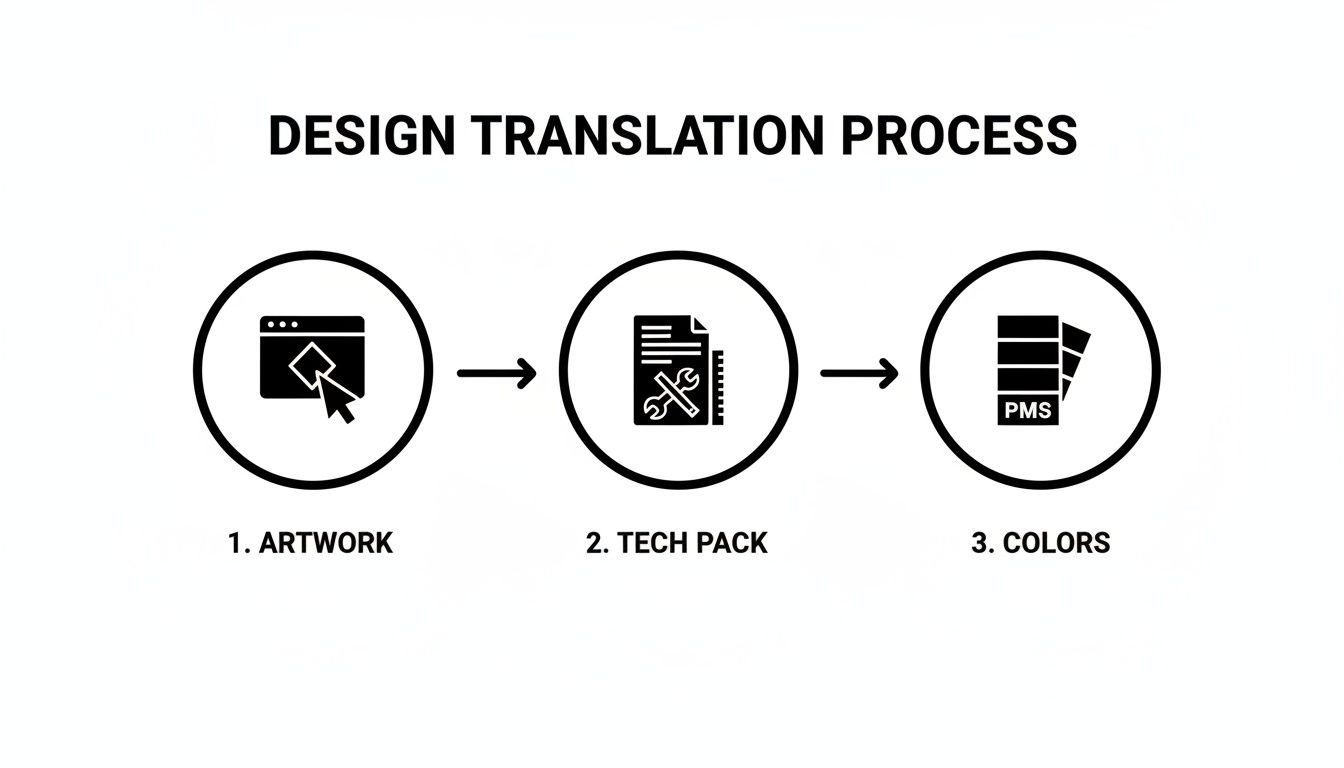
Step 1: Design Translation & Tech Pack Review
Your drawing is the starting point, but our pattern makers need a technical blueprint. A comprehensive "tech pack" is crucial. This document should include:
- Vector Files (.AI, .EPS): Essential for scaling patterns without loss of quality.
- Orthographic Views: Front, back, and side views are non-negotiable for accurate 3D interpretation.
- Detailed Callouts: Specify dimensions, Pantone color codes (e.g., PMS 2925 C), material types, and embroidery placement.
A detailed tech pack is the single most effective tool for reducing sample revisions, saving both time and money.
Step 2: Prototyping (Sampling)
This is where your design takes physical form. The typical timeline for a first prototype is 5-10 business days.
- Pattern Making: Our senior pattern maker translates your 2D views into a series of flat fabric patterns. This is a highly skilled job; a poorly made pattern guarantees a flawed final product.
- Material Cutting: Fabric is cut precisely according to the patterns.
- Embroidery/Printing: Facial features and logos are applied.
- Sewing & Assembly: Our most experienced technicians stitch the pieces together, leaving a small opening.
- Stuffing: The plush is filled to the specified density with A-grade PP cotton.
- Finishing: The opening is hand-stitched closed, and the sample is cleaned and inspected.
Step 3: Sample Revisions & The "Golden Sample"
You will receive the first prototype for review. Provide clear, actionable feedback (e.g., "Increase head size by 10%," not "The head looks small"). After one or two rounds of revisions, we create the Pre-Production Sample (PPS), or "golden sample." This is the master copy. Once you approve it, it becomes the benchmark against which every unit in the mass production run is measured.
Step 4: Mass Production & Quality Control
With the golden sample approved, we move to full-scale production.
- Material Procurement: We order all fabrics, fillings, and accessories in bulk.
- Cutting & Assembly Lines: Production is streamlined into specialized stations for cutting, sewing, embroidery, stuffing, and finishing.
- QC Integration: Quality checks occur at every stage (see Quality Control section below).
Step 5: Final Inspection, Packaging, and Logistics
Every single finished toy undergoes a final inspection and passes through a needle detector. They are then tagged, bagged, and packed into master cartons for shipment via sea or air freight.
Factors That Impact Your Plush Toy's Cost
Understanding the cost structure is vital for any brand. Pricing is not arbitrary; it is a direct calculation based on materials, labor, and complexity.
| Cost Factor | Low-Cost Example | High-Cost Example | Manufacturer's Insight |
|---|---|---|---|
| Design Complexity | A simple round character with 6-8 pattern pieces. | A character with complex clothing requiring 50+ pieces. | This is the primary cost driver. More pattern pieces equal more cutting and sewing time, which increases skilled labor costs. |
| Toy Size | A 6-inch (15 cm) keychain plush. | A 20-inch (50 cm) collectible plush. | A direct correlation: larger toys require more fabric, more stuffing, and larger packaging, all of which increase the unit cost. |
| Material Quality | Stock-color Crystal Super Soft (Velboa) fabric. | Custom-dyed Minky fabric with multiple textures. | Premium materials like Minky have a higher cost per yard. Custom dyeing to a specific Pantone also incurs additional fees. |
| Decorative Details | Simple screen-printed facial features. | Multi-color, high-stitch-count embroidery for logos. | Embroidery is more labor-intensive and costly than printing but offers a premium look and superior durability. |
| Order Quantity (MOQ) | A smaller order of 500 units. | A large production run of 5,000+ units. | Larger orders allow for bulk material discounts and optimized production lines, significantly lowering the price per unit. |
To see examples, browse the types of custom stuffed toys we produce.
Understanding Materials and Filling Types
The tactile feel of your plush is defined by your material choices. As a manufacturer, we source and work with a wide range of textiles to match your brand's quality and budget targets.
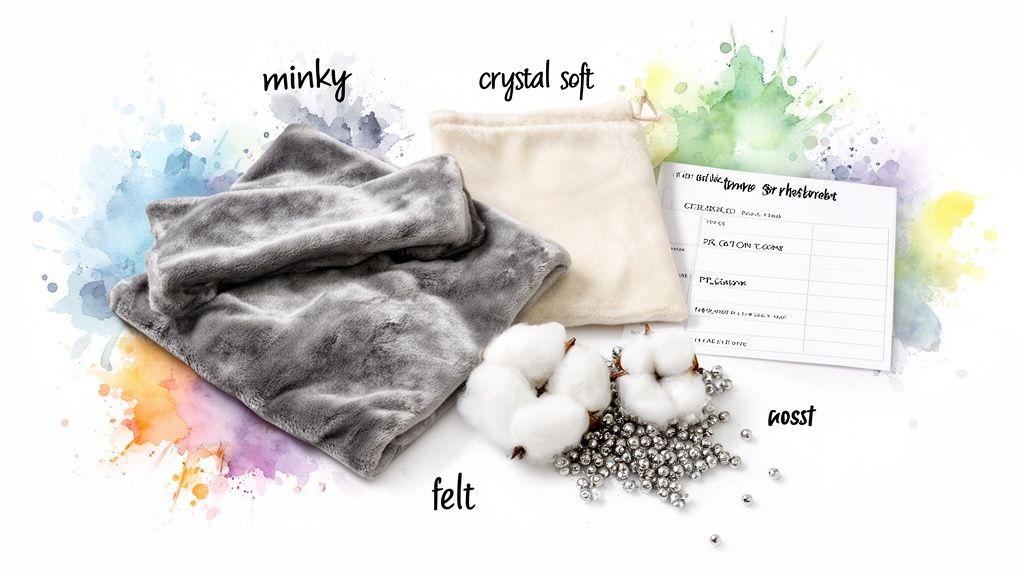
Common Plush Fabrics
- Crystal Super Soft (Velboa): The industry workhorse. It's durable, cost-effective, and excellent for printing and embroidery due to its short pile.
- Minky Plush: A more luxurious option with a slightly longer, exceptionally soft pile. Ideal for premium retail and collectible toys.
- Felt & Sherpa: Used for specific details. Felt is great for firm, non-fraying accents like claws or horns, while Sherpa adds a fluffy, wool-like texture.
Filling Options
- 100% A-Grade PP Cotton: The standard for quality plush toys. It's hypoallergenic, machine washable, and resists clumping. We only use 100% new material. Low-quality factories often use recycled, C-grade cotton which can contain impurities and quickly go flat.
- Plastic or Glass Beads: Used to add weight to the base or paws, allowing a toy to sit upright and providing a premium sensory feel. This adds to the cost due to materials and the labor required to insert them securely.
Minimum Order Quantity (MOQ) Explained
For most professional factories, the MOQ for a custom plush design ranges from 100 to 500 pieces. This number is not arbitrary; it's the minimum threshold required to make a production run viable. It allows us to purchase materials at a reasonable cost and set up the assembly line efficiently. Orders below this quantity result in a significantly higher price per unit due to the lack of economies of scale.
A Manufacturer's Approach to Quality Control and Safety
Quality and safety are non-negotiable. A single recall can destroy a brand. Our quality control (QC) is not a final step; it is a system integrated throughout the entire production process.
Multi-Point Inspection Process
- Incoming Quality Control (IQC): All raw materials (fabric, thread, stuffing) are inspected upon arrival to ensure they meet the exact specifications of the approved "golden sample."
- In-Process Quality Control (IPQC): Our QC team patrols the production floor, performing spot checks at the cutting, sewing, and stuffing stations to catch and correct deviations early.
- Final Quality Control (FQC): Every single finished unit undergoes a 100% inspection. We check for stitching integrity, correct stuffing density, and overall aesthetic match to the golden sample.
- Needle Detection: Critically, every toy must pass through a calibrated metal detector to ensure no broken needle fragments are left inside.
Compliance with International Safety Standards
Adherence to global safety standards is mandatory for market access. The two primary standards are:
- EN71 (Europe): Covers mechanical properties, flammability, and chemical composition.
- ASTM F963 (USA): Includes rigorous testing for choking hazards (pull tests on eyes, buttons), sharp points, and toxic substances like lead and phthalates.
We provide full testing and certification to ensure your product is compliant for your target market. A failure to meet these standards can result in seized shipments, forced recalls, and significant legal liability.
How to Choose the Right Plush Toy Supplier
Selecting the right factory is the most critical decision you will make. A reliable partner acts as an extension of your team, whereas a poor one can lead to production failures, brand damage, and financial loss.
Key Differences: OEM vs. ODM
- OEM (Original Equipment Manufacturer): You provide a complete, production-ready tech pack. We manufacture it to your exact specifications. This is the most common model for established brands.
- ODM (Original Design Manufacturer): You provide a concept or basic sketch. Our in-house team helps you develop it into a manufacturable design. This is ideal for clients who need design support. Get help with your project and design your own plush toy.
The Risks of Low-Quality Factories
Choosing a supplier based solely on the lowest price is a common and costly mistake. Low-bid factories often cut corners in ways that are not immediately apparent:
- Using lower-grade, non-compliant materials.
- Skipping in-process quality control checks.
- Subcontracting work to unvetted workshops.
- Providing inaccurate timelines and poor communication.
The true cost of a cheap manufacturer is not the unit price but the risk of a failed production run, safety liabilities, and irreversible damage to your brand's reputation. Look for experienced stuffed animal companies with transparent processes and verifiable certifications (e.g., BSCI, ISO9001). For more industry context, see China's robust pet toy market report.
Why FunEnjoy is a Trusted Manufacturer
With roots in Yiwu since 1993, FunEnjoy PlushToys has grown into a leading OEM/ODM partner for brands worldwide. Our 2,000㎡ facility and team of 200 skilled craftspeople are dedicated to turning creative concepts into exceptional products. We combine decades of hands-on experience with rigorous, modern quality control systems. Our commitment is to transparency, quality, and partnership, ensuring your journey from drawing to plush toy is smooth and successful.
Ready to bring your character to life? The team at FunEnjoy PlushToys combines decades of craftsmanship with modern manufacturing to create high-quality, safe, and beautiful custom plush toys for brands worldwide. Start your project with us today.